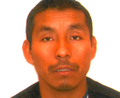
In the vast and often unforgiving landscape of the Arizona desert, the story of Felix Suarez Cruz's disappearance began on April 19, 2010. At 30 years old, Felix, a Hispanic male, was last seen in the area of Santa Rosa, Arizona, a place that would become the last known location in his journey. He was in the process of crossing the U.S.-Mexico border with a group of other individuals. The circumstances surrounding his separation from this group are harrowing; he was reportedly left behind at a location said to be about a seven-hour walk from where the group was ultimately picked up and transported to Tucson. Those he was with left him with matches, a small but potentially life-saving tool, with the hope that he could start a fire and signal for help. It is a detail that paints a stark picture of his isolation and the perilous situation he faced. At the time he went missing, he was using the alias "Ines Salazar Diaz."
Felix is described as being between 5'4" and 5'7" tall and weighing between 130 and 150 pounds. He has black hair and black eyes. A distinguishing physical feature is a scar on his right eyebrow. When he was last seen, he was wearing blue jeans, a white t-shirt, and a blue or white hat. On his feet, he wore either white or black sneakers. Among his possessions was a driver's license bearing the name of his alias, Ines Salazar Diaz. The Pima County Office of the Medical Examiner, through their Missing Migrant Project, is the primary investigating agency in his case, which was officially reported on April 30, 2010. The case was created in the National Missing and Unidentified Persons System on July 30, 2012.
The narrative of Felix Suarez Cruz's disappearance is one that is echoed in the stories of many who attempt to cross the border, a journey fraught with uncertainty and danger. The details of his case, from the location he was last seen to the items he had with him, provide a fragmented glimpse into his final known moments. The alias he was using, along with the fact that he was left behind by his group, adds layers of complexity to the investigation. The Pima County Office of the Medical Examiner's involvement underscores the serious and often tragic outcomes of such border crossings. The overview of this case highlights the vulnerability of individuals in these situations and the enduring pain and uncertainty that families are left to grapple with when a loved one vanishes.
Last Seen: Apr 19, 2010