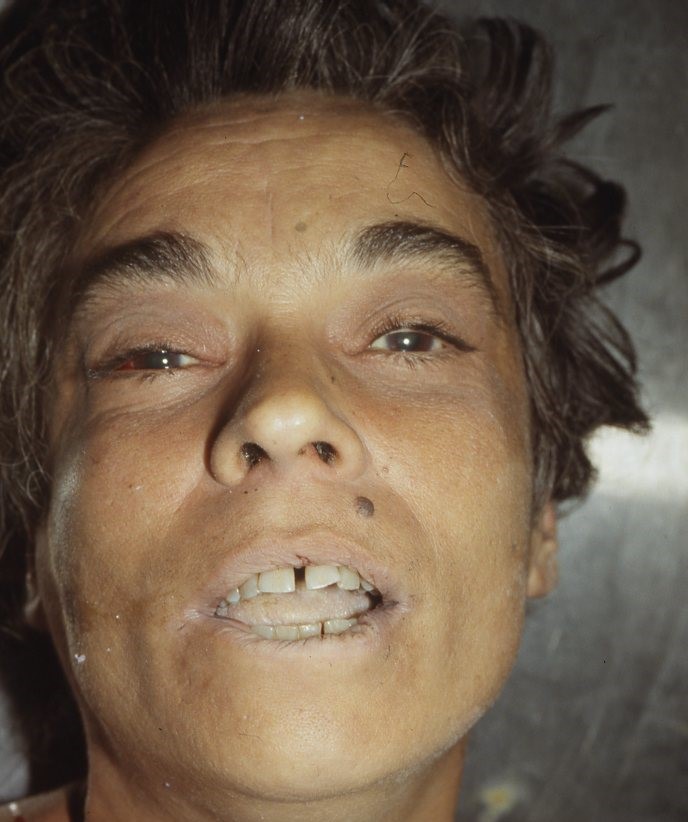
Dona Mae Bourgeois Bayerl was a 38-year-old White female, a mother, and a resident of Muskego, Wisconsin, when she was last seen at her home on May 6, 1979. She had brown hair and brown eyes, stood about 5 feet 6 inches tall, and weighed around 140 pounds; reports list her last known clothing as blue slacks, a white blouse, and glasses with dark brown frames.
The account that first framed her disappearance came from her husband, John Bayerl, who said she left after an argument and drove away in the family car. The vehicle was reportedly returned that same night, but when the children woke the next morning, Dona was gone. John reported her missing on May 9, 1979, three days after she was last seen.
From the beginning, Dona’s absence did not sit right with her family. She had two young daughters, ages 7 and 4 at the time, and relatives said they could not believe she would simply walk away from them, especially with the younger child reportedly sick with chicken pox. Accounts from missing-persons organizations and later case reporting describe investigators looking closely at the home and garage. One account says police searched the house after Dona’s sister, who was caring for the children, reported finding what appeared to be blood on clothespins in the garage; additional possible blood evidence was described on a child’s bicycle seat and a rear service door. Her clothing was said to have remained at the home, adding to the sense that the story of a voluntary departure did not explain what had happened to her.
For decades, Dona’s case remained unresolved, but it was not forgotten. The Muskego Police Department continued to be listed as the investigating agency, and her case was entered into NamUs as MP19994. The Wisconsin Clearinghouse for Missing & Exploited Children & Adults continued to circulate her information, including an age-progressed image created many years after she vanished. Dona was also declared legally dead in 1986, though her remains have not been recovered, and the exact location of her remains remains unknown. The case therefore became both a missing-person investigation and, eventually, a homicide case in which her family still lacked the most painful answer: where she was.
In February 2019, nearly forty years after Dona disappeared, John Bayerl was arrested in Fort Myers, Florida, and charged in connection with her death. Prosecutors later presented the case in Waukesha County as a no-body homicide built largely on circumstantial evidence, including alleged inconsistencies in John’s statements over the years and evidence about the relationship. Reporting from the trial said the district attorney argued that John had a history of abusive behavior and had changed his account of the night Dona vanished. The defense did not present evidence at trial and argued that the prosecution had not met the burden of proof. After more than five hours of deliberation, a jury found John Bayerl guilty of first-degree murder in June 2019.
On August 30, 2019, John Bayerl was sentenced to life in prison for Dona’s murder. At sentencing, he maintained his innocence and did not provide the answer Dona’s daughters had long asked for: the location of their mother. Public reporting described one of the daughters pleading for him to disclose what he knew, while the judge and prosecutors emphasized that decades had passed without Dona being brought home. Later appellate records show that John Bayerl challenged his conviction, but the Wisconsin Court of Appeals affirmed the judgment of conviction and rejected his arguments for a new trial.
Dona Mae Bayerl’s story began as the sudden disappearance of a 38-year-old mother from her Muskego home on May 6, 1979, after a reported argument, and it grew into a decades-long pursuit of accountability. Her family questioned the idea that she left voluntarily, investigators continued to preserve and revisit the case, and forty years later her husband was convicted of killing her. Yet even after the conviction and life sentence, the most personal part of the case remains unresolved because Dona’s remains have not been found. The overview of the case is that Dona was last seen in Muskego, Wisconsin, her disappearance was long investigated as suspicious, her husband was eventually convicted of her murder, and her loved ones still await the recovery of her remains and the full measure of closure that has been denied to them for so many years.Last Seen: May 6, 1979