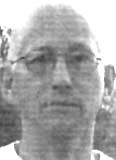
In the spring of 1982, a sense of quiet transition surrounded 31-year-old Gregory Hugh Oliver. On March 9th of that year, he was last seen by his family in Hollywood, Florida. He had expressed to his mother and his landlord his intentions to quit his job and relocate. A shy and solitary individual, his mother believed he may have been grappling with depression and ochlophobia, a fear of crowds. He didn't own a vehicle and relied on public transportation, adding a layer of complexity to tracking his movements after he vanished from his familiar surroundings. A notable physical characteristic was a five to six-inch scar located above his right knee. The last direct communication his family ever received was a letter postmarked from Fort Lauderdale, Florida, on July 20, 1983, in which he mentioned a desire to travel. After that letter, a profound and lengthy silence began, leaving his loved ones with unanswered questions for decades.
For many years, Gregory's case remained cold, another name in the countless files of missing persons across the country. The initial investigation by the Palm Beach County Sheriff's Office, which began on April 11, 1988, yielded few leads. The passage of time did little to erase the family's hope for answers, and a DNA sample from his mother was eventually provided, a crucial piece of evidence that would prove vital many years later. The case also drew the attention of the Humboldt County Sheriff's Office in California, though the reasons for their involvement would only become clear with the passage of more time and advancements in forensic technology.
A significant breakthrough in the case came from a discovery made on August 11, 1996, in Arcata, California. A human skull was found approximately 100 feet down a steep embankment. The remains were determined to be those of an adult white male, but with no other identifying information, he became known as Arcata John Doe. Despite efforts to identify him, including entering a partial DNA profile into national databases, no matches were found, and the case grew cold. However, in a testament to the persistence of law enforcement and the power of advancing science, the Humboldt County Sheriff's Office, in collaboration with the California Department of Justice, submitted the evidence to Othram, a private laboratory specializing in forensic genealogy. In December 2025, Othram reported a potential link to Gregory Hugh Oliver. This lead was confirmed in March 2026, when the DNA from the Arcata John Doe was positively matched to the DNA provided by Gregory's mother. After more than four decades of uncertainty, official reports confirmed that Gregory Hugh Oliver had been found deceased. The cause of his death remains undetermined. This case, stretching from the sunny coast of Florida to the rugged terrain of Northern California, is a poignant story of a long and arduous search for a missing son, ultimately brought to a close through the unwavering dedication of investigators and the remarkable capabilities of modern forensic science.Last Seen: Mar 9, 1982