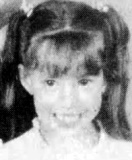
Pauline Rourke was a young mother from Fairfield, Maine, remembered by those closest to her as small in stature, deeply connected to her daughter, and living through a difficult period when she vanished in December 1976. Online records do not all present the date the same way: NamUs lists her date of last contact as December 12, 1976, while Maine State Police and The Charley Project describe her as reported missing or missing on December 15, 1976.
The records agree that she disappeared from Fairfield, Maine, and that she was a White woman with brown hair; sources vary on her eye color and weight, with The Charley Project listing blue eyes and 4 feet 11 inches, 100 to 120 pounds, while NamUs data lists hazel eyes and a range closer to 4 feet 10 inches to 5 feet and 120 to 150 pounds.
At the time she disappeared, Pauline was living in a mobile home in the Fairfield area with Albert P. Cochran, a distant relative, and her twelve-year-old daughter, Honey. Honey later recalled that she and her mother were exceptionally close, and that Pauline would not have willingly left her behind. According to reporting from the Kennebec Journal and Morning Sentinel, Pauline had gone through nursing school and worked at Hilltop School in Waterville, and her daughter remembered everyday pieces of their life together, including gardening and making Christmas ornaments from popcorn and cranberries. Those memories have remained central to the way Pauline is spoken about: not only as a missing person, but as a mother whose absence shaped the rest of her daughter’s life.
The night before Pauline disappeared, Honey reported hearing her mother and Cochran arguing. Maine State Police state that Pauline was last seen by her daughter, and that Honey reported overhearing the argument. The Charley Project provides a fuller account, saying Honey saw her mother lying on her side in bed the next morning, believed she was asleep, kissed her on the head, and left for school. When Honey returned home later, Pauline was gone and was never heard from again. Honey later told reporters that she believed her mother may already have been dead that morning, and that police also believed Pauline was dead when Honey kissed her goodbye. A couple of days later, Honey went to live with relatives out of state.
Pauline’s disappearance became tied to another violent case from the same period: the murder of Janet Baxter, a nurse from Oakland, Maine, who disappeared in November 1976 after going out to buy cold medicine and was later found dead. Maine State Police say Pauline was scheduled to be interviewed by investigators as a possible witness against Cochran in connection with Baxter’s homicide. The Charley Project reports that Pauline had told a relative she was afraid Cochran was involved in Baxter’s murder, and that she disappeared before that interview could take place. Cochran denied knowledge of Pauline’s disappearance, but in 1998 he was convicted of Janet Baxter’s murder.
Cochran’s history made investigators’ concerns even heavier. Central Maine reporting states that, before the Baxter case and Pauline’s disappearance, Cochran had served time in Illinois for the 1964 murder of his first wife, Patricia Ann Cochran. Their three young children were also found dead, though he was not convicted in the children’s deaths. By 1976, he was on parole and living in Maine. In the years after Pauline vanished, he never admitted killing her, but according to both The Charley Project and Central Maine reporting, he told authorities that he knew her body was in a well. Police searched multiple wells based on information connected to him, including searches in the Smithfield and Mercer areas in 2017, but did not find Pauline’s remains.
The case has remained painful because Pauline was not only lost to her family, but also denied the certainty and dignity that come with being found. Maine State Police state that her body has not been recovered, and investigators continued to follow leads decades after she disappeared. In 2017, after Cochran’s death, authorities again sought public help identifying possible well locations in central Maine, including the Oakland, Fairfield, Smithfield, and Mercer areas. The overview of Pauline Rourke’s case is that a young Fairfield mother disappeared after a troubling night in the home she shared with her daughter and Albert P. Cochran; she was expected to speak with investigators about another homicide, was never seen again, and despite suspicion, later searches, and decades of effort, her whereabouts remain unknown.Last Seen: Dec 12, 1976