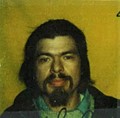
On Aug. 31, 2012, Jaime Javier Gallegos was a 31-year-old man whose last known circumstances were connected to Kodiak, Alaska, and the commercial fishing vessel Advantage. NamUs identifies him under missing-person case MP54034 and lists Kodiak as the place from which he went missing, while other case listings describe him as a White/Caucasian male, approximately 5 feet 9 inches tall and 230 pounds, with black hair and brown eyes. His disappearance was not the result of an ordinary break in contact. Jaime was one of four people aboard the Advantage when the vessel suffered a sudden and catastrophic accident in the waters off Kodiak Island. The National Transportation Safety Board placed the sinking roughly 14 nautical miles from Cape Barnabas in the Gulf of Alaska during the early morning hours of Aug. 31. The Advantage had been traveling from Kodiak Harbor toward fishing grounds along the southern coast of Kodiak Island, carrying empty cod pots in preparation for the approaching cod season. What began as a routine working voyage would, within a matter of minutes, become a desperate fight for survival in cold Alaskan waters and the beginning of Jaime's missing-person case.
The Advantage had been actively preparing for the fishing season in the days before the accident. According to the NTSB investigation, the vessel had been in Cordova about nine days earlier, where the crew transferred fuel between tanks and loaded fresh water before traveling to Kodiak to take on cod gear. The crew subsequently made two trips from Kodiak to fishing grounds near Black Point at the southern end of Sitkalidak Island, setting 33 cod pots on each trip, and then returned to Kodiak to prepare for another run. Before its final departure, the Advantage took on lubricating oil, diesel fuel and a third load of 33 cod pots. Two deckhands secured the pots on deck while another deckhand handled supplies and groceries. The boat departed Kodiak Harbor at about 4 p.m. on Aug. 30 for a journey of roughly 100 nautical miles that was expected to take eight or nine hours. Conditions were not described as extreme: there was light rain, intermittent breaks in the clouds, light southwest winds and seas of approximately three to four feet. Both a deckhand and the vessel's owner later characterized the departure as normal, and the boat appeared to be riding normally under its load. After dinner that evening, the captain assumed the wheel watch. One crewman awakened for a time after feeling low swells and went onto the deck to make certain nothing was shifting; after several minutes of checking, he found nothing that appeared suspicious and returned to his bunk. There was little warning of what was about to happen.
Later that night, another deckhand was abruptly awakened when the Advantage took a sharp heel to port. As he moved through the vessel, he saw water already entering and alerted the other crew members to get their survival suits. The flooding and the vessel's movement developed so rapidly that the men in the darkened living spaces did not have enough time to locate and put those suits on. As the Advantage continued rolling to port, one deckhand managed to swim out through the galley, while another, temporarily caught in an air pocket, had to dive underwater to reach an exit and swim to the surface. The two surviving deckhands later told investigators that they did not see the third deckhand during their escape. The captain was able to emerge from a pilothouse window as the boat rolled beyond 90 degrees. The men who reached the outside clung to the overturned vessel, and one recovered the emergency position-indicating radio beacon, or EPIRB, which was floating nearby. As the Advantage rolled completely over, the captain and two deckhands made their way onto the keel to reduce their exposure to the frigid water. The vessel sank approximately 15 minutes later. A Zodiac inflatable dinghy surfaced nearby, allowing the three men to climb aboard, and they used a floating five-gallon bucket to bail water from it. The water-activated EPIRB transmitted an emergency signal, prompting the Coast Guard to contact the vessel's owner and dispatch an MH-60 Jayhawk helicopter. The three men in the dinghy were hoisted aboard the helicopter, but Jaime was not among them. Contemporary maritime records identify Jaime as the crewman lost from the Advantage, while captain Leif Bolan, who had been rescued, later died after the ordeal. The Coast Guard returned to the scene with another helicopter crew and continued searching for the missing deckhand before the search-and-rescue operation was suspended later on Aug. 31.
The loss of the Advantage prompted a detailed federal investigation into how a vessel that had appeared to be operating normally could capsize so quickly. Investigators noted that the boat had undergone a voluntary Coast Guard commercial fishing vessel safety examination shortly before the voyage. Several minor deficiencies had been noted, but none prevented the vessel from sailing, and those safety examinations concentrated primarily on lifesaving equipment rather than the kind of hull and machinery inspection required for Coast Guard-inspected vessels. Investigators also examined whether the load might have affected stability. Although the Advantage's stability booklet had last been updated in 1988 and had not been revised to reflect later changes to the vessel, it indicated that the boat could safely carry 24 crab pots. The 33 cod pots aboard on the accident voyage weighed approximately 16,500 pounds in total, close to the estimated 16,800-pound weight of 24 crab pots, suggesting that the captain and owner had attempted to remain within the old stability guidance. Investigators considered possible sources of water intrusion, including hatch covers, but the owner reported that hatches and tanks had been checked in Kodiak and appeared normal, and some hatch components had recently been replaced. Ultimately, the NTSB determined that the probable cause of the sinking was a severe heel to port followed by immediate downflooding into the vessel, producing the rapid capsize, but investigators could not determine what caused the Advantage to lose stability in the first place.
In the aftermath, Jaime's disappearance was felt far beyond the technical findings contained in the accident investigation. A memorial gathering in Kodiak brought mourners together to remember the 31-year-old fisherman after he disappeared at sea; an account of the service described people preparing to release balloons when the weather briefly cleared and a rainbow appeared over the gathering. It was a deeply human moment following a disaster otherwise described through coordinates, vessel loads, weather observations and investigative findings. In overview, Jaime Gallegos's case began with an apparently routine fishing voyage from Kodiak and changed without warning when the Advantage suddenly heeled, flooded and capsized in the Gulf of Alaska. The crew had only moments to react, three men reached the overturned vessel and an inflatable dinghy, an emergency beacon brought Coast Guard rescuers to the scene, and Jaime was the crew member who did not emerge with them. The later investigation reconstructed much of what happened to the vessel but could not explain the underlying loss of stability that triggered the disaster. The central facts therefore form a heartbreaking but clearly documented sequence: Jaime, a 31-year-old man working at sea near Kodiak on Aug. 31, 2012, disappeared during the rapid sinking of the Advantage, and despite an immediate Coast Guard response and subsequent search, he was not located during the rescue effort.
Last Seen: Aug 31, 2012