

True Crime Community: Your Ethical Cold-Case Playbook

A true crime community is a coordinated group of volunteers, family advocates, and researchers who gather, verify, and route case information to investigators while following strict ethical rules. The single best first action you can take is to submit what you know through an official tip channel, not a public forum.
Before anything else, know the four platforms that matter most:
- Crimesolverscentral — a national cold-case database with one of the largest publicly accessible cold-case databases with hundreds of thousands of cases cataloged by state and situation, with volunteer onboarding resources built around investigator needs
- NamUS (National Missing and Unidentified Persons System) — the federal database for matching missing and unidentified persons
- Crime Stoppers — anonymous, locally operated tip programs active across U.S. jurisdictions, often with reward structures
- National Institute of Justice (NIJ) — the federal research arm that sets best practices for cold-case review and community involvement
These are your starting points. Everything else in this guide builds on them.
Table of Contents
- Who actually joins true crime communities, and what can they realistically do?
- A “do no harm” checklist every community member must follow
- Practical, lawful actions that reliably help investigations
- Trusted U.S. tools and organizations to join or use
- How to coordinate with investigators and the legal limits to respect
- How to start or moderate a reputable true crime community
- How community contributions have actually helped cold cases
- Key Takeaways
- Why moderation and a liaison role are the difference between help and harm
- Crimesolverscentral connects you to cold cases that need attention now
- Useful sources and next-step reading
- FAQ
Who actually joins true crime communities, and what can they realistically do?
The people who contribute most aren’t armchair detectives. They’re genealogists who can trace a John Doe through DNA databases, data analysts who spot timeline gaps, archivists who digitize decades-old newspaper microfilm, and family advocates who keep a case visible when agencies have moved on.
NIJ research makes a direct case for this: bringing non-law-enforcement specialists into cold-case reviews reduces cognitive bias and surfaces investigative paths that trained investigators sometimes miss. That’s not a knock on detectives. It’s a structural argument for diverse skill sets.
Realistic goals include generating fresh tips, organizing case timelines, digitizing physical archives, advocating for NamUS database entries, and running public awareness campaigns. What’s not realistic: conducting an independent criminal investigation, confronting witnesses, or expecting a case to break in weeks. Breakthroughs often arrive years later, frequently tied to forensic advances like genetic genealogy. Understanding that timeline before you start is what separates sustainable contributors from burned-out ones.
A “do no harm” checklist every community member must follow
The foundational ethic is simple to state and hard to practice: protect victim dignity, respect family wishes, and never compromise an active investigation. Here’s what that looks like in practice.
Do:
- Route all tips through official channels (tip lines, assigned detectives, Crime Stoppers)
- Verify information before sharing it anywhere
- Respect family privacy and follow their lead on public engagement
- Document your sources and search methods so investigators can reproduce them
Don’t:
- Doxx anyone, including unproven suspects
- Contact witnesses or family members without investigator approval
- Share unverified forensic claims or leaked records
- Amplify speculation just because it’s trending
Red flags to moderate for: repeat speculation about named individuals, coordinated harassment campaigns, sharing of sealed records, and posts that retraumatize families by replaying crime details without purpose.
Moderators should archive flagged content rather than delete it outright (it may matter later), escalate serious violations to the platform and, when appropriate, to law enforcement. A written code of conduct isn’t optional for a serious community.
Pro Tip: Require every new member to read and sign your code of conduct before they can post. Onboarding acknowledgment is the single fastest way to reduce moderation load.
For moderators navigating how to communicate sensitively with grieving families, grief and bereavement resources offer practical guidance on language and boundaries.
Practical, lawful actions that reliably help investigations
The most useful contributions share three traits: they’re verifiable, documented, and routed through official channels. Anything that doesn’t meet all three is more likely to create noise than leads.
Highest-impact tasks:
- Timeline reconstruction — compile a chronological record from public sources (news archives, court dockets, social media) and flag gaps
- Unique identifier searches — focusing on tattoos, scars, and distinctive physical features produces more usable leads than speculative matching
- Database submissions — check whether a case has a NamUS entry and advocate for one if it doesn’t; this expands the pool of medical examiners, genealogists, and agencies who can work the case
- Archival research — pull primary-source records (newspaper morgues, court filings, vital records) and digitize non-digitized materials when agencies or libraries allow it
- FOIA requests — federal and state open-records laws give citizens access to many investigative records; keep requests narrow and avoid anything that could interfere with an active case
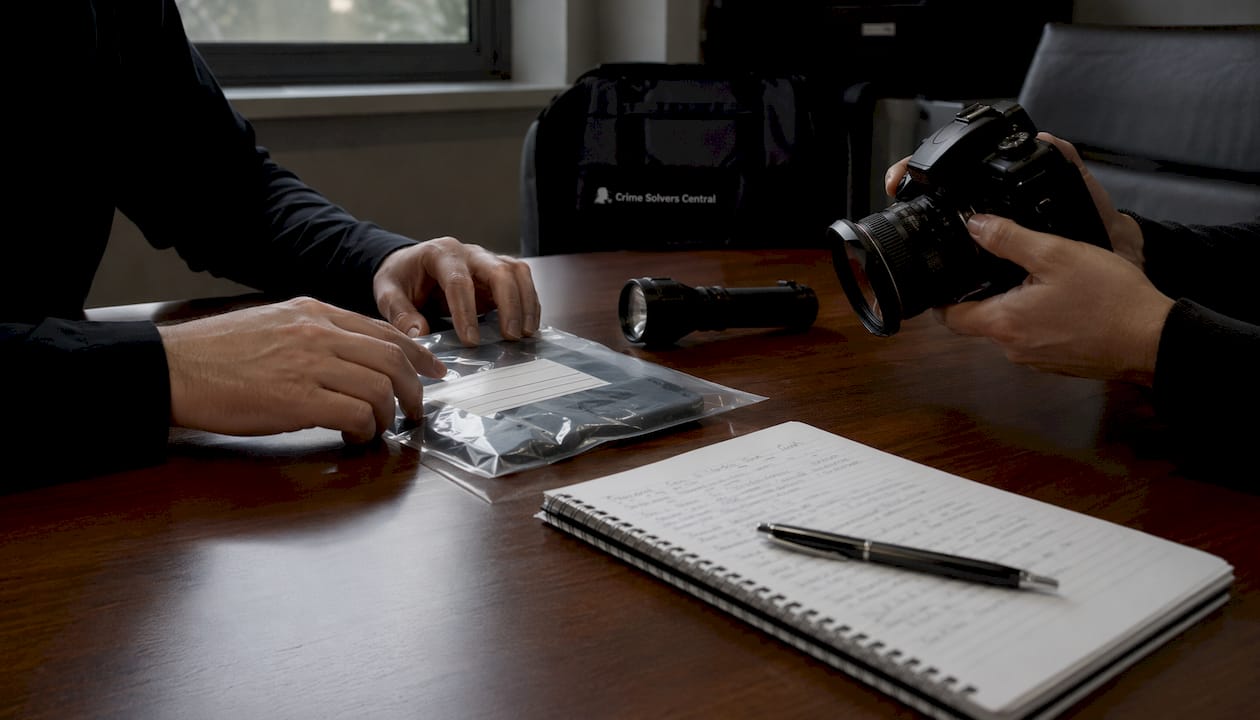
When you find something, don’t handle physical evidence. Document where it is, photograph it if safe, and call investigators immediately. The same principle applies to digital finds: screenshot, note the URL and timestamp, and submit through the official tip line.
Pro Tip: Keep a research log with dates, exact search terms, and source URLs. Investigators need to reproduce your findings independently. A log that lets them do that in under ten minutes is worth ten times more than a vague summary.
Trusted U.S. tools and organizations to join or use
Each platform serves a different function. Using the right one at the right moment is what makes a contribution count.
- Crimesolverscentral — national cold-case database organized by state; best for discovering cases, coordinating research efforts, and accessing volunteer onboarding resources
- NamUS — use this when working a missing or unidentified person case; it connects law enforcement, medical examiners, and the public in one searchable system
- Crime Stoppers — the right channel when you have a tip but need anonymity; local programs often carry reward structures that incentivize community reporting
- NIJ — not a tip line, but the research authority on cold-case methodology; their published guidance shapes best practices for community involvement
- FOIA and state open-records portals — request federal records through FOIA.gov; most states have equivalent portals for local agency records
- Archival newspaper databases — Newspapers.com, ProQuest Historical Newspapers, and local library systems often hold coverage that never made it online
- Court docket search tools — PACER for federal cases; state court websites for local criminal and civil records
Crimesolverscentral’s database of one of the largest publicly accessible cold-case databases with hundreds of thousands of cases is one of the largest publicly accessible cold-case catalogs in the country, which means a volunteer can locate a specific case, review its status, and identify the correct reporting pathway without starting from scratch.
How to coordinate with investigators and the legal limits to respect
Always route new information through official tip lines or the assigned detective. Running a parallel investigation, even a well-intentioned one, can contaminate evidence, alert suspects, and give defense attorneys grounds to challenge findings.
Chain of custody starts the moment you find something. Never move or touch physical evidence. Document its location precisely (address, GPS coordinates if possible), photograph it without disturbing it, and notify investigators. For digital evidence, the same logic applies: preserve the original, note where and when you found it, and submit through official channels.
When submitting a tip, investigators prefer a concise written summary that includes what you found, where and when you found it, why it matters, any supporting links or screenshots, and your contact information. That format makes it actionable without requiring investigators to reconstruct your research process.
Legal limits worth knowing: entering private property without permission is trespassing, contacting witnesses repeatedly can constitute harassment, and accessing sealed court records is a criminal offense in most jurisdictions. When you’re unsure whether an action crosses a line, call the agency’s records unit or consult an attorney before proceeding. Cold-case units, prosecutor’s offices, victim services, and Crime Stoppers all offer escalation paths depending on what you’ve found and how sensitive it is.
How to start or moderate a reputable true crime community
Reputable communities are rule-driven, documented, and maintain direct lines to law enforcement and victim advocates. The structure isn’t bureaucracy for its own sake. It’s what keeps the community from doing harm.
Moderation checklist:
- Membership vetting (even a brief application filters out bad actors)
- Mandatory code-of-conduct signoff at onboarding
- Clear evidence-handling policy (document, don’t touch; report, don’t post)
- Privacy protections for case subjects and their families
- A defined escalation flow: moderator → platform admin → law enforcement when necessary
Operationally, assign specific volunteer roles: researchers, transcriptionists, outreach coordinators, and a dedicated liaison to law enforcement. The liaison role is the most important one. A single point of contact with the local cold-case unit builds trust over time and speeds investigator uptake of community-generated leads.
Hold regular training sessions covering FOIA basics, digital hygiene, and privacy law. Keep audit logs of moderation actions. Track simple health metrics: how often tips lead to investigator follow-up, how frequently moderation interventions are needed, and whether member retention is stable. Those numbers tell you whether the community is functioning or drifting.
For communities working cases involving recent losses, grief sensitivity training helps moderators communicate with families without causing additional harm.
How community contributions have actually helped cold cases
Community help has produced leads mainly by surfacing overlooked records, matching identifiers, or generating tips through renewed publicity. The mechanism matters less than the deliverable: a concise, verified dossier that an investigator can act on.
Three patterns show up repeatedly in documented cases. A volunteer reconstructing a timeline from archived news coverage identified a witness whose name appeared in a single 1987 article and had never been formally interviewed. The deliverable was a two-page summary with source links, submitted through the tip line. In another case, a researcher cross-referencing a distinctive tattoo description against NamUS entries produced a potential match that led to a DNA comparison. The contribution was a single documented search with screenshots. A third example: a FOIA request for court filings in a related civil case surfaced a deposition that contradicted a key witness’s original statement, prompting a prosecutor’s office to reopen inquiries.
What these contributions share is discipline. No public accusations, no leaked details, no contact with witnesses. Just documented research handed to the right people through the right channel.
Key Takeaways
Ethical, documented, and officially routed contributions are what separate helpful true crime community members from those who derail investigations or retraumatize families.
| Point | Details |
|---|---|
| Ethics before everything | Follow the “do no harm” principle: no doxxing, no public accusations, no contact with witnesses without investigator approval. |
| Route tips officially | Submit findings through tip lines, NamUS, Crime Stoppers, or the assigned detective — never through public posts. |
| Document your research | Include what, where, when, and why in every submission; keep a reproducible research log. |
| Use the right databases | NamUS for missing/unidentified matches; Crime Stoppers for anonymous tips; Crimesolverscentral for national case discovery. |
| Crimesolverscentral | Hosts one of the largest publicly accessible cold-case databases with hundreds of thousands of cases organized by state, with volunteer onboarding resources and official reporting pathways. |
Why moderation and a liaison role are the difference between help and harm
The hardest part of running a true crime community isn’t finding motivated volunteers. It’s keeping them from doing damage when a case goes viral.
A family contacts the community asking for help pressuring a detective they believe is dragging their feet. A post naming an unproven suspect gets shared 4,000 times in a weekend. A member claims to have found physical evidence and wants to post photos publicly. Each of these is a real scenario, and each one requires a moderator who knows exactly what the rules say and why they exist.
The liaison role solves the escalation problem. When a community has an established contact at the local cold-case unit, tips move faster, investigators trust the source, and the community doesn’t have to guess whether a finding is worth reporting. That relationship takes months to build and is worth protecting.
Burnout is the other threat. Volunteers who work emotionally heavy cases without structure or support don’t last. Rotate assignments, set clear scope limits for each role, and treat member education as ongoing rather than a one-time onboarding event. A community that retains experienced members compounds its value over time.
Crimesolverscentral connects you to cold cases that need attention now
Most volunteers who want to help cold cases spend weeks just trying to find the right case and the right reporting channel. Crimesolverscentral cuts that search down to minutes.
The platform’s national cold-case database covers over 264,913 missing persons and unsolved homicides, organized by state, so you can locate cases in your area and identify the correct law enforcement contact immediately. Volunteer onboarding resources walk you through documentation standards and tip submission so your first contribution meets investigator expectations. The platform’s role is facilitation, not investigation. Investigative authority stays with law enforcement.
Visit the cold case database by state to find a case, locate the right reporting pathway, and access onboarding materials.
Useful sources and next-step reading
- NamUS.gov — search missing and unidentified person records; submit or update case entries
- Crime Stoppers USA — find your local program at crimestoppers.org for anonymous tip submission
- Crimesolverscentral.com — national cold-case database with volunteer resources and state-by-state case access
- NIJ cold-case guidance — research on expanding cold-case teams and best practices for community involvement
- FOIA.gov — submit federal open-records requests; state equivalents vary by jurisdiction
- Amplify overlooked cold cases — practical guide to raising awareness for neglected cases responsibly
- Memory Keep grief resources — bereavement and communication guidance for moderators working with families
- LegalClarity.org cold-case guide — tip submission format and legal boundaries for citizen researchers
FAQ
What is a true crime community?
A true crime community is a group of volunteers, family advocates, and researchers who gather and route verified case information to investigators while following strict ethical rules. Membership ranges from genealogists and data analysts to archivists and public awareness coordinators.
How do I join a true crime community safely?
Start with an established, vetted platform like Crimesolverscentral, which provides onboarding resources and official reporting pathways. Avoid communities that lack a written code of conduct or that encourage public speculation about named suspects.
What is the most useful thing a community member can do?
Submit a concise, documented tip through an official channel — a tip line, NamUS, Crime Stoppers, or the assigned detective. Include what you found, where and when, why it matters, and your contact details.
Are there legal risks to participating in cold-case research?
Yes. Entering private property, repeatedly contacting witnesses, and accessing sealed records can result in criminal or civil liability. When uncertain about an action’s legality, consult an attorney or the relevant agency’s records unit before proceeding.
How long does it take for community contributions to affect a case?
Realistically, months to years. Breakthroughs often depend on forensic advances like genetic genealogy or the emergence of new witnesses. Sustainable, documented contributions build a record that investigators can act on when circumstances change.