

Missing and Murdered People: A Family Action Guide

If someone you love is missing right now, call 911 immediately if there is any sign of danger or foul play. For Indigenous missing persons, also contact the BIA Missing and Murdered Unit (MMU) toll-free tip line at 833-560-2065, email [email protected], or text BIAMMU to 847411. File a missing-person report with local or Tribal law enforcement the same day. There is no mandatory waiting period.
Immediate contacts to save right now:
- 911 — active danger, evidence of crime, or person under 21
- BIA MMU tip line — 833-560-2065 (toll-free) or text BIAMMU to 847411
- NamUs — 1-833-560-2065 or namus.nij.ojp.gov to register a case and request free forensic services
- FBI tips — tips.fbi.gov for federal-level reporting
- DOJ family resources — justice.gov/tribal/mmip/resources/families-victims-survivors
First steps in the first hour:
- Call 911 or Tribal law enforcement. Do not wait.
- Write down the last known location, time, clothing, and anyone the person was with.
- Photograph or screenshot all recent social media, texts, and emails before accounts go dark.
- Ask for a case number and the assigned investigator’s direct contact information.
Call 911 when: there is evidence of violence, the person is a child or teenager, or they have a medical condition requiring medication. Contact a tip line or Tribal office when: the person is an adult who may have left voluntarily, or when you need to escalate a case that has stalled.
Key Takeaways
Families who act within the first 24 hours, document everything, and engage both official agencies and community resources give investigators the best possible foundation for resolution.
| Point | Details |
|---|---|
| Call immediately, no waiting period | Contact 911 or Tribal law enforcement right away; request NCIC entry within two hours of filing. |
| BIA MMU is the direct MMIP contact | Reach the Missing and Murdered Unit at 833-560-2065 or text BIAMMU to 847411 for AI/AN cases. |
| NamUs provides free forensic services | Families can register cases and request DNA kits at no cost through NamUs to match missing persons to unidentified remains. |
| Federal law now requires coordination | Savanna’s Act and the Not Invisible Act mandate data standards and interagency coordination to reduce jurisdictional delays. |
| Crimesolverscentral supports family advocacy | The platform’s 264,913-case database, flyer builder, and community tools help families organize and sustain long-term case advocacy. |
Table of Contents
- Why murdered and missing Indigenous people face a different crisis
- What to do in the first 24–72 hours when someone goes missing
- Which agencies investigate, and how jurisdiction is determined
- National databases and forensic services every family should know
- Where families can find emotional, legal, and community support
- How cold cases and long-term missing-person cases get solved today
- Federal laws and initiatives that shape the MMIP response
- A week-by-week playbook for keeping a case active over 90 days
- What persistence actually looks like in practice
- Crimesolverscentral gives families a searchable, organized starting point
- Sources
- FAQ
Why murdered and missing Indigenous people face a different crisis
The scale of missing-person cases in the United States is significant, but the burden falls unevenly. American Indian and Alaska Native (AI/AN) women and girls face disproportionately high rates of violence and disappearance compared to the general population, and their cases are historically underreported and undercounted. Homicide is among the leading causes of death for AI/AN women in certain age groups, yet national data systems have long failed to capture the full picture.
Part of the problem is structural. Tribal lands sit at the intersection of at least three legal jurisdictions: Tribal, state, and federal. A crime committed on a reservation may involve Tribal police, the Bureau of Indian Affairs, the FBI, and a county sheriff’s office, all with overlapping or contested authority. When no single agency takes clear ownership, cases stall. Families get passed between offices. Evidence degrades.
Pro Tip: Document every agency contact from day one: the officer’s name, badge number, agency, date, and what was said. This log becomes your paper trail if a case gets transferred or goes cold.
Savanna’s Act and the Not Invisible Act were passed specifically to address these gaps. Savanna’s Act directs federal agencies to develop and publish guidelines for responding to MMIP cases, standardize data collection, and improve coordination. The Not Invisible Act established a commission of Tribal leaders, law enforcement, and survivors to produce concrete recommendations for interagency cooperation. Together, they represent the federal government’s acknowledgment that the existing system was not working for Indigenous communities.
Understanding why Indigenous missing persons are so often overlooked is the first step toward changing the outcome.
What to do in the first 24–72 hours when someone goes missing
The early hours after a disappearance are the most critical window for preserving evidence and generating leads. Here is a prioritized sequence drawn from the Operation Lady Justice family guide and DOJ resources.
Numbered checklist: first 24 hours
- Call 911 or Tribal law enforcement immediately. Do not wait 24 or 48 hours. That waiting period is a myth. Law enforcement can and should take a report right away.
- File a formal missing-person report. Ask specifically that the case be entered into NCIC (the FBI’s National Crime Information Center) within two hours of the report.
- Request a case number and investigator contact. Write these down. You will need them for every follow-up call.
- Preserve the last-known location. Do not clean the person’s room, car, or workspace. Photograph everything first.
- Secure digital evidence. Screenshot recent texts, social media posts, location history, and app activity. Ask the provider to preserve data before it auto-deletes.
- Notify NamUs. Families can register a case directly at NamUs, which provides free forensic services and helps match missing persons to unidentified remains.
- Contact the DOJ family resource basket at justice.gov/tribal/mmip/resources/families-victims-survivors for step-by-step guides and victim-services referrals.
What to include in your case log
A written case log is one of the most practical tools a family can maintain. Keep a dedicated notebook or digital document with these fields:
- Full legal name, date of birth, physical description
- Last-seen date, time, and exact location
- Clothing and personal items last seen with
- Vehicle description and license plate if applicable
- Known contacts, friends, and frequented locations
- Social media usernames and phone numbers
- Medical conditions, prescriptions, and treating physicians
- Recent behavioral changes or stressors
- Photos taken within the last 30 days
For a complete template, the missing person case file guide at Crimesolverscentral walks through every field with examples.
Pro Tip: Ask law enforcement whether they have submitted a preservation request to the missing person’s cell carrier and social media platforms. If not, ask them to do so immediately — digital data is often deleted within 90 days without a legal hold.
Which agencies investigate, and how jurisdiction is determined
Knowing who has authority over a case tells you who to pressure for updates and who can actually take action. The answer depends heavily on where the disappearance or crime occurred and who the victim is.
- Tribal law enforcement has primary jurisdiction for crimes occurring on Tribal land involving Tribal members. They are usually the first responders and the agency that files the initial report.
- Bureau of Indian Affairs (BIA) Office of Justice Services provides law enforcement support to Tribes that do not have their own police force and operates the Missing and Murdered Unit, which analyzes cold cases involving AI/AN individuals and accepts tips directly.
- Local and county police have jurisdiction when a disappearance or crime occurs off Tribal land, even if the victim is Indigenous. Many families find themselves working with multiple local agencies simultaneously.
- State bureaus of investigation can assist local agencies, particularly in rural areas with limited resources, and often maintain their own missing-person databases.
- FBI has federal jurisdiction over major crimes on Tribal land (under the Major Crimes Act), crimes crossing state lines, and cases involving federal law. The FBI also maintains NCIC and provides forensic support.
- Public Law 280 states (Alaska, California, Minnesota, Nebraska, Oregon, and Wisconsin) transferred some criminal jurisdiction from federal to state authority on certain Tribal lands, which changes who leads an investigation.
Multi-agency coordination is common in practice but rarely automatic. Families often need to prompt it. Ask each agency: “Have you contacted the BIA MMU? Has this case been entered into NCIC and NamUs? Is the FBI aware?” The DOJ MMIP page maintains current guidance on interagency coordination and Tribal Community Response Plans that can help clarify these roles.
The NIWRC Jurisdiction Assessment Toolkit is a practical resource that helps families and advocates determine which agencies hold charging authority in a specific case, particularly useful when jurisdictional lines are unclear.
National databases and forensic services every family should know
Four national systems form the backbone of missing-person and unidentified-remains investigations. Each serves a distinct function, and families can interact with some of them directly.
| Database / System | What It Stores | Who Can Submit | Why It Matters |
|---|---|---|---|
| NamUs | Missing persons, unidentified remains, unclaimed persons | Families, law enforcement, medical examiners | Free forensic services; cross-matches missing persons to unidentified remains |
| NCIC | Missing persons, wanted persons, stolen property | Law enforcement only | National law enforcement query system; 24/7 access across agencies |
| CODIS | DNA profiles from crime scenes, convicted offenders, unidentified remains | Forensic labs, law enforcement | Matches DNA from crime scenes to known profiles or unidentified remains |
| NCMEC | Missing and exploited children | Families, law enforcement, the public | CyberTipline, photo age-progression, and case coordination for minors |
NamUs is the system families can use most directly. It is free, federally funded, and provides services that smaller agencies often cannot afford on their own: forensic odontology, anthropology, fingerprint analysis, and DNA collection kits mailed to family members at no cost. If a loved one has been missing for more than 30 days and has not been entered into NamUs, contact the system directly or ask law enforcement to do it.
The unidentified-remains workflow matters too. When remains are found without identification, a medical examiner creates a NamUs entry. NamUs then runs cross-comparisons against missing-person entries. Families who have submitted DNA can receive a match notification even years later. This is why resolving unidentified persons cases is so critical to bringing closure.
- Confirm with law enforcement that NCIC entry has occurred within two hours of filing the report.
- Submit a NamUs case yourself if law enforcement has not done so within a week.
- Ask the medical examiner’s office whether unidentified remains in the region have been entered into NamUs and CODIS.
- For missing children, contact the National Center for Missing and Exploited Children (NCMEC) at 1-800-THE-LOST (1-800-843-5678).
Where families can find emotional, legal, and community support
A missing or murdered loved one creates immediate practical needs alongside grief. These resources address both.
- DOJ Victim Services — The DOJ family resource basket links to victim-witness assistance programs in every federal district, which can help with court accompaniment, safety planning, and referrals to counseling.
- National Indigenous Women’s Resource Center (NIWRC) — Provides advocacy, legal support, and community resources specifically for Indigenous families affected by violence. Their MMIW toolkit for families and communities helps navigate jurisdictional complexity and connects families to Tribal coalitions.
- Tribal victim services programs — Many Tribes operate their own victim services offices funded through DOJ grants. Contact your Tribal government directly to ask what is available.
- Crime Victims Compensation programs — Every state has a program that can cover funeral costs, counseling, and lost wages for families of crime victims. Eligibility and amounts vary by state; the DOJ Office for Victims of Crime maintains a directory.
- National Domestic Violence Hotline — 1-800-799-7233, available 24/7, which also connects callers to safety resources and local advocates when violence is a factor.
- Grief and bereavement support — For families navigating the long-term emotional weight of an unresolved case, grief resources online offer curated support options including counseling directories and community groups.
Community-organized search events and case-keeping volunteers can be enormously helpful, but they need coordination to avoid compromising an active investigation.
Pro Tip: Before organizing a public search, contact the lead investigator and ask for a briefing on areas that are off-limits. Uncoordinated searches can contaminate evidence. Ask the investigator to designate a search coordinator, or request that a law enforcement liaison attend.
How cold cases and long-term missing-person cases get solved today
Cases that go cold are not necessarily closed forever. Advances in forensic science and investigative methods have reopened cases that sat untouched for decades.
- Genetic genealogy — Investigators upload DNA from crime-scene evidence to genealogical databases, then build family trees to identify unknown individuals. This method has identified both perpetrators and unidentified victims in cases where conventional DNA matching failed.
- Improved forensic analysis — Techniques for extracting DNA from degraded samples, analyzing touch DNA, and recovering latent fingerprints from aged surfaces have improved substantially. Evidence collected years ago can now yield results that were not possible at the time.
- New witness testimony — Relationships change, people move, and witnesses who stayed silent for years sometimes come forward. Periodic public appeals, especially on anniversaries, generate new tips.
- Digital evidence re-examination — Old cell tower records, social media archives, and financial transactions can be re-analyzed with current tools. Families can ask investigators whether digital evidence has been re-examined.
- Cross-database matching — As more unidentified remains and missing-person profiles are entered into NamUs and CODIS, the probability of a match increases over time. Cases submitted years ago continue to be compared against new entries.
The FBI’s guidance on cold-case and no-body homicides identifies case file management and forensic genealogy as two of the most productive paths to resolution. Families can support this by maintaining their own organized case files and periodically asking investigators whether evidence has been submitted for re-testing.
The ethics of genetic genealogy deserve a direct note. Submitting your own DNA to a genealogical database to help identify a relative is legal and voluntary, but it also creates a genetic record that extends to other family members. Discuss this with family before submitting, and use platforms that have clear law-enforcement cooperation policies. For historical context on how forensic breakthroughs have changed investigations, the crime cases that changed how we solve murders resource at Crimesolverscentral is worth reading.
Federal laws and initiatives that shape the MMIP response
Three federal frameworks directly affect how missing and murdered Indigenous persons cases are handled today.
- Savanna’s Act (2020) — Directed the DOJ to develop and publish guidelines for responding to MMIP cases, including recommended data fields, database entry standards, and coordination steps between Tribal, state, and federal agencies. It also requires the DOJ to consult with Tribes in developing these guidelines and to report annually on MMIP statistics.
- Not Invisible Act (2020) — Established a joint commission between the DOI and DOJ, composed of Tribal leaders, law enforcement, survivors, and service providers. The commission produced recommendations for improving interagency coordination, increasing resources for Tribal law enforcement, and addressing gaps in data collection. The DOI priorities page tracks implementation of these recommendations.
- Tribal Community Response Plans (TCRPs) — The DOJ recommends that every Tribe develop a TCRP: a written, multidisciplinary plan that specifies who does what in the first hours after a disappearance. Templates and development guides are available through the DOJ’s MMIP page. A TCRP reduces the jurisdictional confusion that costs critical time in the early hours of a case.
Practical next steps for Tribes and families: contact your regional DOJ Tribal Affairs coordinator to request TCRP development assistance or training. Families can also ask their Tribal government whether a TCRP exists and whether it has been updated since Savanna’s Act guidelines were published.
A week-by-week playbook for keeping a case active over 90 days
Sustained family advocacy is one of the most consistent factors in keeping a case from going cold. Here is a structured workflow.
Weeks 1–2: establish the foundation
- File the missing-person report and confirm NCIC entry.
- Register the case with NamUs and request a DNA kit if applicable.
- Contact the BIA MMU tip line (833-560-2065) if the person is AI/AN.
- Build your case log using the fields listed earlier in this guide.
- Identify the lead investigator and schedule a weekly check-in call.
Weeks 3–4: expand outreach
- Contact the DOJ family resource basket for victim services and legal aid referrals.
- Reach out to Tribal coalitions or NIWRC if you need advocacy support.
- Prepare a one-page missing-person flyer with a recent photo, physical description, and tip-line number. Crimesolverscentral’s flyer builder can generate a shareable version quickly.
- Submit the case to NCMEC if the person is under 18.
Weeks 5–12: sustain momentum
- Send a written update request to the lead investigator every two weeks. Keep copies of all responses.
- Ask whether evidence has been submitted for forensic re-testing or entered into CODIS.
- Engage local media on the one-month anniversary with a prepared statement and photo.
- Coordinate any volunteer search or awareness events with law enforcement first.
- If the case has stalled, contact the FBI field office and ask whether federal jurisdiction applies.
Dos and don’ts when working with media and investigators:
- Do prepare a written statement before any media interview. Stick to facts.
- Do designate one family spokesperson to keep messaging consistent.
- Don’t share investigative details publicly that law enforcement has asked you to keep confidential.
- Don’t post unverified tips or suspect names on social media. It can compromise a prosecution.
- Do use public awareness campaigns to generate tips, not to conduct your own investigation.
For a deeper look at common errors that derail searches, the common mistakes in missing persons searches guide covers the most frequent missteps families make.
Pro Tip: Contact the prosecutor’s office early, before any arrest. Prosecutors can issue subpoenas for phone records, financial data, and digital accounts that law enforcement cannot access without a court order. Ask the lead investigator to facilitate an introduction.
What persistence actually looks like in practice
The hardest truth about missing and murdered persons cases is that the system was not built with families in mind. Jurisdictional gaps, underfunded Tribal law enforcement, and inconsistent database entry mean that families often become the most consistent advocates for their own loved ones. That is not how it should be. But it is the reality that the Not Invisible Act Commission documented and that Savanna’s Act was designed to begin correcting.
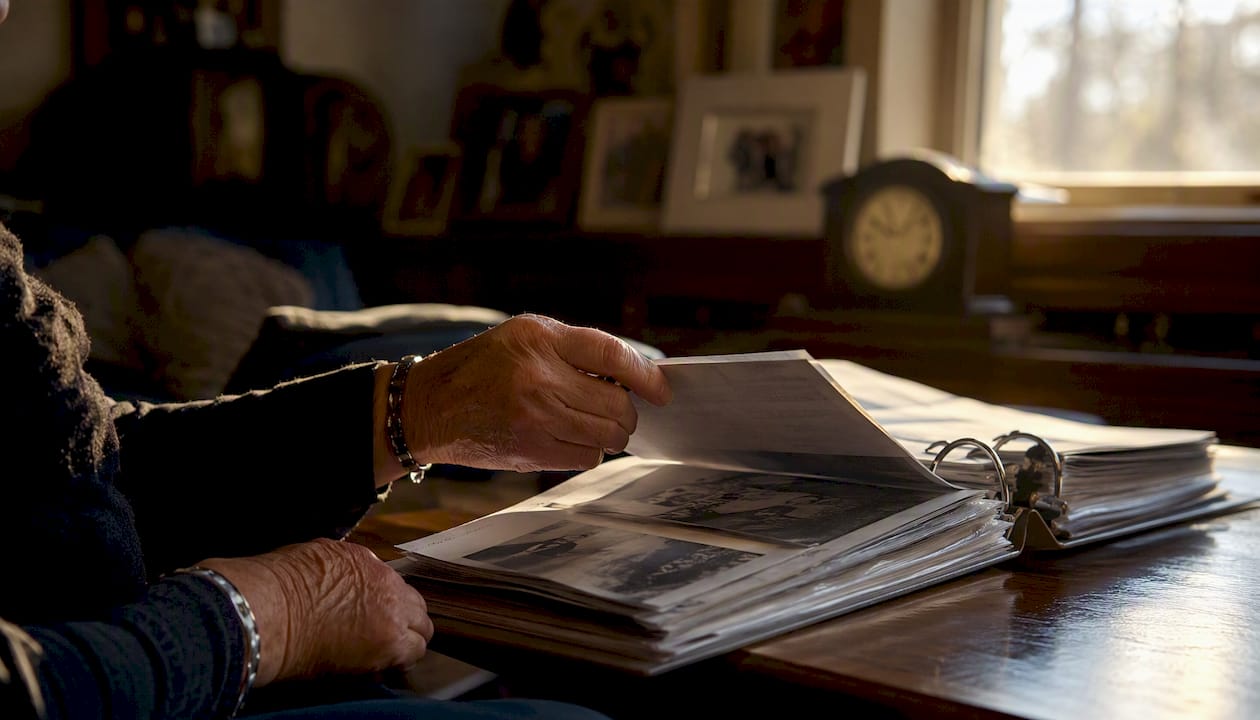
What actually moves cases forward is rarely a single dramatic breakthrough. It is the family that calls the investigator every two weeks, keeps a meticulous case log, submits DNA to NamUs, and shows up at the prosecutor’s office asking the right questions. It is the community that organizes a public awareness event on the anniversary and generates three new tips. It is the advocate who knows which federal agency has jurisdiction and calls them directly.
Cultural sensitivity is not a procedural checkbox. When working with Indigenous communities, the protocols around death, remains, and family notification are specific to each Nation. Investigators and advocates who take time to understand those protocols build the trust that makes families willing to share information. Crimesolverscentral works to reflect that respect in how cases are presented on the platform, and families are encouraged to flag any concerns about how their loved one’s case is described.
The platform’s database of over 264,913 cases is a resource, not a replacement for official channels. Use it alongside NamUs, the BIA MMU, and the DOJ family guides, not instead of them.
Crimesolverscentral gives families a searchable, organized starting point
Families navigating a missing or murdered loved one’s case face a specific problem: information is scattered across agencies, databases, and time. Crimesolverscentral addresses that directly. The platform’s national cold-case database holds over 264,913 cases organized by state and case type, so families can search for patterns, find similar cases, and understand what investigative paths have worked in comparable situations.
A paid membership unlocks full case profiles, source documents, video evidence boards, a flyer builder for public awareness campaigns, AI image tools, and access to a community forum where families and advocates share leads and strategies. The flyer builder alone saves hours when you need to get a missing-person notice out quickly. Volunteer coordination tools help families organize search events without stepping on active investigations.
Crimesolverscentral complements official reporting. It does not replace law enforcement, NamUs, or the BIA MMU. Think of it as the organizational layer that sits between your family’s case log and the public-facing awareness campaign. Start by searching the database for your loved one’s case or a similar one, then use the forum and resources to build your advocacy strategy. Membership details and case search are available at Crimesolverscentral.
Sources
Bookmark these official resources and tip lines. They are the fastest path to action.
- Missing and Murdered Indigenous People | Indian Affairs
- Home | NamUs
- SAVANNA’S ACT GUIDELINES FOR RESPONDING TO CASES OF MISSING OR MURDERED INDIGENOUS PERSONS
- Tribal Justice and Safety | Resource Basket for Families, Victims & Survivors
- Missing or Murdered Indigenous Persons | DOJ
- Missing and murdered indigenous peoples | DOI priorities
- When a Loved One Goes Missing | Operation Lady Justice (OJP)
- No-Body Homicide Cases: A Practical Approach
FAQ
What should you do first when a loved one goes missing?
Call 911 or Tribal law enforcement immediately and file a missing-person report the same day. Ask the officer to enter the case into NCIC within two hours and contact NamUs to register the case and request free forensic services.
What is the longest a missing person has been found alive?
Jaycee Dugard was held captive for many years before being found alive, making her case one of the longest-duration recoveries on record in the United States.
Who investigates missing Indigenous persons in the United States?
Jurisdiction depends on location: Tribal law enforcement handles cases on Tribal land, the BIA Missing and Murdered Unit assists with AI/AN cold cases nationwide, and the FBI has federal jurisdiction over major crimes on Tribal land. Families should contact all three simultaneously rather than waiting for one agency to refer them.
How can families access cold-case records and investigative resources?
NamUs is the primary free national system where families can search unidentified remains and register missing-person cases. Crimesolverscentral’s database of over 264,913 cases, organized by state and case type, gives families a searchable starting point for identifying patterns and building an advocacy strategy.
What federal laws protect missing and murdered Indigenous people?
Savanna’s Act and the Not Invisible Act, both signed in 2020, require federal agencies to improve data collection, publish coordination guidelines, and consult with Tribal nations on MMIP response standards. The DOJ and DOI both publish implementation updates and guidance documents tied to these laws.