

How to Get Involved in Solving Crimes: A Safe Guide
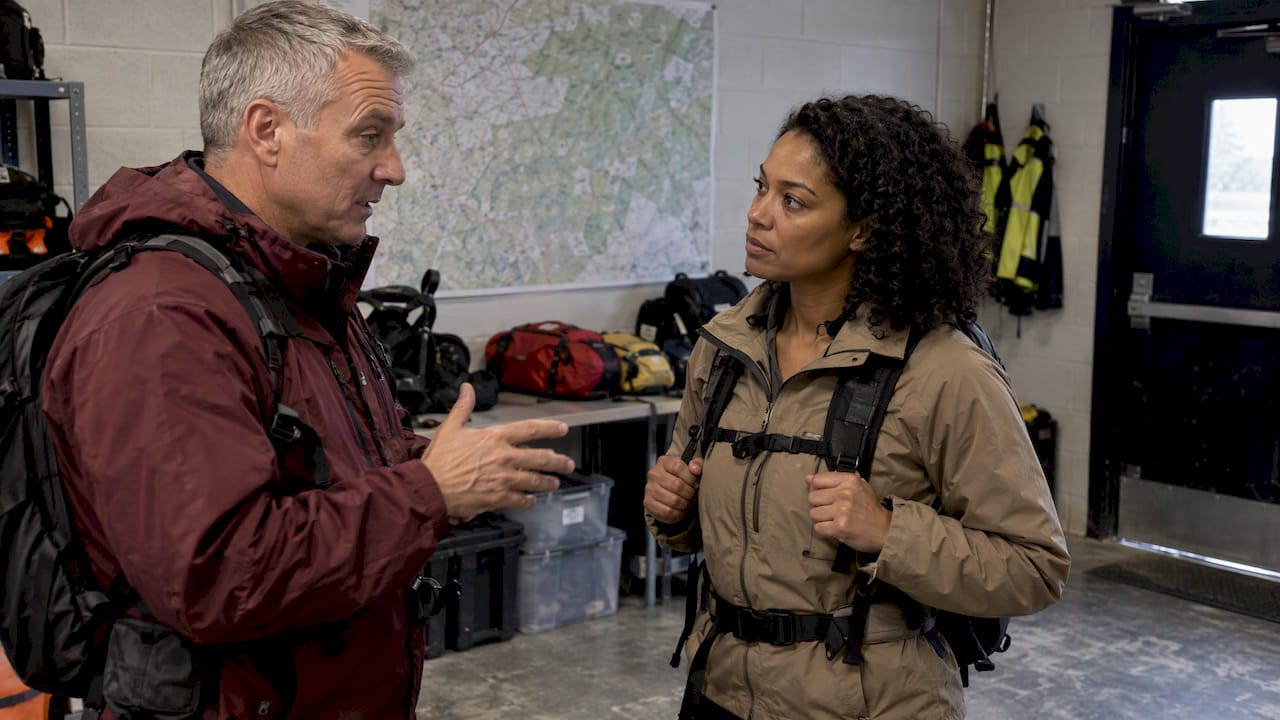
You can help solve crimes in four main ways: pass accurate information to the right agency, volunteer through a law-enforcement program, support families and cold cases from the outside, or train for a career as an investigator. The common thread is that detectives, not the public, run investigations. The most useful thing you can do is feed good information into their process and never work around it.
This guide walks through each path, what it asks of you, and how to start without putting yourself or a case at risk.
TL;DR
- If you know something about a crime or a missing person, call 911 for emergencies. Otherwise contact the local law-enforcement agency where it happened.
- Many police and sheriff’s offices run volunteer programs, including cold-case support, and they train and vet volunteers first.
- Online sleuthing helps when it means organizing, sharing and forwarding verified details. It hurts when it means confronting people or collecting evidence.
- A paid career in investigations usually starts with police work, or with a private-investigator license in most states.
- Crime Solvers Central gives you a searchable national case database and community tools to get started in a structured way.
Table of Contents
- What “getting involved” actually means
- Path 1: Report what you know
- Path 2: Volunteer with a law-enforcement agency
- Path 3: Help with missing-person cases
- Path 4: Help from your keyboard, ethically
- What we think
- Path 5: Make it a career
- A starting plan you can follow this week
- Start with a searchable case database
- FAQ
- Sources
What “getting involved” actually means
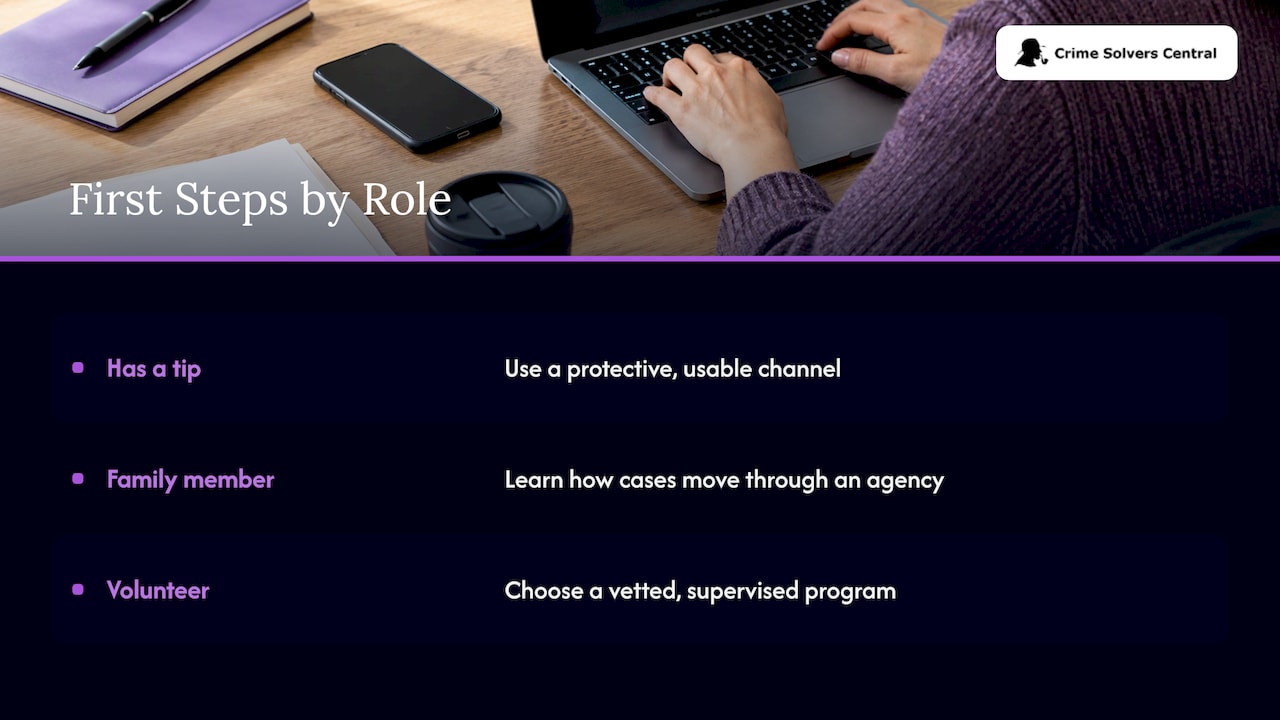
People who type this question into a search bar usually fall into one of four groups. Some have a piece of information and don’t know where to take it. Some are family members of someone missing or murdered. Some are curious volunteers who want a role. Others want a job.
Each group has a different best first step, and the differences matter. A family member may need to learn how cases move through an agency. A volunteer needs a program that vets and supervises. Someone with a tip needs a channel that protects them and keeps the information usable.
The U.S. Army’s law-enforcement investigations manual stresses impartiality, avoiding early suspect theories, protecting evidence and documenting chain of custody. Those are professional principles, and civilians who respect them contribute far more than those who ignore them. In practice that means forwarding leads rather than running your own confrontations or collecting physical evidence.
Path 1: Report what you know
This is the most direct way to help, and it needs no training.
Per USAGov’s guidance on reporting a crime, you call 911 for emergencies. To report a crime that isn’t an emergency, contact the local law-enforcement agency where it occurred. Most local agencies accept anonymous tips or reports online or by phone. For a missing child, the same page lists specialized reporting contacts.
Make the tip usable
A vague tip is hard to act on. A specific one can restart a case. Before you contact anyone, write down:
- What you saw or heard, and when you saw or heard it
- Where it happened, as precisely as you can
- Names, nicknames, vehicles, plate fragments or descriptions, only if you actually observed them
- How you know the information, whether firsthand or secondhand
- What you don’t know, so no one treats a guess as a fact
The Bureau of Indian Affairs advises tipsters to submit information only once, be as specific as possible, and keep the assigned number so they can check the tip’s status confidentially. That advice works well for any agency: one clear submission beats five fragments, and a reference number lets you follow up without re-explaining everything.
For cases in Indian Country, the BIA accepts missing or murdered tips by texting BIAMMU and your tip to 847411, calling 1-833-560-2065, or emailing [email protected]. The same page says the standard reward for information leading to an arrest, or helping close an unsolved missing or murdered case, may be up to $5,000, with jurisdiction and eligibility rules applying.
Our own guides go deeper on the practical side. See how to submit an anonymous tip safely, how to report information about a cold case, and the walkthrough on removing EXIF data from photos before you send them.
Path 2: Volunteer with a law-enforcement agency
If you want a standing role instead of a one-time tip, look at your local police or sheriff’s department. The Bureau of Justice Assistance’s volunteer resource guide lists administrative support, data entry, research, crime mapping, victim assistance, search and rescue, investigations support and cold-case-squad assistance among the activities volunteers take on.
The same guide names other ways the public supports policing: citizen patrols, Neighborhood Watch, citizen police academies, advisory boards, internships, Explorer posts and youth programs. If crime-solving isn’t open to volunteers where you live, these programs are often the door to it.
How to find a program
- Search your city or county agency’s website for “volunteer,” “citizen academy” or “community programs.”
- Call the non-emergency line and ask who coordinates volunteers.
- Ask specifically whether the investigations or cold-case unit uses volunteers.
- Expect an application, identity verification and a background check.
Outside the agency, nonprofits also run volunteer outreach programs built on the same principle: organized, trained people achieve more than scattered effort.
What cold-case volunteers really do
The National Institute of Justice published a field account of the Charlotte-Mecklenburg cold-case team, which brought in volunteers with banking, real-estate, academic and retired-investigator backgrounds. Reviewers worked through case files for months, and a detective decided when a case was pulled for review.
The time commitment was real. The same account describes reviews taking five to six months, producing summaries of 40 to 60 pages, with reviews requiring 50 to 200 hours and one reviewer needing a year. Its practitioner advice for outside volunteers is to sit back and observe before asking questions.
That is useful honesty for anyone picturing a dramatic breakthrough. Cold-case work is mostly careful reading, organizing and patience.
Path 3: Help with missing-person cases
Missing-person cases have the widest range of public roles. A Bureau of Justice Assistance guide on volunteers in missing-person cases lists canvassing, phone banks, command-center support, flyers, translation, family liaison work, physical searches, and collecting, logging and preserving evidence.
For longer-running and cold cases, it lists roles such as answering coroner or detective-unit phones, maintaining case files, collecting photographs and information, contacting hospitals and shelters, distributing flyers and updating families.
Why volunteers are vetted
The same guide says spontaneous volunteers must be supervised, documented, identity-verified, background-checked and trained. The federal AMBER Alert field guide adds that time pressure makes vetting hard in the moment, so it recommends pre-established volunteer teams.
The practical lesson: join a trained team before a crisis, not during one. If you live near a search-and-rescue group or a missing-persons volunteer organization, getting onboarded now makes you useful later.
Rules volunteers follow during an active search
Per that field guide, volunteers should be briefed and closely supervised. They are told not to speak to the media or touch possible evidence, to keep case activities confidential, and they are checked for stress and fatigue. Follow those rules even when you’re acting as an informal helper in a friend’s family search. They protect the case and you.
Helping a family without hurting the case
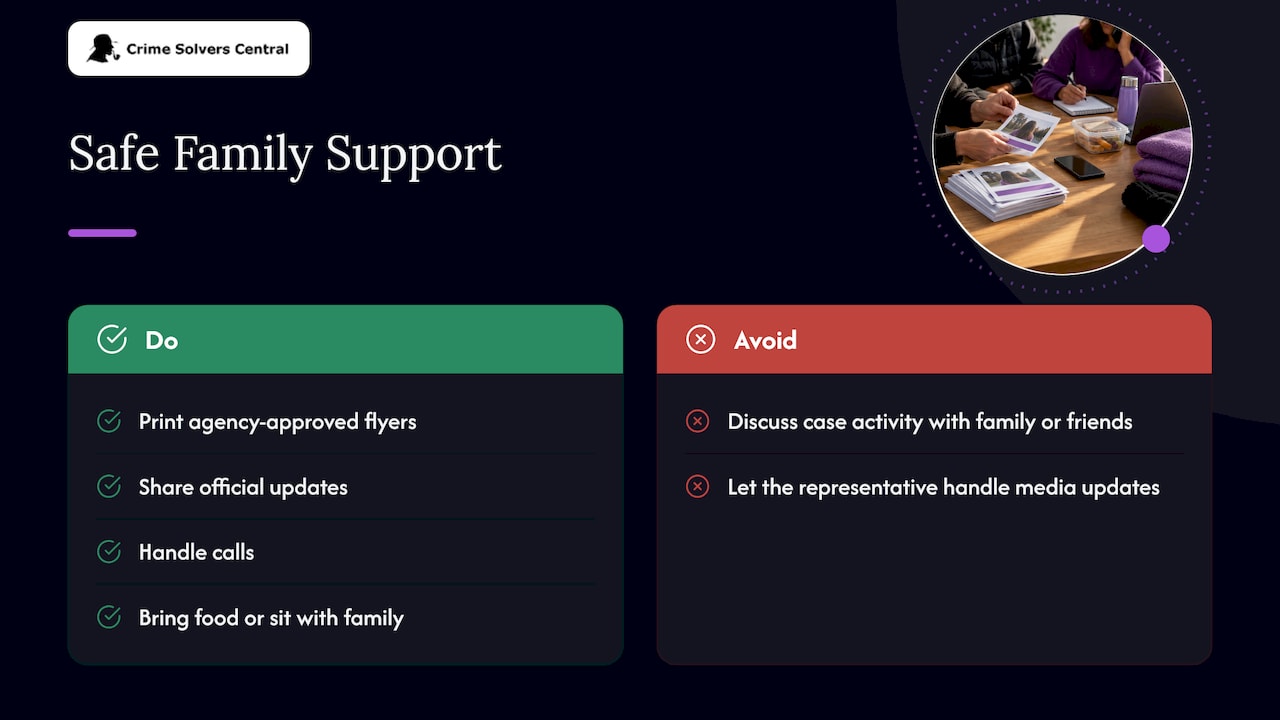
If you know a family searching for someone, the most helpful things are concrete and quiet: printing flyers the agency has approved, sharing official updates, handling phone calls, bringing food, or sitting with them. During an active incident, volunteers shouldn’t discuss case activities with family or friends, and media updates should come only from the designated representative.
Families also deserve clear information from officials. A 2025 best-practice recommendation from the forensic standards community says medicolegal authorities should give next of kin understandable information, family-liaison or social-work support, access to reports when legally allowed, and timely answers, while recognizing grief and cultural needs. If you advocate for a family, that is a fair standard to ask agencies to meet.
Path 4: Help from your keyboard, ethically
Most people who ask this question are really asking whether they can help from home. They can, within limits. The online work that actually helps is:
- Amplifying verified case information. Share official posters and details from agencies, not rumors.
- Organizing public records. Timelines, maps and lists of dates are useful when you hand them to investigators rather than act on them yourself.
- Raising visibility for overlooked victims. Many cases get little attention. Our guide to amplifying overlooked cold case victims covers how.
- Connecting with similar families. Our walkthrough on registering with NamUs first, then connecting with vetted families explains the order that keeps things safe.
We’ve also laid out four priority actions that help solve crime online ethically and a broader guide to where to search and how to help with unsolved crimes.
The line you shouldn’t cross
The Army manual’s principles translate directly: don’t build a theory around one suspect, don’t touch or collect evidence, and don’t confront anyone. Investigators are trained in processing scenes, identifying critical evidence, preserving it, forensic analysis requirements, interviewing and courtroom testimony. Those are trained functions, and an unsupervised public version of them can damage a case or put you in danger.
When you find something that seems important, document where you found it, then forward it to the agency with jurisdiction and keep your copy. Let them decide what it means.
What we think
We built Crime Solvers Central on a simple belief: most cold cases don’t stay cold because nobody cares. They stay cold because the people who care can’t find each other, or can’t find the case.
That’s why we organized a national database of more than 264,000 cases by state and by situation, covering missing persons, unsolved homicides and unidentified remains. When a case is easy to find, a neighbor, a relative or a student can recognize a detail that matters, and a family can see that someone is still looking.
We also think structure keeps people safe. Our members work with digital evidence boards, volunteer coordination, forums and a flyer builder, so energy goes into organized, shareable work instead of scattered speculation. Our A.I. image progression tools help people picture how a missing person might look today, so the flyers people share are more likely to be recognized.
Our guiding rule is the same one the best volunteer programs teach: gather, organize, and pass it to the people with the authority to act. We design our community features around that rule, and our members’ testimonials show how it can reunite families and move investigations forward.
Crime
Path 5: Make it a career
If you want to investigate for a living, the routes are well defined.
Police detective
The Bureau of Labor Statistics says police and detective applicants need at least a high-school diploma or equivalent, though some agencies require college coursework or a degree. Most recruits complete an agency academy and supervised on-the-job training. Detectives typically begin as police officers because they need law-enforcement experience.
FBI special-agent applicants, according to the same source, need at least two years of full-time work experience, or one year plus an advanced degree.
Private investigator
Private detectives and investigators typically need a high-school diploma or equivalent and several years of related work experience. Some employers prefer a bachelor’s degree, and most states require a license. Related experience can come from law enforcement, the military, federal intelligence, claims work, paralegal work or security, and on-the-job training can last several months or longer.
Licensing rules differ by state, so check with your state’s licensing authority before offering services.
Students and researchers
If you’re studying criminology or sociology, case databases, news archives and volunteer research roles give you real material to work with. Pairing coursework with a volunteer position in a cold-case unit can show employers you understand the process.
A starting plan you can follow this week
- Decide your goal. Are you reporting information, helping a family, volunteering or building a career?
- Contact the right agency. For a tip, use the local agency where the crime happened. For volunteering, ask your local department about its program.
- Write down what you know. Keep facts separate from guesses.
- Join a structured community. Learn how cases are organized before you try to contribute.
- Stay in your lane. Forward leads, never confront, and never handle evidence.
- Commit for the long haul. Cold-case work rewards steady effort over months, not days.
Start with a searchable case database
If you want a place to begin, Crime Solvers Central lets you browse cases by state and type, then unlock full case details, sources, videos, forums, digital evidence boards and volunteer coordination with a membership. Our flyer builder helps you create missing-person flyers.
Our membership plans are:
| Plan | Monthly | Yearly |
|---|---|---|
| Jr. Detective | $3.97 | $39 |
| Sr. Detective | $9.97 | $99 |
| True Crime Influencer | $39.97 | $399 |
Our guide to safely helping solve cold cases is a good companion read before you start, and our piece on collaborating with communities on unsolved crimes shows how groups work together.
FAQ
Can a regular person help solve a cold case?
Yes, in supporting roles. Many agencies use volunteers to review files, organize records and assist units, as the Charlotte-Mecklenburg experience shows. A detective still decides which cases get reviewed, so expect to work under supervision.
What should I do if I have information about a missing person?
Call 911 if it’s an emergency. Otherwise contact the local law-enforcement agency where the person disappeared, and give specific details, including how you know them. Keep any reference number so you can follow up.
Do I need to be a police officer to solve crimes?
Not to help, but detectives typically start as police officers. Private investigators generally need several years of related experience and, in most states, a license. Volunteering, tips and research don’t require either.
Is it safe to investigate on my own?
It’s safest not to. Confronting people or collecting evidence can put you at risk and damage a case. Document what you find and hand it to the agency with jurisdiction.
Sources
- Report a crime | USAGov
- Submit a Tip or Case Information | Indian Affairs
- Volunteer Programs resource guide | Bureau of Justice Assistance
- Missing Persons volunteer guide | Bureau of Justice Assistance
- Notes From the Field: Expanding the Cold Case Team Beyond Law Enforcement | National Institute of Justice
- AMBER Alert Field Guide for Law Enforcement Officers | OJJDP
- ANSI/ASB Best Practice Recommendation 209 | AAFS
- Law Enforcement Investigations, Volume I | U.S. Army
- Police and Detectives | Occupational Outlook Handbook
- Private Detectives and Investigators | Occupational Outlook Handbook