

Crowd-Sourced Investigation: A U.S. Cold-Case Guide

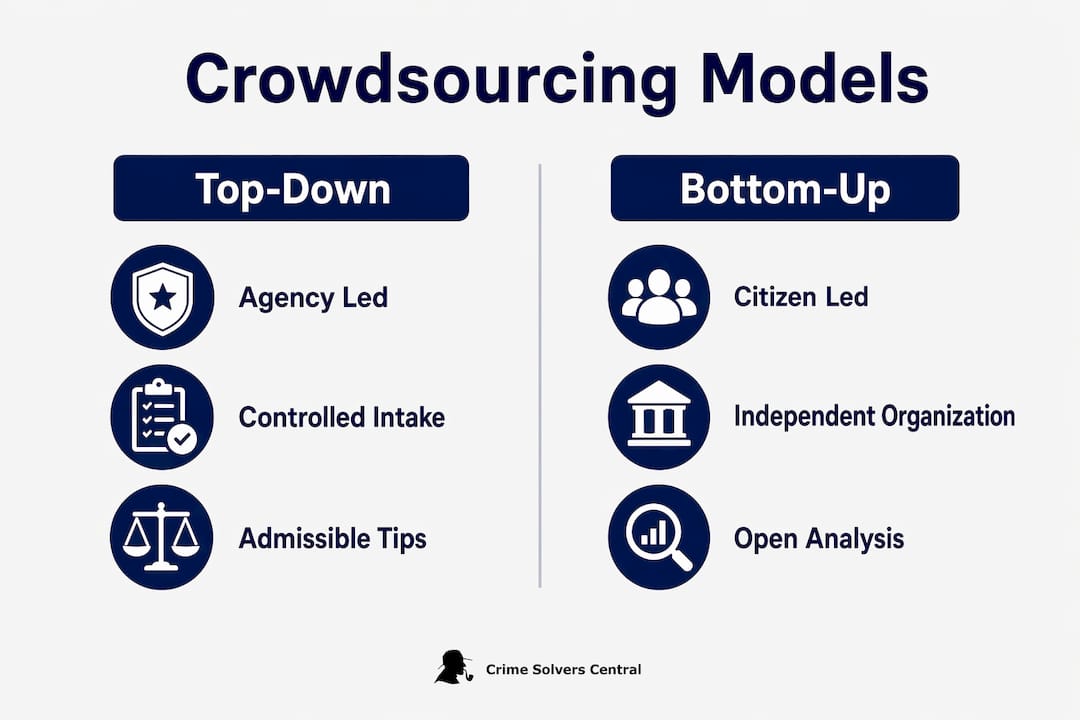
A crowdsourced investigation, more precisely called a crowdsourced investigation, is a community-driven inquiry where either law enforcement or citizens mobilize public knowledge to surface new leads in cold or violent cases. Think of it in two modes: top-down, where an agency issues a specific public ask and channels the responses, and bottom-up, where citizens organize independently using open-source materials. Done right, it can break a case that sat dormant for decades. Done carelessly, it destroys evidence, harms innocent people, and exposes organizers to civil liability.
- Crimesolverscentral maintains a national cold-case database of numerous cases, organized by state, giving community investigators a structured starting point.
- DOJ guidance and academic research consistently show that structured, expert-led efforts produce usable leads; unstructured bottom-up efforts carry serious legal and ethical risks.
Table of Contents
- What are the two models of a crowdsourced investigation?
- When does crowdsourcing actually help a cold case?
- What legal and ethical risks should every volunteer know?
- How should volunteers run a safe, lawful crowdsourced effort?
- How should agencies structure a public crowdsourcing request?
- Which tools and databases should U.S. investigators use?
- What does a responsible crowdsourced effort look like in practice?
- When should volunteers stop and hand the case to professionals?
- Key Takeaways
- Why responsible crowdsourcing is the only kind worth doing
- Crimesolverscentral gives your community a structured place to start
- Useful sources
- FAQ
What are the two models of a crowdsourced investigation?
Research distinguishes two operationally distinct models, and the choice between them shapes everything from evidence handling to legal exposure.
Top-down: Law enforcement identifies a specific gap, issues a public request for tips, photos, or video, and controls how submissions are received and triaged. Volunteers supply raw data; experts validate it. Chain of custody stays largely intact because the agency owns the intake process.
Bottom-up: Citizens organize independently, often through social media or forums, using publicly available documents, satellite imagery, or news archives. No official oversight. Evidence handling is inconsistent, and the line between analysis and interference blurs fast.
The operational implications are significant. Top-down efforts can produce admissible tips when intake is documented. Bottom-up efforts, by contrast, risk contaminating the evidentiary record before investigators even know a lead exists.
Pro Tip: If the case has an active law enforcement contact, default to top-down. If the case is genuinely cold with no assigned detective, a structured bottom-up effort with expert oversight is the safer path.
When does crowdsourcing actually help a cold case?
Crowdsourcing is a genuine force multiplier in specific, bounded situations. It struggles everywhere else.
Where it works:
- Analyzing time-stamped public media: surveillance footage, social posts, and dashcam clips that volunteers can cross-reference against known timelines.
- Locating witnesses who have moved or changed contact information since the original investigation.
- Generating tips for overlooked cold-case victims who received minimal media coverage at the time.
- Identifying unidentified remains through comparison with NamUs records and family DNA databases.
Where it fails or causes harm:
- Active investigations where public speculation can tip off a suspect or compromise surveillance.
- Cases involving living survivors or minors whose identities must stay protected.
- Situations with high vigilantism risk, where a named “person of interest” could face harassment before any evidence is confirmed.
A useful rule: if the original case file is publicly available and no active investigation is ongoing, crowdsourcing can help. If either of those conditions is uncertain, verify with the assigned agency before organizing anything.
What legal and ethical risks should every volunteer know?
The risks here are not hypothetical. After the Boston Marathon bombing, Reddit users misidentified innocent people as suspects, causing documented harm to those individuals and their families. That incident is the clearest U.S. example of how platform-enabled crowd analysis can go catastrophically wrong without expert oversight.
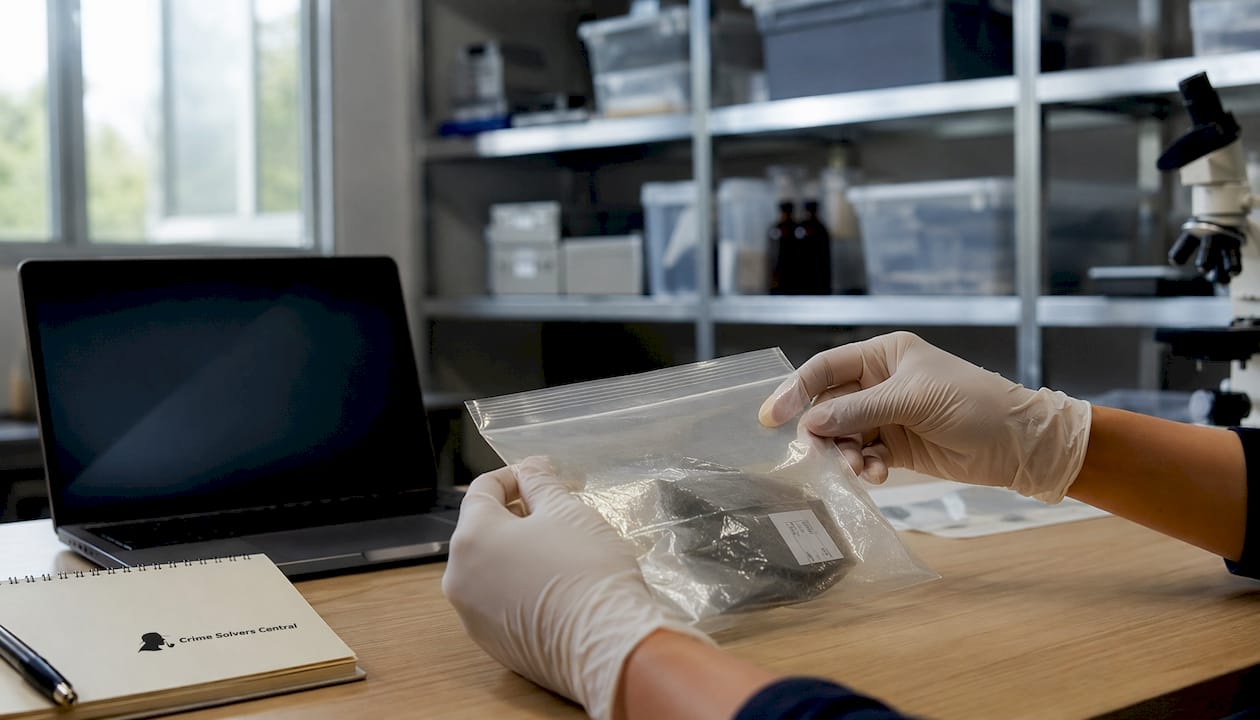
Chain of custody and admissibility. When a civilian downloads, screenshots, or re-uploads digital evidence, they alter metadata and break the chain of custody. Courts scrutinizing that evidence later may find it inadmissible. The private search doctrine and Fourth Amendment case law are poorly equipped to handle crowdsourcing, because the public/private actor line becomes nearly impossible to maintain once hundreds of volunteers are involved.
Privacy and statutory exposure. Posting unverified personally identifiable information about a living person can violate state privacy statutes and expose organizers to defamation suits. Victims’ families have separate privacy interests that volunteers often overlook.
Vigilantism and doxxing. Publishing a suspect’s name, address, or workplace before law enforcement has confirmed anything is not just ethically wrong. It can constitute harassment, tortious interference, or, in extreme cases, criminal obstruction.
Liability for organizers. The person who runs a crowdsourced effort can face civil suits from misidentified individuals and, in rare cases, criminal exposure if their actions are found to have obstructed an official investigation.
How should volunteers run a safe, lawful crowdsourced effort?
Follow this sequence before and during any community investigation.
Pre-launch:
- Confirm the case status with the assigned agency or county sheriff. Ask directly whether an active investigation is ongoing.
- Determine which model fits: top-down (agency-coordinated) or bottom-up with expert oversight.
- Identify a point of contact inside law enforcement for tip submission.
Data hygiene: 4. Never post unverified PII about any living person in any public channel. 5. Preserve original file timestamps and metadata. Do not re-save, compress, or re-upload media files before submitting them. 6. Use encrypted, documented channels for tip intake, not public social media threads.
Evidence handling: 7. Do not collect, move, or photograph physical evidence. If a volunteer stumbles onto physical evidence, stop, leave the area, and call 911.
Submission protocol: 8. Use a standardized tip form that captures: submitter contact, date/time of observation, original file attachment, and a brief description. 9. Log every submission with a timestamped receipt. 10. Hand off to law enforcement with a signed chain-of-custody note.
Hard don’ts: 11. Never name a living suspect publicly. 12. Never confront a person of interest directly. 13. Never share unverified information with media before law enforcement review.
Pro Tip: A volunteer intake form needs five fields: name, contact, date/time of observation, description, and original file upload. Set a retention policy of 90 days for downloaded media, then delete unless law enforcement requests an extension in writing.
How should agencies structure a public crowdsourcing request?
Agencies that want community help without creating evidentiary chaos need a clear framework from the start.
Sample public ask template: “We are seeking any photos, videos, or firsthand observations from [specific location] between [time window] on [date]. Submit materials through [secure portal URL] only. Do not post materials publicly. Do not contact persons of interest directly. All submissions will be reviewed by investigators.”
Core principles for agency-facing requests:
- Define scope tightly. A vague “any information” ask floods intake with noise. Specify the time window, geography, and media type.
- Segregate evidence. Keep crowdsourced tips in a separate intake system from official investigative files until they are vetted.
- Specify one submission channel and enforce it. Multiple channels fragment the record.
- Brief volunteers on what they cannot share publicly, and get a signed acknowledgment where feasible.
Expert-led, co-located events that provide formal training and controlled access to evidence have demonstrated the ability to generate useful leads while protecting victims’ families. The governance model from those events, including clear separation of public versus restricted materials and expert triage, is directly replicable by agencies.
Pro Tip: Release media to the public in controlled batches. Releasing everything at once invites speculation on details that should stay restricted. Triage incoming tips within 48 hours so volunteers get a confirmation and the agency keeps momentum.
Which tools and databases should U.S. investigators use?
| Tool / Resource | Purpose | Key Caveat |
|---|---|---|
| NamUs | National database for unidentified remains and missing persons | Requires case submission by law enforcement or medical examiners for full access |
| ExifTool | Reads and extracts metadata from photos and video files | Never use it to alter metadata; read-only use preserves chain of custody |
| Google Reverse Image Search | Verifies whether an image has been published elsewhere or is misattributed | Confirms provenance only; does not authenticate content |
| InVID / WeVerify | Timestamp and geolocation verification for online video | Browser extension; free for journalists and investigators |
| Crimesolverscentral database | Searchable national cold-case catalog by state | Use for case context and tip submission, not as a substitute for official records |
Platform structure shapes outcomes. Moderation, thread organization, and media hosting all influence whether a crowd produces useful analysis or harmful speculation. Choose platforms with active moderation and clear takedown policies.
Practitioners consistently advise starting from raw evidence, such as original crime-scene photos and primary documents, rather than secondary summaries. Prior narrative accounts carry prior investigators’ biases, and volunteers who read them first tend to confirm rather than challenge existing theories.
What does a responsible crowdsourced effort look like in practice?
A four-day expert-led crowdsourcing event with more than 250 attendees demonstrated what responsible structure produces. Organizers divided materials into public and restricted tiers. Volunteers worked only with the public tier unless cleared by an expert. Formal training covered evidence handling, privacy rules, and submission protocols before any analysis began.
Key finding from the event: Co-location, expert oversight, and formal training enabled attendees to generate credible leads while supporting, rather than undermining, the victims’ families’ interests.
Lessons that transfer directly to any community effort:
- Separate what volunteers can see from what only experts review.
- Train before you analyze. Even a 30-minute briefing on chain of custody and privacy reduces mistakes significantly.
- Build in a triage layer. Experts review volunteer outputs before anything reaches law enforcement, filtering noise and flagging high-value leads.
When should volunteers stop and hand the case to professionals?
Some signals are non-negotiable. Stop the community effort immediately and contact law enforcement when any of the following occur:
- A volunteer identifies a living suspect by name, address, or workplace.
- Evidence suggests imminent harm to any person.
- A volunteer recovers or discovers physical evidence.
- Threats, harassment, or vigilante activity emerge within the group.
- Law enforcement contacts the organizer and requests a pause.
When handing off, package findings in a single document: a timestamped log of all submissions, original files with unaltered metadata, the intake form for each submission, and a brief summary of the analytical conclusions. Deliver it to the assigned detective or, if none is assigned, to the agency’s cold-case unit in writing. Log the handoff with a date, recipient name, and confirmation number.
Key Takeaways
Responsible crowdsourcing requires choosing the right model, protecting evidence integrity, and knowing exactly when to stop.
| Point | Details |
|---|---|
| Choose the right model | Top-down (agency-led) preserves chain of custody; bottom-up requires expert oversight to avoid evidentiary harm. |
| Protect metadata | Never re-save or re-upload media; use ExifTool in read-only mode to extract information without altering files. |
| Avoid public naming | Never identify a living suspect publicly; misidentification causes documented harm and exposes organizers to civil liability. |
| Know your stop signals | Hand off to law enforcement immediately when a suspect is identified, physical evidence is found, or threats emerge. |
| Use Crimesolverscentral | The platform’s database of over 264,913 cases, organized by state, provides a structured, vetted starting point for cold-case community work. |
Why responsible crowdsourcing is the only kind worth doing
The conventional wisdom in amateur investigation circles is that more eyes always help. That is only half true. More eyes help when those eyes are working within a structure that protects evidence, respects privacy, and defers to expertise at the right moments. Without that structure, the crowd becomes the problem.
What gets underestimated is the cost of a contaminated lead. A tip that arrives with broken metadata, or a name that gets circulated publicly before verification, does not just fail to help. It can actively close doors for investigators who now have to work around the damage. The Boston Marathon misidentifications are the most cited example, but smaller versions of that failure happen in online cold-case communities regularly, with less visibility and just as much harm to the people wrongly named.
The cases where crowdsourcing genuinely moved the needle share a common structure: experts controlled access, volunteers worked within defined lanes, and the handoff to law enforcement was clean and documented. That is not a coincidence. It is the model.
Crimesolverscentral gives your community a structured place to start
Most community cold-case efforts stall because there is no central, vetted place to begin. Crimesolverscentral solves that directly. The platform’s cold-case database covers over 264,913 missing persons and unsolved homicides, organized by state, so volunteers and investigators can locate a case, review what is publicly documented, and submit tips through a structured intake channel rather than a social media thread.
The practical next step: search the database for cases in your state, use the platform’s tip submission infrastructure to route findings to the right contacts, and consult the educational guides before organizing any community effort. That sequence, starting with the database and working through vetted channels, is what separates a productive community investigation from one that causes harm.
Useful sources
| Resource | Best for |
|---|---|
| Texas Law Review: Crowdsourcing Crime Control | Legal analysis: admissibility, Fourth Amendment, and liability risks in U.S. crowdsourced investigations |
| CrowdSolve study (ACM) | Practical governance: expert-led event model, training protocols, and evidence-tier separation |
| NamUs (DOJ/NIJ) | Authoritative U.S. database for unidentified remains and missing persons |
| ExifTool | Metadata extraction from photos and video without altering original files |
| Rebekah Gould investigation podcast | Practitioner guidance on starting from raw evidence to avoid confirmation bias |
FAQ
What is a crown-sourced investigation?
It is a crowdsourced inquiry, either agency-led or citizen-led, that mobilizes public knowledge to generate leads in cold or violent cases. The term “crown-sourced” is an informal variant of “crowdsourced” used in some community investigation contexts.
Is crowdsourcing evidence admissible in U.S. courts?
Admissibility depends on how evidence was collected and handled. Tips routed through documented, agency-controlled intake channels have the best chance; materials altered or re-uploaded by volunteers face serious chain-of-custody challenges under existing Fourth Amendment doctrine.
How do volunteers submit tips safely?
Use a standardized intake form, attach original unaltered files, and submit through a secure, documented channel designated by law enforcement or the organizing expert. Never post tips or media publicly before law enforcement review.
When should a community investigation stop?
Stop immediately and contact law enforcement if a living suspect is identified by name, physical evidence is found, threats emerge, or an agency requests a pause. Document the handoff in writing.
How does Crimesolverscentral support responsible crowdsourcing?
Crimesolverscentral provides a searchable national database of over 264,913 cases by state, structured tip intake, and educational guides that help volunteers work within safe, lawful boundaries rather than improvising on social media.