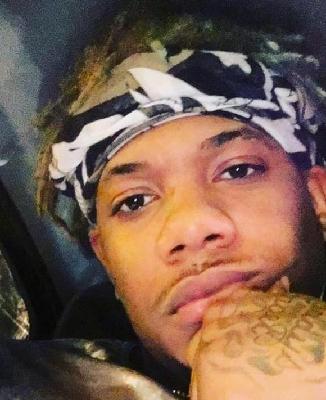
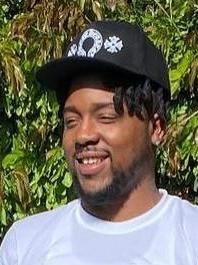
In the quiet dark of the early morning on December 23, 2007, Donald Young, a 47-year-old Black man and longtime Chicago choir director and schoolteacher, lay dying on the floor of his South Shore apartment. Just days before Christmas, his life ended not in the glow of church lights or the warmth of family, but in the sudden violence of multiple gunshots, including one to the head, inside the modest home he shared on the 2300 block of East 69th Street on Chicago's South Side.
Young had spent most of his life building community through music and education. A fourth- and fifth-grade teacher at Guggenheim Elementary School, he was known as an energetic, devoted educator who had recently completed advanced degrees and dreamed of moving into school leadership. At Trinity United Church of Christ, a prominent African-American congregation on the South Side, he had directed the choir for roughly two decades and served as a deacon, guiding voices that filled the sanctuary week after week. Parishioners and clergy later described him as someone who “lived and breathed music,” a man whose enthusiasm for his church and its choir was as constant as the Sunday services themselves.
On that December Sunday, it was Young's roommate who found him. Returning home around 7:30 a.m., the roommate saw that the front door was shut but not locked, an unsettling detail that would become one of the few concrete pieces of the puzzle investigators could publicly confirm. Inside, Young lay shot multiple times. Chicago police and the Cook County medical examiner quickly ruled the death a homicide caused by multiple gunshot wounds. Some valuables were missing from the apartment, including jewelry and Christmas presents, prompting investigators to consider robbery, but there were no definitive signs that theft alone could explain the killing.
In the days that followed, detectives canvassed the neighborhood, questioned friends and family, and spoke extensively with the roommate, whom authorities described as cooperating with the investigation. No public statements indicated that the roommate or any close associate had been identified as a suspect, and police did not announce any arrests. The case was treated as an active homicide inquiry, but from the outset, investigators faced a scarcity of clear leads: no widely reported eyewitnesses, no immediate suspect description, and no publicly disclosed forensic breakthrough that could point them toward the person who had walked into Young's home and pulled the trigger.
The shock of the killing rippled quickly through Chicago's South Side. Trinity United Church of Christ, already a high-profile congregation, filled with mourners. At a standing-room-only funeral service on December 29, 2007, more than 2,500 people crowded into the church, with some waiting outside in the winter cold for a chance to say goodbye. Colleagues from the classroom, fellow musicians, and parishioners from the church he had served for so many years remembered a man who poured his energy into children and choirs, someone whose days were crowded with rehearsals, lesson plans, and services rather than confrontation or conflict. He was, by every public account, a community figure whose life made sense—until the moment of his death did not.
Beyond the church and the school, Young's killing also stirred fear and anger among community activists. His death came just weeks after another South Side man, 24-year-old Larry Bland, was shot to death in his home. Both men were shot indoors, both cases remained unsolved, and advocates worried the pattern might signal that Black gay men on the South Side were being targeted. A newly formed community group, Critical Caucus, and LGBTQ organizations urged the police and media to pay closer attention, holding press events and distributing alerts that named Young and Bland together and demanded answers. Police, however, stated at the time that they were not formally linking the two murders, and no official announcement ever tied Young's homicide to a broader series of connected attacks.
As years passed, the absence of arrests or named suspects allowed rumor and speculation to creep in. Because Young's church was also the longtime spiritual home of a rising national political figure, his unsolved killing became fodder for conspiracy theories on blogs, message boards, and later in online videos and commentary. Some narratives suggested hidden political motives or secret relationships, but these stories remained unverified, often directly contradicted by reputable fact-checking and by the simple reality that no law-enforcement agency has publicly substantiated any such claims. Officially, Young's death is still treated as a neighborhood homicide with no confirmed political link, and authorities have neither announced a suspect nor brought charges against anyone in connection with the crime.
Today, Donald Young's case endures in the public record not as a solved mystery but as a lingering question. Crime databases and retrospective accounts continue to list his killing as an unsolved homicide, emphasizing that no one has been arrested and no definitive motive has been established. For those who knew him, the story is less about the speculation that followed than about the abrupt silence where his music used to be: the empty director's stand at Trinity, the classroom without his voice, the family and congregation still waiting for a clear name, a clear motive, and a final measure of justice that has yet to come.