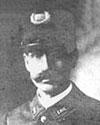
Police Officer Thomas Mallory, a white, Caucasian male serving with the Erie Railroad Police Department and assigned to the bustling coal docks of Edgewater, New Jersey, met his death on December 11, 1912, in the middle of a violent labor dispute. At the New York, Susquehanna and Western Railroad yards and coal docks, where coal from Pennsylvania flowed toward the Hudson River and eastern markets, tensions between management and striking coal handlers had been rising, turning an industrial waterfront into a place bristling with anger and apprehension.
On that December day, Mallory and Captain Andrew J. Craw of the Erie Railroad Police were among the officers sent into the yards and along the piers to hold the line during the strike, standing between the company's property and the crowd of agitated coal handlers. The docks, normally a din of shovels, winches, and locomotive whistles, instead echoed with shouted demands and the shuffling mass of men who had stopped work. As the confrontation intensified, the strikers surged toward the line of railroad police. When the crowd charged, the fragile barrier between protest and violence shattered: gunfire erupted across the waterfront, and the yards dissolved into chaos.
In the sudden volley, Captain Craw was struck repeatedly by rounds from a revolver, while Mallory was hit by a devastating load of buckshot. Both officers went down in the melee as other Erie Railroad policemen tried to hold their positions and return fire amid the confusion and shouting. Though Mallory and Craw were removed from the scene and received what aid was available, their wounds were mortal; both men died within a few hours of the attack. Around them, the cost of the clash was stark: nine additional Erie officers were wounded in what contemporary accounts describe as a riot along the coal docks.
In the aftermath, the bloodied yards were transformed from a battlefield back into an active crime scene. Authorities moved quickly to identify those responsible for the lethal gunfire. Ten men from among the striking coal handlers were arrested and charged with the murders of Officer Mallory and Captain Craw, their roles in the violence scrutinized as prosecutors tried to impose order and accountability on what had begun as a labor dispute. Surviving summaries of the case record that at least one suspect was ultimately convicted of murder in connection with the killings, marking the legal system's final, formal response to the deaths on the Edgewater waterfront, even as the detailed names and stories of the accused have faded from common memory.
Over a century later, Mallory's death is preserved less in newspapers than in memorial rolls and digital walls of remembrance. He is listed among the officers who fell in the line of duty in 1912 on the Officer Down Memorial Page and on rosters honoring the Erie Railroad Police, his end of watch recorded as December 11, 1912, with the cause simply given as gunfire in New Jersey. His name also appears on modern online memorials to victims of gun violence, paired with that of Captain Craw, linking the distant violence of an early twentieth-century labor clash with contemporary efforts to remember those killed by firearms. Together, these brief but steadfast records keep alive the story of a railroad police officer who walked into a storm on the Edgewater coal docks and did not come home, his death bound forever to the harsh intersection of industrial conflict and the dangerous duty of policing the rails.