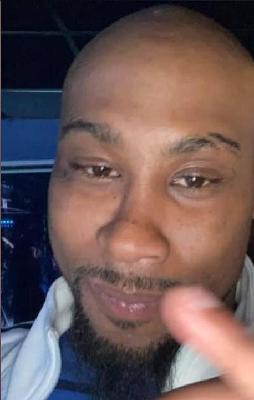
Kevin Sean Hall, a 29-year-old Black/African American male from Hillside, New Jersey, stepped into the evening of December 2, 2017, expecting nothing more dramatic than a night out in his own neighborhood. As the day faded into a cold Saturday night, he met up with a friend, Andrae Vogleson, and the two moved through familiar streets, stopping by a home for a bottle of vodka and eventually drifting toward a small neighborhood store near the 100 block of Summer Street. Later testimony would describe Hall as unsteady on his feet, his speech a little impaired, and smoking something wrapped in a brown leaf that his friend thought might be a drug-laced cigarette rather than a typical cigar or marijuana. An autopsy would later confirm that his blood contained both alcohol and PCP, hinting at a chaotic, disoriented state in the hours before his death.
Outside that neighborhood store, events took a sharp and fatal turn.
According to the trial record, Hall contacted Vogleson and the two met up, shared drinks from the vodka bottle, and walked the streets together until they crossed paths with another man, Javon Pittman, whom Vogleson already knew. Vogleson later told a jury that as he walked slightly ahead, he heard a commotion and turned to see Hall and Pittman grappling with each other in the street. In one telling, he said they were “tussling,” grabbing at each other; in later testimony he insisted that Hall was the aggressor and that Pittman was backing away as blows were thrown. While the two struggled, Vogleson heard a series of gunshots, saw a brief flash in the darkness and then, suddenly, Hall was on the ground, bleeding and gasping for air while the other man fled.
At around 9 p.m., police and emergency responders from the Union County Homicide Task Force and Hillside authorities were dispatched to the 100 block of Summer Street on a report of shots fired. They arrived to find Hall lying on or near the sidewalk with multiple gunshot wounds. Neighbors had heard sharp cracks in the night that sounded at first like firecrackers; one homeowner looked at his video doorbell feed, saw someone standing over a prone figure on the ground, and dialed 911. Hall was rushed in critical condition to Newark Beth Israel Medical Center, where doctors fought to stabilize him, but he was pronounced dead at approximately 11:40 p.m. that same night.
Detectives cordoned off the scene and began to reconstruct what had happened. Surveillance footage from nearby homes and businesses was collected and compared with witness statements. Investigators recovered a wallet later identified as belonging to Pittman in the spot where Hall had collapsed, along with a ten-dollar bill tucked into Hall's clothing, details that would play a significant role in the story later told in court. Notably, despite a careful search, no firearm was ever recovered. In the immediate aftermath, Union County authorities announced that the case was under active investigation and that a reward of up to $10,000 was being offered for information leading to an arrest and indictment, urging anyone with knowledge of the shooting to come forward.
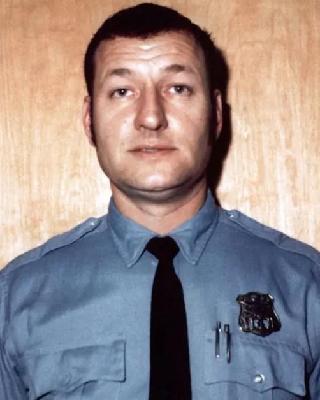
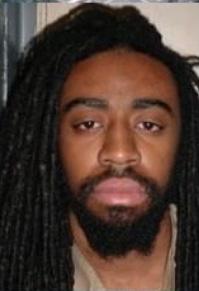
Within a few days, the investigation converged on a suspect. Working together, the Union County Homicide Task Force, Hillside Police Department, and the Union County Sheriff's Office Crime Scene Unit identified 24-year-old Newark resident Jevon Pittman as the person they believed responsible for the shooting. On December 6, 2017, officers located him on Warren Street in Newark and took him into custody without incident. Prosecutors announced that Pittman had been charged with murder and related weapons offenses in connection with Hall's death, and he was ordered held at the Union County Jail pending his first appearance in Superior Court. Local police publicly emphasized that the rapid arrest, coming only four days after the killing, was the result of a focused joint effort and expressed sympathy and solidarity with Hall's family as they faced the sudden loss. At that stage, officials stressed that the charges were accusations and that Pittman was presumed innocent unless and until proven guilty.
In the months that followed, the case moved from the street into the courtroom. A Union County grand jury indicted Pittman on first-degree murder, as well as counts of possessing a weapon for an unlawful purpose and unlawful possession of a handgun. When the case finally went to trial in March 2020, jurors heard two starkly different accounts of what had unfolded on Summer Street. Vogleson described seeing an altercation and heard shots but claimed not to have seen who fired the gun. Portions of his earlier statements to police suggested he had once believed Pittman was firing from inside the pocket of his hoodie, but on the stand he repeatedly said he had not actually seen a gun, only heard the shots and seen the flash. His shifting versions—first distancing himself from the scene, then admitting he was present, then recanting parts of his prior description—became a central issue in the trial.
Pittman, testifying in his own defense, painted the encounter as a robbery gone violently wrong. He told jurors that after leaving the store with a cigar and other items, he was stopped by Hall and Vogleson, who he said were intoxicated and pressing him for drugs. According to his account, Hall produced a gun, pointed it at his face, and demanded money, a wallet, and a phone. Pittman said he handed over a ten-dollar bill and a phone, then was knocked to the ground and pistol-whipped as Hall threatened to kill him. He described grabbing for the gun in desperation as Hall straddled him, insisting that the weapon discharged during the struggle and that he never intended to shoot anyone. When the shots stopped and Hall's weight slackened, Pittman claimed he pushed free and ran, too afraid that no one would believe his story to stay and wait for police. The discovery of Pittman's wallet near Hall's body and the absence of any gun at the scene became pivotal facts that both the prosecution and defense tried to spin in their favor.
Medical and forensic testimony added more layers to the narrative. The autopsy confirmed that Hall had a blood alcohol content over the legal driving limit and that PCP was present in his system, consistent with Vogleson's description of his unsteady gait and the unusual-smelling smoke. DNA testing linked Pittman to various items at the scene, including suspected blood on the grass and street, the phone, and clothing, while Hall's genetic profile was excluded from the mixture on Pittman's wallet. Prosecutors argued that the absence of Hall's DNA on the wallet undermined any suggestion that he had handled it during a robbery, while the defense urged jurors not to read too much into the forensic tests, arguing that the chaotic struggle and limitations of DNA analysis left room for doubt.
When the jury returned its verdict on March 17, 2020, it delivered a mixed result. Pittman was acquitted of murder but convicted of the lesser-included offense of passion/provocation manslaughter and of unlawful possession of a weapon. He received an eight-year sentence on the manslaughter conviction, subject to New Jersey's requirement that most of that term be served before parole eligibility, along with a concurrent eight-year sentence on the weapons charge. Even that outcome did not mark the end of the legal story. Pittman appealed, arguing that the trial judge had mishandled the use of Vogleson's prior statements and failed to conduct a required evidentiary hearing to assess their reliability, among other alleged errors.
In October 2023, a New Jersey appellate panel agreed that the way the jury had been allowed to hear and consider Vogleson's earlier statements—particularly speculation about shots being fired from inside a hoodie pocket—had created too great a risk of an unfair verdict. The court vacated Pittman's convictions and sent the case back for a new trial, instructing the lower court to hold a formal hearing on the reliability of the witness's prior statements and to be more careful with limiting instructions around both those statements and evidence of Pittman's past convictions. With that ruling, the legal status of the case shifted once again: the earlier convictions were erased, and the question of criminal responsibility for Hall's death was formally reopened, leaving the final resolution of the charges pending within the justice system.
Beyond the legal documents and press releases, the loss was marked in quieter, more personal ways. An obituary in the Star-Ledger identified him as Kevinray Sean Hall of Hillside and announced services at a church in nearby Irvington, followed by burial in Newark, drawing family, friends, and neighbors together to mourn a life cut short. Online memorial pages and case summaries continue to carry his name, photo, and the bare facts of his death—date, place, age—so that he does not become just another anonymous statistic in New Jersey's homicide files. In Hillside and beyond, the story of what happened on Summer Street remains both a matter of ongoing legal dispute and a painful reminder to those who knew him that one winter night's violence altered their lives forever.