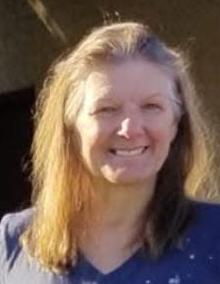
A woman is found strangled in front of a Hogan
On October 13, 1976, the quiet community of St. Michaels, Arizona, was shaken when the body of Lena Ann Begay was found lying just outside the entrance to her traditional hogan home. Lena, whose exact age was not reported, was a female Native American / Indigenous resident of the area, and the circumstances of her death were immediately treated as suspicious even though official records listed her cause of death only as “unknown.” Her remains were discovered in front of the dwelling on reservation land near St. Michaels, and the brief case summaries that exist today describe the incident as a “death by force,” emphasizing that, from the outset, authorities did not regard it as a natural or accidental death.
Accounts collected in later years describe a close-knit, rural community struggling to process a sudden and unexplained loss. A retrospective article notes that Lena was remembered as someone devoted to her family, and that news of her death reverberated beyond St. Michaels through surrounding reservation communities. Neighbors and relatives held gatherings and vigils to honor her and to call for justice, while community leaders urged anyone with knowledge of what had happened outside the hogan that night to come forward. Despite this outpouring of grief and the early recognition that something violent or suspicious had occurred, the official investigation appears to have stalled quickly, leaving the manner of death unresolved in formal records.
Decades later, much of what is publicly known about how Lena may have died comes from her surviving family. A memorial post written by one of her children recalls being told that their mother had been strangled and left in a snowbank near the home, where she was found outside the hogan. Another family member, writing on a missing-persons awareness page, flatly describes the case as a murder connected to domestic violence, echoing the summary on a victim-advocacy site that reports a relative believes Lena’s death was the result of intimate partner abuse. At the same time, modern case listings still quote the original classification that her cause of death was “unknown,” reflecting a tension between the family’s understanding of what happened and what was ever documented or proven in court or by medical examiners.
Information about suspects and law-enforcement action is similarly fragmentary and comes largely from the family’s recollections. In one memorial message, Lena’s child writes that the person they believe responsible was “the only one there” with her, and that this individual was questioned by investigators but ultimately released. Another post notes that a “person of interest” was interviewed in connection with the death but that no charges were filed, with the writer attributing the lack of prosecution to insufficient evidence and, in their view, inadequate investigative work at the time. No publicly available records indicate that anyone has ever been arrested or formally named as a suspect in Lena Ann Begay’s case, and current true-crime and cold-case databases list the homicide as unsolved.
Today, Lena’s story continues to circulate on advocacy pages dedicated to missing and murdered Indigenous people and on specialized cold-case sites, where her profile emphasizes that she was found outside her home near St. Michaels and that the manner of death has never been satisfactorily resolved. Family members still publicly ask for information, and one case listing includes a contact for relatives who hope that someone with knowledge of what happened that night will finally come forward. Nearly half a century after she was discovered outside her hogan, no one has been held legally accountable for Lena Ann Begay’s death, and her case remains an open wound and an unresolved mystery for those who knew and loved her.