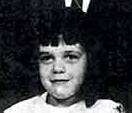
In the summer of 1968, the tranquil resort community of Good Hart, Michigan, was shattered by a crime that would haunt the area for decades. Shirley Robison, a 40-year-old female, her husband Richard, and their four children were spending their annual vacation at their secluded log-and-stone cottage, nestled in a heavily wooded area near the shores of Lake Michigan. The family, from the Detroit suburb of Lathrup Village, had been a fixture in Good Hart each summer, but their idyllic retreat in June of 1968 would be their last.
On June 25th, an assailant targeted the Robison family in a brutal attack inside their vacation home. The murders were methodical and violent. The perpetrator first fired a. 22-caliber rifle through a window, striking Richard Robison. After gaining entry to the cottage, the killer used both the rifle and a. 25-caliber pistol to murder the rest of the family: Shirley, and their children Richard Jr., 19, Gary, 16, Randall, 12, and Susan, 7. Shirley was found in the living room, having been shot once in the head with the. 25-caliber pistol; a blanket was placed over her body after her death.
The horrific scene remained undiscovered for nearly a month. A note on the cottage door indicated the family would 'Be Back By 7/10,' leading neighbors to believe they were on a trip to Florida. It wasn't until July 22nd, after neighbors reported a foul odor, that a caretaker entered the cottage and found the decomposing bodies of the entire family. The gruesome discovery shocked the peaceful community and launched an extensive investigation that would span years.
Investigators quickly focused on a prime suspect: Joseph Scolaro III, a business associate of Richard Robison. The motive was believed to be financial, as Robison had recently discovered that Scolaro had been embezzling a significant amount of money from his advertising business. It is theorized that on the day of the murders, Robison confronted Scolaro about the missing funds during a phone call, prompting Scolaro to drive to Good Hart to silence him and his family. Despite strong circumstantial evidence, including failed polygraph tests and shell casings matching weapons Scolaro owned found at a target practice area he used, the Emmet County prosecutor was hesitant to bring charges, citing a lack of direct evidence.
The case remained officially unsolved, a dark cloud hanging over Good Hart. In March 1973, as investigators were reportedly preparing to seek an indictment against him for the murders, Joseph Scolaro took his own life. In a suicide note, he denied his involvement, stating, 'I am a liar but not a murderer.' Though never arrested or convicted, Scolaro remains the primary and sole suspect in the brutal slaying of Shirley Robison and her family, a case that continues to be one of Michigan's most infamous unsolved crimes.