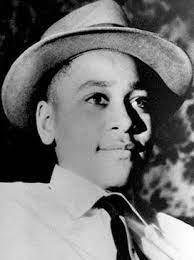
In the summer of 1955, a 14-year-old African American boy named Emmett Louis Till traveled from his home in Chicago to visit relatives in the Mississippi Delta. His fateful journey ended in his brutal murder on August 28, 1955, a crime that would shock the nation and become a pivotal moment in the Civil Rights Movement. The events leading to his death began with an encounter at Bryant's Grocery and Meat Market in Money, Mississippi, where Till was accused of offending Carolyn Bryant, a 21-year-old white woman and the store's proprietor. Accounts of the interaction vary, but it was alleged that Till had whistled at, or flirted with, her.
Days later, in the early morning hours of August 28, Roy Bryant, Carolyn's husband, and his half-brother, J.W. Milam, abducted Till at gunpoint from his great-uncle's home. They drove him to a barn in Drew, Mississippi, where they subjected him to a savage beating, torturing him and gouging out one of his eyes. The two men then drove Till to the banks of the Tallahatchie River, shot him in the head, and submerged his body in the water, weighing it down with a large metal fan tied to his neck with barbed wire.
Three days after his abduction, Till's mutilated and bloated body was discovered in the river. His face was so disfigured that he was only identifiable by a ring he was wearing. Roy Bryant and J.W. Milam were arrested for kidnapping and murder. Their trial began in September 1955, and despite the courageous testimony of Black witnesses who identified them, an all-white, all-male jury acquitted both men of all charges after deliberating for just over an hour.
Protected by double jeopardy, Bryant and Milam later confessed to the murder in a 1956 interview with Look magazine, for which they were paid $4,000. They detailed the kidnapping and brutal killing of the young boy. No other individuals were ever charged in connection with the crime. Carolyn Bryant Donham, whose accusation precipitated the tragedy, was never charged, and a grand jury in 2022 declined to indict her. She died in 2023. The federal government reopened the case in 2004 to identify potential co-conspirators, and again in 2017 after reports that Donham had recanted her testimony, but both investigations were closed without any new charges.