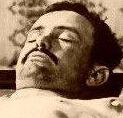
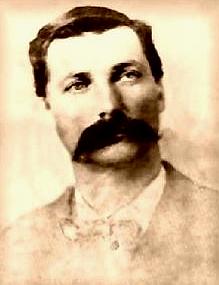
Thomas Jefferson “Tom” Taylor, a 53-year-old male deputy U.S. marshal, had spent much of his life in service by the time his story converged with the frontier town of Pawnee, Oklahoma, in October 1900. Born in Tennessee in the 1840s, he served as a private in Company K of the 43rd Indiana Infantry during the Civil War before drifting west, eventually settling in what would become Oklahoma. He was appointed a deputy U.S.
marshal shortly before the great land rush of April 1889, and over the next decade he grew into one of the most seasoned and respected lawmen in the territory, known locally as one of the oldest and best-known deputy marshals on the federal rolls.
By the autumn of 1900, Taylor’s long career placed him squarely in the middle of the government’s effort to control liquor traffic in and around the Indian reservations. In the days leading up to his death, he arrested a man known in contemporary accounts as Deloss—identified in official summaries as Orrin DeLaus—on a charge of selling liquor to Indians on the Osage reservation. DeLaus had friends who promised to travel to Pawnee and post bond on his behalf, and Taylor, trusting that the man would be produced for court, agreed to keep the prisoner with him while they waited. Deputy Sheriff Lowry accompanied Taylor and DeLaus into Pawnee, where the accused was arraigned, and afterward the officers chose the back room of Cook Horton’s saloon as a convenient place to finish their paperwork and keep an eye on their captive while his friends were supposedly on the road.
That Saturday afternoon, October 13, 1900, the scene in the rear of the saloon was, for a moment, almost domestic: Taylor, Deputy Sheriff Lowry, and their prisoner seated together at a table, the officers working through the formalities while the man they guarded waited for word that his bond was secured. A local man, John Horton, stepped briefly into the room, exchanged greetings with the two lawmen, and then departed through a back door. Soon after, Lowry also left the room, leaving Taylor alone with DeLaus, a seemingly manageable situation for a marshal who had faced down outlaws across the territory for more than a decade.
What happened next unfolded in an instant. As later recounted in official reports, the three men had been sitting together when the prisoner suddenly sprang up with a handgun in his grasp and opened fire on the marshal at close range. Taylor was struck twice, the shots cutting down the veteran lawman before he could draw effectively in his own defense. The quiet workroom behind Cook Horton’s saloon erupted into chaos as the gunfire echoed through the building; Taylor fell mortally wounded, and the man he had arrested—described in one retelling as a “desperado” named Deloss—forced his way out of the saloon in the confusion.
The escape was short-lived. Accounts preserved in law-enforcement memorials state that the suspect fled the immediate scene but was captured not long afterward, taken into custody, and lodged in jail to await the courts. Within days, Orrin DeLaus stood before a magistrate in Pawnee for a preliminary examination and was ordered held without bond on the charge of murdering Deputy Marshal Thomas Taylor—a sign of how seriously territorial authorities viewed the killing of a federal officer. Contemporary summaries emphasize that the case attracted considerable attention: Taylor’s reputation as a long-serving, highly regarded deputy marshal made the shooting more than just another act of frontier violence, and the trial of DeLaus became a notable event in Pawnee’s legal calendar. Surviving records, however, grow thin after the preliminary hearing, and the available memorial and summary sources do not clearly record the ultimate outcome of DeLaus’s trial, leaving the final legal resolution of the case in partial shadow.
While the courts prepared to address the crime, Taylor’s family and colleagues confronted their loss. Biographical and memorial records agree that he left behind his wife, Effie, as well as four children—two from his marriage to her and a son and daughter from an earlier marriage. His body was carried from Pawnee to nearby Perry, where he was buried in Grace Hill Cemetery, closing a life that had stretched from the battlefields of the Civil War through the turbulent years of settlement in Indian Territory and into the dawn of a new century in Oklahoma. In the decades that followed, his name would appear on honor rolls of fallen U.S. marshals and on state memorials to law-enforcement officers, the brief, violent encounter in a Pawnee saloon remembered as the final chapter in a long career spent carrying a badge on the edge of the frontier.