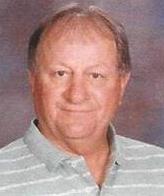
Frederick M. Woods, a 46-year-old male deputy constable in Eufaula, Oklahoma, stepped into the summer of 1908 as a local peace officer at the center of a political storm. He worked for the small town’s police force at a time when McIntosh County was bitterly divided over which community—Eufaula or nearby Checotah—would claim the lucrative and prestigious title of county seat.
In early June, Woods confronted the consequences of that rivalry when armed men arrived with the intention of taking the county records by force, a move that would symbolically and practically shift power away from Eufaula.
For months, the contest between Eufaula and Checotah had played out in speeches, campaigns, and contested elections. A special election in May 1908 appeared to favor Checotah, but questions over “unaccounted for” ballots and accusations that bad weather had prevented many Eufaula voters from reaching the polls cast doubt on the result. Attorneys representing Eufaula persuaded the Oklahoma Supreme Court to issue an injunction forbidding anyone from removing the county offices or records until the dispute could be sorted out. For Eufaula’s citizens, the injunction was a lifeline; for Checotah’s partisans, it was an intolerable delay that left them feeling robbed of a victory they believed they had already won.
On Sunday morning, June 7, 1908, frustration turned into action. A “squad” of roughly twenty-five heavily armed men left Checotah on a special train and rode south to Eufaula. Led by former deputy U.S. marshal W. Frank Jones, the group split into two columns once they arrived: a smaller party went in search of county clerk Edward C. Julian, who held the keys to the offices, while the main body marched toward the intersection of Foley Avenue and Main Street, a vantage point overlooking the courthouse. As Jones’s column moved through town, Woods and another Eufaula deputy briefly stepped into their path. Jones warned them to get off the street or “get the contents of his gun,” and the two deputies withdrew—not in surrender, but to sound the alarm. Before long, Eufaula men returning from church were arming themselves, and the owner of a local hardware store began handing out guns to defenders determined to keep the records—and the county seat—from being carried off.
By afternoon, Eufaula’s quiet streets had become a battleground. Accounts later preserved in regional newsletters describe a confrontation between about fifteen men from Checotah and local citizens that erupted into a chaotic exchange of gunfire. One report recalled that the trouble began when Woods tried to disarm one of the armed visitors, Special Deputy Sheriff Joe Parmenter. The attempt to take Parmenter’s weapon escalated almost instantly; witnesses remembered roughly fifteen shots being fired in the street as tension boiled over into violence. In the confusion, Woods was struck and badly wounded, while Parmenter was hit as he tried to take cover behind a water trough.
Later reconstructions of the fight identify Woods as the first fatal casualty of what became known as the Battle of Eufaula. He was shot three times by Parmenter during the exchange, injuries that left him mortally wounded. Eufaula’s defenders eventually outnumbered and out-positioned the Checotah raiders, and the battle began to tilt decisively away from the men who had arrived on the train. Word was sent for Grant Johnson, an African-American lawman and former deputy U.S. marshal living two miles outside town. When he reached Eufaula and surveyed the scene, he persuaded Jones to surrender rather than press a fight that was already lost. The Checotah men laid down their arms and were loaded onto a train to be sent back home. Woods, however, could not be saved; he succumbed to his gunshot wounds the following day, his death formally recorded as occurring in early June 1908 after injuries suffered in the line of duty.
In the aftermath, attention turned to questions of blame and justice. Two figures emerged as central suspects in connection with the killing: Joe Parmenter, the special deputy sheriff who had fired the shots that struck Woods, and county clerk Edward C. Julian, whose cooperation with the raiding party was widely suspected. Both men were arrested on murder charges in the wake of the battle, their roles scrutinized not just as participants in a political dispute but as individuals potentially responsible for the death of a local officer. Yet the legal process ultimately fell short of delivering a conviction. Parmenter was acquitted of murder in June 1909, and Julian, after being arrested and held up as a symbol of the Checotah cause, returned to his position within a year. The armed men who had ridden in from Checotah under Jones’s command were taken prisoner during the immediate crisis and shipped out of town, but none would serve time specifically for Woods’s death.
The political struggle that had set the stage for the shooting continued into the following year. A new special election was eventually held in February 1909, this time with only Eufaula and Checotah on the ballot. Eufaula won by a narrow margin, and this result was allowed to stand, cementing the town’s status as the permanent county seat and closing the chapter on the McIntosh County Seat War. Long after the gunfire faded and the courthouse conflicts became local legend, Woods’s name endured in quieter places: in Greenwood Cemetery at Eufaula, where his grave marks the short distance between his home and the streets where he fell, and on law-enforcement and gun-violence memorials that remember him as a deputy constable killed by gunfire while defending his town’s lawful claim to its own records and identity.