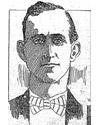
J. H. Swinford, a 29-year-old man serving as city marshal of Kiefer, Oklahoma, spent the summer of 1909 policing a volatile oil-boom town whose rapid growth had brought wealth, crowds, and a reputation for violence. In the years around 1909, Kiefer had exploded from a quiet settlement into a shipping point for the Glenn Pool oil field, its streets choked with wagons, rough transient workers, saloons, gambling rooms, and an undercurrent of armed confrontation that made law enforcement a
dangerous calling.
On Monday, August 16, 1909, trouble announced itself in the afternoon. Two men dressed as cowboys rode into Kiefer and took a particular interest in the Kiefer State Bank, studying it closely enough to draw the attention of Marshal Swinford. Their manner and their focus on the bank seemed wrong in a town already accustomed to hard characters, and Swinford’s suspicions were strong enough that he went to the bank officials and warned them outright that he believed a robbery might be attempted later that night. The warning hung over the town as daylight faded, an uneasy prediction from the man charged with keeping order in a place where gunfights and robberies were already too common.
That night, the threat materialized. Accounts differ on how many men came back to the bank—some say the same two cowboys returned, others describe as many as six men converging on the State Bank under cover of darkness—but all agree that the robbers were inside the bank when Marshal Swinford moved to confront them. In the dimly lit streets of Kiefer, where armed men were no rarity, he stepped into the path of the robbers as they carried out their plan. When he challenged them, the men opened fire. A burst of gunshots shattered the night; Marshal Swinford was struck and killed instantly, and the bank cashier inside was critically wounded in the exchange. The robbers fled into the darkness while the town scrambled to respond.
In the chaotic aftermath, local men formed a posse and tried to run the killers down, scouring the countryside in hopes of intercepting them. But the robbers, whether two or six, slipped away from Kiefer’s streets and into anonymity. Modern law-enforcement memorials that reconstruct the events of that night note only that the suspects were “at large,” and contemporary commemorations describe a hurried pursuit that ended without captures or courtroom reckonings. No record survives of any identified gunman being brought to trial for the killing of Marshal Swinford, and official summaries of his death simply state that he was shot and killed while attempting to stop a bank robbery or make an arrest, his killers never named.
Over time, the town changed and the oil boom that had made Kiefer both prosperous and perilous became a chapter in Oklahoma history rather than the pulse of everyday life. What remained of that August night was the story of a young marshal who anticipated danger, warned his town, and went out into the dark anyway when the danger arrived. Today his name appears on rolls of fallen officers and on local memorials in Creek County, where his death is remembered as part of the grim cost of imposing law and order on an oil-field town where violence once echoed nightly through the streets.