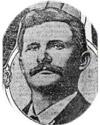
On the early morning of January 23, 2016, police in Anadarko, Oklahoma, were called to Kim's Country Mart at the corner of South Mission Street and West Texas Avenue after reports of gunfire. Inside the small neighborhood store they found Son Duong, a male Asian convenience store owner, lying on the floor with multiple gunshot wounds, spent rifle shell casings scattered nearby and no sign of the attacker.
Investigators turned to the store's security system and recovered images of a lone figure entering around 12:30 a.m., a man in a Dallas Cowboys jacket pulled over a red hoodie, carrying a rifle as he stepped through the door. The footage showed him raise the weapon and begin firing almost immediately while Duong stood at the counter, the violence unfolding so quickly that authorities later said the victim appeared to die almost instantly. After the shots, the gunman moved behind the counter, pounding on the cash register and rummaging through items on the counter before fleeing, apparently without successfully taking any money, leaving behind a wrecked store, a grieving family and a stunned community that soon began to cover the storefront with flowers.
In the hours and days that followed, Anadarko police released the security images to the public and announced that a man had been taken into custody as agents from the Oklahoma State Bureau of Investigation joined the case. Tips and interviews gradually narrowed the focus to two local teenagers: 18-year-old Joshua Lonewolf and 17-year-old Marcus Escobar. Court records and news reports later described Lonewolf as the gunman in the Cowboys jacket, entering the store with a rifle, while Escobar waited across the street with a cellphone, acting as a lookout during the deadly break-in.
According to affidavits, Lonewolf had gone into the store multiple times in the days leading up to the killing, behavior prosecutors framed as surveillance before the attack. During subsequent police interviews, both teens referred to Duong by name, signaling that they knew the man who worked behind the counter. Investigators and prosecutors came to see the shooting as a calculated attempted robbery that never yielded any cash, not a chance encounter gone wrong; at one court appearance, Lonewolf shouted that there had been “no intent to kill,” even as the district attorney pointed to the way he opened fire almost immediately on entering the store as evidence of deliberate intent.
Both Lonewolf and Escobar were formally charged with first-degree murder and brought into a packed Caddo County courtroom, where bond was denied and the district attorney publicly argued that life without parole was the only punishment that fit such a cold and callous killing, noting that Lonewolf, as an adult, could even face the death penalty if convicted. The case against Lonewolf moved slowly through Caddo County District Court, with hearings and trial dates set and reset over several years until he entered a blind guilty plea to first-degree murder and received a life sentence with credit for time served, formalizing his role as the gunman in the killing of Duong at Kim's Country Mart. Escobar continued to face his own first-degree murder charge arising from that night, his alleged role fixed in the record as the lookout across the street.
Around Anadarko, long after the crime scene tape came down, the store where Duong died remained a quiet landmark of loss. Customers and neighbors remembered him as a gentle presence behind the counter who treated young people kindly, encouraging teenagers to stay in school and find steady work, a man who supported their efforts to build better lives. The contrast between that image and the clinical descriptions in court–a familiar clerk, greeted by name, gunned down within seconds of a would-be robber stepping through his door–left the town with enduring questions about why someone who knew him chose to end his life in such a sudden burst of violence.