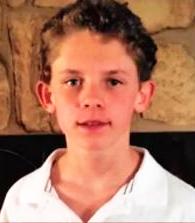
Robert Jordan, a 36-year-old white male from Madill, Oklahoma, was known in his small community as “Bob,” someone who loved being outdoors, who hunted and fished around Carter Lake, and who was always ready to lend a hand to friends, neighbors, and co-workers. He grew up in the Madill area, worked for local businesses such as Catfish Bay, Weller Construction, and Big Tex Trailer Company, and built a life that revolved around simple routines and the people close to him.
His sudden death in early October 2018 left family and friends stunned, turning a familiar face around town into the center of a homicide investigation that shook the community.
In the early hours of October 2, 2018, that ordinary life was shattered. Around 2:30 a.m., police were called to a house in the 100 block of East Wolf Street in Madill, where Jordan was renting a room. Inside, officers found him lying in a bed with a single gunshot wound, critically injured but still alive. His longtime friend and roommate, David Davis, later described sitting in his chair when he heard a sharp “pop” from the back of the house. Rushing toward the sound, he discovered Jordan in bed, bleeding, and immediately called 911. Paramedics tried to keep him alive as they rushed him toward the hospital, but he died on the way, his final moments unfolding in the back of an ambulance rather than in the quiet bedroom where he had been sleeping.
The home on East Wolf Street quickly became a crime scene. Officers secured the property and called in the Oklahoma State Bureau of Investigation to process the house, searching for physical evidence that might explain who had entered the home and fired the shot into the man lying in his own bed. Neighbors awoke to the sight of law enforcement vehicles and investigators moving in and out of the modest residence, a jarring contrast to the stillness of a typical Madill morning. Even as word spread that Jordan had not survived, authorities remained tight-lipped about what they were finding inside, declining to share anything publicly about the weapon or the events that led up to the gunshot.
While friends were just beginning to absorb the news of his death, investigators already had a name. Police identified 38-year-old Harold Andrew MacNeil as the suspected gunman and launched a search when he was not found at the scene. A tip came in around 7:30 that morning, pointing officers toward a trailer north of Madill near Carter Lake. There, after about an hour-long standoff, authorities surrounded the property and took MacNeil into custody. He was booked into the Marshall County Jail on a charge of first-degree murder in connection with Jordan’s death. Reports described the two men as acquaintances who were believed to have been friends, a characterization echoed in gun-violence records that listed the relationship between victim and suspect as “friends,” adding a painful twist for those who knew Jordan as trusting and quick to help the people in his life.
Even with an arrest, much about the case remained opaque. Police did not publicly name a motive, and no detailed narrative of what happened inside the house before the gunshot has appeared in available records. Case summaries and community posts continue to ask for updates, suggesting that, at least in the public eye, the story feels unresolved. Local police blotters in the years that followed note a man named Harold Macneil being transported to the Marshall County Jail on writs tied to first-degree murder and “deliberate intent,” along with references to prior drug and weapons convictions, indicating that serious charges against him were still moving through the system; however, those brief entries do not mention Jordan by name, nor do they describe any final verdict or sentence.
For those who knew him, Jordan is remembered less for the grim details of the investigation and more for the everyday moments that defined his life: helping a friend get a truck running again, tinkering with lawn mowers, or heading out to fish at Carter Lake. Friends described him as the kind of person who would help anyone and who would be “missed, that’s for sure,” a sentiment that lingers in online tributes and case forums where people still write about their grief and their hope that justice, whatever form it ultimately takes, will fully catch up with the man accused of taking his life.