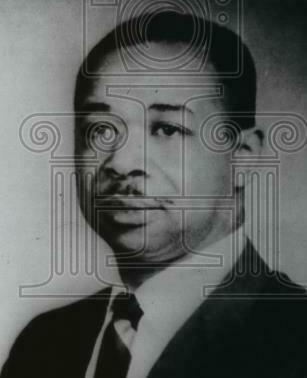
On a winter morning in late January 1969, the corridors of Cardozo Senior High School in Washington, D.C., filled with the ordinary sounds of students changing classes and teachers calling out reminders, as assistant principal Herman L. Clifford, a 45-year-old Black/African American man, moved through the building overseeing the rhythm of the school day.
He was more than just an administrator; he was a school leader entrusted with discipline and safety, and at home he was a father of two children whose life revolved around education and family.
Inside Cardozo, the school maintained a small bank where students and staff deposited money, a routine symbol of thrift and responsibility in an era when schools tried to teach financial habits alongside academics. On January 23, three young men targeted that modest institution. They entered, confronted the staff, and made off with about $350 in cash, turning the quiet operation into a sudden, frightening robbery. Moments later, they spilled out into the hallway, carrying the stolen money and a gun, as word of the crime began to ripple through the building.
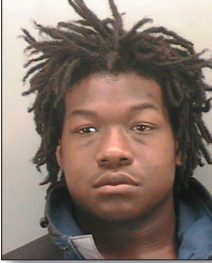
When Clifford learned what had happened, he did what colleagues would later remember him for: he went toward the trouble instead of away from it. In the hallway he confronted the three youths, attempting to stop them from escaping with the school’s money. Witness accounts and later summaries describe a brief, chaotic struggle as he tried to block or grab them, a tense encounter in a public corridor suddenly transformed into the scene of a crime. During that scuffle, one of the youths—identified as 18-year-old student Ronald Joyner—produced a firearm and fired. The shot struck Clifford, and he collapsed in the hallway of the school he helped lead, as stunned students and staff realized that what had begun as a robbery had become a killing.
The gunmen fled almost immediately, leaving behind a corridor scarred by panic and grief. Staff rushed to Clifford’s side and emergency responders were called, but the wound was fatal; he was pronounced dead that day, his life ending within the walls where he had spent his career trying to guide and protect young people. News of the shooting spread beyond Cardozo into the wider city and then the nation. It was noted in national television news coverage as an emblematic incident in the broader story of rising urban crime and violence in schools, a moment that captured the fear that even educators standing between youth and wrongdoing could themselves become victims.
In the days and months that followed, detectives worked to piece together what had happened in that hallway. Witness testimony and investigative work focused on identifying which of the three youths had actually pulled the trigger. Contemporary accounts and later reconstructions report that investigators eventually centered on Joyner, the teenager already named in summaries of the attack as the shooter. According to later descriptions of the case, the assailants were tracked down after the initial escape, and Joyner—then 18 and turning 19 that year—was arrested and charged with first-degree murder in connection with Clifford’s death, reflecting the authorities’ conclusion that he was the one who fired the fatal shot during the struggle over the stolen money.
Publicly available records do not clearly trace what happened to the case after those charges were filed, leaving the ultimate outcome of Joyner’s prosecution largely obscured by time. What endures in accessible sources instead is the stark outline of the crime itself: an assistant principal stepping into danger to confront three youths who had robbed their own school, and losing his life in the attempt. Clifford’s name now appears on memorial lists of school shooting victims and in the National Teachers Hall of Fame’s Fallen Educators memorial, where he is remembered specifically as a school leader killed while trying to protect his community. Decades later, the story of his death is still retold not only as a statistic in the history of school violence, but as a narrative of courage and loss—of an educator who met danger in a hallway and paid with his life for the belief that a school should be a safe place.