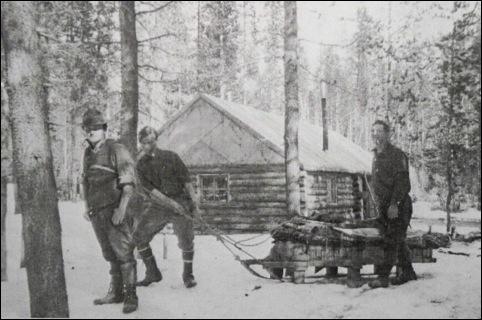
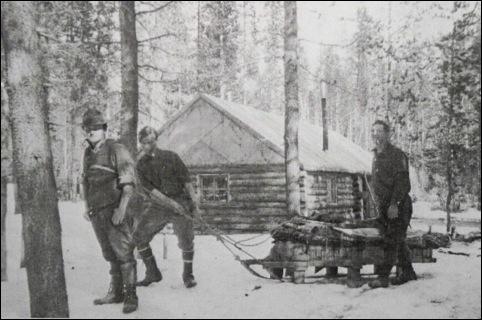
In the winter of 1923, Dewey Morris, a 25-year-old male, along with his companions Edward Nickols, 50, and Roy Wilson, 35, ventured into the Deschutes National Forest in Oregon. The three men from Bend, Oregon, planned to spend the season working as fur trappers, using a log cabin owned by a local contractor near Little Lava Lake as their base. In exchange for lodging, they agreed to look after five valuable foxes belonging to the cabin's owner.
The trapping season started successfully, with Nickols returning to Bend just before Christmas in a cheerful mood, having sold a sled full of expensive furs. The last known sighting of the men alive was on January 15, 1924, when a resort owner visited their cabin and found them in good spirits.
As weeks turned into months with no word from the trappers, concern grew among their family and friends. Innis Owen Morris, Dewey's brother, noticed that mink traps in the area had been left untended, which was uncharacteristic of the conscientious trappers. In April 1924, a search party, including Innis, traveled to the cabin. They found an unsettling scene: burnt food on the stove, a table set for a meal, and the men's coats and guns still in the cabin. The five foxes were gone from their pen, and a blood-stained hammer was discovered nearby. The men's transport sled was also missing.
The grim search led investigators to nearby Big Lava Lake, where the missing sled was found in a snowdrift. As the ice on the lake began to thaw, the bodies of Dewey Morris, Edward Nickols, and Roy Wilson floated to the surface. Autopsies revealed the brutal nature of their deaths; all three had suffered from gunshot wounds and blunt force trauma. Morris had been shot in the left forearm and had a severe skull fracture, likely from the hammer found at the cabin. Nickols had been killed by a close-range shotgun blast to his jaw and also had a revolver wound to the head, while Wilson was shot in the shoulder and the back of the head.
The investigation into the triple homicide quickly focused on a man named Lee Collins, who had a previous dispute with Nickols and had reportedly threatened to kill him. It was discovered that 'Lee Collins' was an alias for Charles Kimzey, a man with a criminal history who was wanted for assault and robbery. A traffic officer in Portland recalled giving directions to a man matching Kimzey's description who was carrying a gunnysack of furs on January 24, 1924, and directed him to a local fur dealer where the man sold the furs for $110. Despite a reward being offered for his capture, Kimzey remained at large for years. He was finally apprehended in Montana in 1933. While there was substantial circumstantial evidence linking him to the murders, the fur dealer could not definitively identify him. Consequently, Charles Kimzey was never convicted of the Lava Lake murders. He was, however, sentenced to life in prison for the attempted murder of a stagecoach driver in 1923. The brutal killing of Dewey Morris and his companions remains one of Oregon's oldest unsolved murder cases.