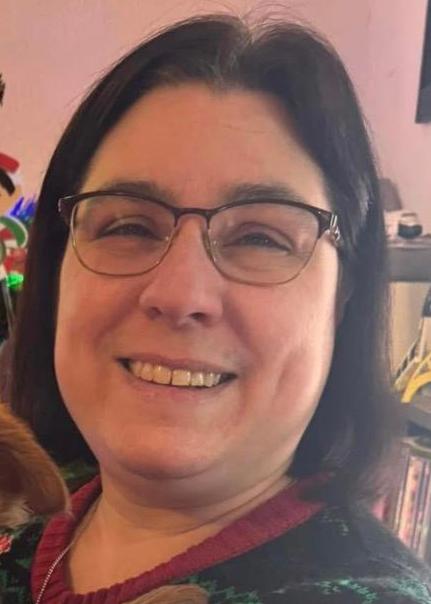
Nancy Santomero was a 19-year-old White/Caucasian woman from Huntington, New York, who was traveling with 26-year-old Vicki Durian of Wellman, Iowa, during the summer of 1980. The two young women were hitchhiking toward West Virginia’s Monongahela National Forest, where they intended to attend the annual Rainbow Family gathering. They never reached the festival. At about 9 p.m. on June 25, 1980, a college student walking toward a lean-to where he was staying on Briery Knob, near Droop Mountain Park in Pocahontas County, discovered the women lying in a remote clearing. Both had been shot to death at close range. The coroner estimated they had been dead for no more than about three hours, and reports indicated that neither victim had been sexually assaulted. Neither woman was carrying identification, leaving authorities initially uncertain who they were.
For several days Nancy and Vicki remained unidentified.
Nancy’s sister, Kathy, had traveled from New York expecting to meet her at the Rainbow gathering, but Nancy never arrived. Kathy initially believed her sister may simply have changed her plans. After returning to New York on July 5, however, a friend showed her a newspaper article containing photographs of the unidentified victims. One of the photographs appeared to be Nancy. Kathy returned to West Virginia and identified her sister on July 8, also helping investigators contact Vicki Durian’s family. What had begun as the discovery of two unidentified victims was now a double homicide that would haunt Pocahontas County for decades.
Investigators immediately faced a difficult case. Briery Knob was isolated, and the secluded location contributed to a belief that whoever brought Nancy and Vicki there may have been familiar with the area. There was also considerable local tension surrounding the upcoming Rainbow gathering, which was expected to bring thousands of outsiders into the region. Rumors circulated that the murders might somehow have been connected to hostility toward the gathering, but investigators did not establish that as a motive. With little evidence and no dependable eyewitness account immediately identifying a killer, the investigation stalled. In 1982, local resident Jacob Beard attracted police attention after making unusual telephone calls to Vicki Durian’s parents. During one call he criticized the investigation and urged the family to seek FBI involvement. Beard told authorities that he had called because he was sympathetic to the family and denied knowing who had committed the murders.
The investigation became increasingly complicated as different witnesses supplied conflicting stories. In 1983, Lee Morrison told authorities that he and Gerald Brown had picked up Nancy and Vicki while they were hitchhiking. Morrison claimed that after drinking and later awakening inside a van on Briery Knob, he witnessed Brown kill the women and helped move their bodies. Brown was arrested and charged, but the case quickly unraveled when Morrison recanted at a preliminary hearing. Morrison then claimed Beard had pressured him into making the accusation. The charge against Brown was dismissed. After several more years with no resolution, investigators renewed their efforts in 1991 and began reexamining old witness information and seeking new statements.
The revived investigation ultimately produced charges against seven local men. On April 16, 1992, authorities charged Jacob Beard, Johnnie Lewis, Winters “Pee Wee” Walton, Gerald Brown, Arnold Cutlip, William McCoy and Richard Fowler with first-degree murder in connection with the killings. Police said Lewis and Walton implicated Beard as the shooter. The prosecution soon encountered serious credibility problems, however. Walton alleged that he had been physically threatened during police questioning, while Lewis had repeatedly recanted his identification of Beard. In July 1992, the charges were dismissed without prejudice because questions concerning witness credibility and the conduct of the investigation required further examination. Five men—Beard, McCoy, Fowler, Brown and Cutlip—were indicted again in January 1993. Walton and Lewis were not indicted and instead received immunity in exchange for their testimony. Beard was arrested in Crescent City, Florida, on April 16, 1993.
At Beard’s 1993 trial, prosecutors presented a theory that Nancy and Vicki had been picked up along Route 219 by men in Richard Fowler’s van. Walton testified that the women were driven first to Gerald Brown’s trailer and later toward Droop Mountain and Briery Knob. According to Walton, Nancy and Vicki eventually realized they were not being taken where they wanted to go and became frightened and angry. He claimed the van stopped in a remote area, where other men joined them, and testified that William McCoy displayed a pistol before Beard opened fire. Walton alleged that Vicki was shot first and that Nancy attempted to escape before she too was shot. He said the victims were then placed in the van, moved farther up the mountain and left in the field where they were later discovered. Lewis also testified that he had witnessed Beard kill the women, although his earlier recantations became an important issue in assessing his credibility.
Physical evidence was also disputed. Investigators had recovered paint chips from Nancy’s clothing and prosecutors attempted to connect those particles to the theory that the bodies had been transported in Fowler’s van. The original suspect vehicle was no longer available for direct comparison by the time of Beard’s trial, however, and a state police analyst acknowledged under cross-examination that the paint evidence was not inconsistent with the defense theory that the particles could have originated from another vehicle. Beard maintained that he was elsewhere during the critical period. He produced employment records indicating he worked that day and testified that after leaving work and stopping at a store, he went home before attending a school board meeting with his wife. Other witnesses confirmed seeing him at that meeting. Despite the defense challenge, on June 4, 1993, a jury convicted Beard of both murders. He received two life sentences without the possibility of parole, and the remaining charges against his co-defendants were subsequently dismissed.
Even before Beard was convicted, however, another extraordinary suspect had emerged: convicted serial killer Joseph Paul Franklin. Franklin had told a Wisconsin Department of Justice agent in 1984 that he had killed the two women in West Virginia and drew a map purporting to show the murder location. He later repeated versions of the story to federal investigators. When West Virginia authorities questioned him, he initially denied responsibility, then accepted responsibility before refusing to discuss the matter further. Because his accounts shifted, the judge at Beard’s first trial ruled that Franklin’s statements lacked sufficient guarantees of reliability and prevented the defense from introducing the confession to the jury.
Franklin later repeated his claim. During the 1990s, while already imprisoned for other killings, he gave a more detailed account in which he claimed that he had picked up Nancy and Vicki while they were hitchhiking and decided to kill them after a conversation involving interracial dating. Franklin said he used a. 44-caliber handgun. His admission attracted particular attention because Franklin was a racist extremist and serial murderer whose known crimes included attacks motivated by racial hatred. However, investigators and prosecutors questioned inconsistencies in his accounts, and his claim of responsibility was never tested in a criminal trial for Nancy and Vicki’s murders. As a result, Franklin’s confession became powerful evidence for Beard’s defense without conclusively establishing Franklin as the killer.
Beard continued challenging his conviction. In 1995, the Supreme Court of Appeals of West Virginia reviewed the case and remanded it for additional proceedings concerning whether evidence used against Beard had been obtained independently of information he had previously supplied while operating under limited immunity. His conviction initially survived that process. His attorneys later filed a state habeas corpus petition presenting additional evidence, including a sworn deposition from Franklin claiming responsibility for the murders and testimony contradicting portions of the prosecution’s original case. In January 1999, Beard’s conviction was vacated, a new trial was ordered, and he was released on bond.
Beard went on trial a second time in May 2000, this time in Braxton County because of the extensive publicity surrounding the case. He again presented his alibi, while the defense introduced Franklin’s deposition and testimony undermining some of the witnesses who had implicated Beard at the first trial. On May 31, 2000, after deliberating for less than three hours, the jury acquitted Jacob Beard of the murders of Nancy Santomero and Vicki Durian. Beard later brought a wrongful-conviction lawsuit, and in January 2003 a $2 million settlement was reached. No conviction against Beard remained, and none of the other local men originally charged were ultimately convicted of Nancy and Vicki’s murders.
Joseph Paul Franklin was never prosecuted for the Pocahontas County killings. His confession has continued to divide those who have studied the case: it was significant enough to help Beard obtain a new trial, but authorities noted inconsistencies and some investigators remained unconvinced that Franklin was responsible. Franklin was executed in Missouri in November 2013 for an unrelated murder. With Beard acquitted, the other charges dismissed and Franklin never tried for the crime, no legally established conviction presently identifies the person responsible for killing Nancy Santomero and Vicki Durian. The case that became known as the “Rainbow Murders” therefore remains unresolved despite decades of arrests, accusations, courtroom proceedings, conflicting witnesses and a serial killer’s confession.