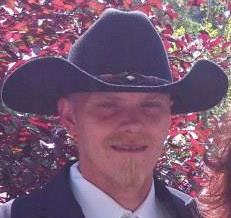
Clinton Mullins, a 46-year-old White man from Garland, West Virginia, was killed during the night of October 18 into the early morning hours of October 19, 2014, in McDowell County. His body was discovered with that of Brandon Church inside a burned pickup truck along the Long Pole Creek area near Panther. A passerby encountered the truck engulfed in flames early that morning, bringing firefighters, West Virginia State Police, crime-scene investigators and personnel from the State Fire Marshal’s Office to what initially appeared to be a vehicle accident. Once investigators examined the scene, however, it became clear that the fire was concealing something far more serious. Five spent shell casings were found near the truck, and investigators determined that both occupants had been shot before the vehicle was set on fire.
The investigation eventually reconstructed the hours leading to the killings through witness statements and later courtroom testimony.
Mullins and Church encountered a group that included Donald Sidney Bailey, Bailey’s wife Sheila, Troy Justice, April Justice and Bailey’s two teenage stepdaughters. The groups met at convenience stores before Mullins and Church followed the others to an area known as Orchard Branch, where they continued drinking together. Testimony described considerable alcohol consumption throughout the evening. At some point the atmosphere changed, with Troy Justice becoming angry and removing his shirt, and the gathering eventually broke up. Bailey later testified that he had known Mullins for years and considered him a friend.
The group left Orchard Branch in Bailey’s blue van while Mullins and Church followed in Church’s pickup. Because the van’s windshield wipers were malfunctioning in the rain, Sheila Bailey pulled onto the side of the road. Church’s truck stopped behind them. According to April Justice’s later testimony, Donald Bailey and Troy Justice walked back toward the pickup while Bailey had a gun concealed behind his back. Mullins remained seated on the passenger side of the truck and Church was also inside. April Justice said she did not hear the argument itself, but she heard gunfire. Medical testimony later established that Mullins was struck twice in the chest while seated on the passenger side of the pickup and died from those gunshot wounds. His death was formally classified as a homicide.
Bailey gave several versions of what happened after he came under investigation. He initially told authorities that Troy Justice had shot the victims, but in later statements Bailey acknowledged firing his own gun into the truck. Bailey claimed Mullins was involved in a confrontation concerning Bailey’s stepdaughters and that Mullins reached toward a gun after Troy Justice shouted a warning about a weapon. Bailey maintained that he fired in an effort to frighten Mullins or prevent him from obtaining the gun and later argued that the shooting was an act of self-defense rather than a planned killing. At his trial, however, one of Bailey’s stepdaughters testified that she saw Bailey walk toward the pickup with a gun and begin shooting into it.
After the shooting, the group drove to the Justices’ residence. Evidence presented in court showed that they later returned to the disabled pickup with gasoline at approximately 1:00 a.m. Bailey and Troy Justice approached the vehicle and called out to Mullins and Church but received no response. According to testimony, gasoline was then poured onto the truck and it was ignited. Bailey later maintained that Troy Justice was the person who poured the gasoline and set the fire. The burning truck was subsequently discovered by the passerby, turning what initially looked like an accident into a double-homicide investigation.
Investigators quickly focused on the people who had been with Mullins and Church that evening. Witnesses at nearby businesses reported seeing a blue van in the area, and while investigators were working along the roadway they saw a blue van pass. Police stopped it and found Donald Bailey, Sheila Bailey and April Justice inside. Donald Bailey and Troy Justice were arrested shortly afterward. Bailey was initially charged with two counts of first-degree murder, third-degree arson and conspiracy, while Justice initially faced accusations of being an accessory to the murders along with arson and conspiracy. A McDowell County grand jury expanded the case in February 2015, indicting Donald Bailey, Sheila Bailey and Troy Justice in connection with both killings, the arson and conspiracy. Sheila Bailey and Justice were also indicted on an accessory-after-the-fact charge.
Donald Bailey ultimately went to trial, where prosecutors presented witness testimony, forensic evidence and medical findings to establish that Mullins and Church had been intentionally shot before an effort was made to destroy the evidence by burning the pickup. Bailey’s defense argued that severe intoxication affected his ability to form the intent required for premeditated murder and maintained that he had fired because he believed he faced a threat. The jury rejected those defenses. On July 15, 2016, after approximately 29 minutes of deliberation, Bailey was found guilty of the first-degree murders of both Mullins and Church, third-degree arson and felony conspiracy. The jury declined to recommend mercy, eliminating the possibility of parole on the murder convictions.
On July 29, 2016, Bailey was sentenced to two life terms without the possibility of parole for the murders. He additionally received a sentence of one to three years for third-degree arson and one to five years for felony conspiracy, with all of the sentences ordered to run consecutively. Bailey appealed his convictions, challenging several aspects of his trial, including evidence admitted against him and the brevity of the jury’s deliberations. On January 5, 2018, the Supreme Court of Appeals of West Virginia rejected his arguments and affirmed the convictions and sentences.
Sheila Bailey also faced criminal consequences for what authorities said was her participation after the shootings. She pleaded guilty in March 2017 to charges stemming from the deaths and was sentenced that June. She received five years for being an accessory after the fact to murder and an additional one-to-three-year sentence for third-degree arson, with contemporary reports describing her total potential imprisonment as up to eight years. Investigators accused her of helping her husband burn the bodies after the shootings.
Troy Justice was a significant figure throughout the investigation and was accused of helping with the effort to burn the truck. The grand-jury record shows that he was indicted on charges connected with the murders, arson, conspiracy and being an accessory after the fact. Court records from Donald Bailey’s case also identify Justice as the person Bailey said obtained the gasoline and ultimately poured it on the pickup and ignited it. The online sources located for this synopsis clearly document Justice’s arrest and indictment, but they do not establish with the same certainty a final trial, plea or sentencing disposition for his case. Donald Bailey’s responsibility for Mullins’s killing, however, was conclusively determined in court through his first-degree murder conviction, consecutive life sentence without parole and the subsequent affirmance of that conviction by West Virginia’s highest court.