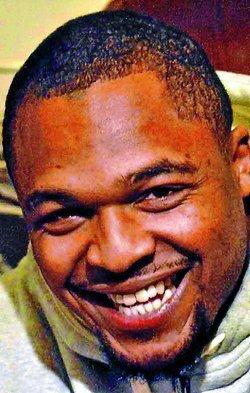
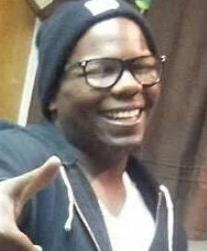
Gerald Martin Maxwell, a 28-year-old Black man, was shot inside an apartment on Starling Drive in Rand, West Virginia, on the morning of December 17, 2014. At approximately 9:00 a.m., Kanawha County emergency dispatchers received a report of a shooting in the 5300 block of Starling Drive. Deputies from the Kanawha County Sheriff’s Office responded, assisted during the initial response by the West Virginia State Police and the U.S. Marshals Service. Maxwell had suffered a gunshot wound to the head and was transported by ambulance to Charleston Area Medical Center with life-threatening injuries.
The shooting triggered a substantial police response in the Rand area. Eight Kanawha County schools were placed on lockdown for more than an hour while officers searched for the person believed responsible. Investigators quickly focused on Leonard Dwayne Thomas, who was staying at the apartment where the shooting occurred.
Deputies located Thomas at a nearby residence and arrested him shortly after the shooting. He was initially charged with malicious wounding because Maxwell was still alive and undergoing treatment. Thomas was arraigned that afternoon, and his bond was set at $100,000 cash only. According to the criminal complaint, Thomas told investigators that he was also known as “D,” that he had recently come to the Rand area at the request of people staying at the apartment, and that after the shooting he had given the firearm to another person.
Maxwell’s condition remained critical throughout the day. The Kanawha County Sheriff’s Office later reported that he died at the hospital late that Wednesday night. With Maxwell’s death, the case changed from a serious assault investigation into a homicide. Thomas appeared in Kanawha County Magistrate Court the following day and the charge against him was upgraded to murder. When a television reporter asked Thomas whether he was sorry and whether he had anything to say to Maxwell’s family, Thomas answered that he was. Authorities did not immediately announce a motive or explain the exact nature of the relationship between the two men.
As investigators and prosecutors reconstructed what had happened inside the apartment, a picture emerged of a gathering that had begun the previous night and involved alcohol and illegal drugs. Robert Obey, the owner of the apartment, later testified that he had hosted a house party there. Thomas and Maxwell were among several people temporarily staying in the residence. Prosecutors said Maxwell had been selling drugs and that Thomas became involved in a dispute concerning a woman and heroin. According to the prosecution’s account at trial, Thomas wanted heroin to give to a woman in the apartment, Maxwell refused, and the disagreement escalated. Prosecutors maintained that Maxwell was resting on a living-room couch when Thomas walked across the room and shot him in the head.
Witness testimony became especially important because Thomas never denied firing the fatal shot. The dispute instead centered on why he fired and whether he was acting in self-defense. Obey testified that roughly half an hour before the shooting he had seen Thomas handling a firearm at the kitchen table. Another witness, Denise Fitzwater, described Thomas counting on his fingers during the night. When she asked what he was counting, she testified that Thomas indicated he was determining how many bullets he would need because he intended to kill everyone in the house. Prosecutors used that testimony to argue that the shooting was deliberate rather than an impulsive act of self-defense. An eyewitness also described Maxwell as unarmed and reclining on a couch when he was shot. Other witnesses did not recall Maxwell possessing a firearm that night.
Thomas was indicted by a Kanawha County grand jury in May 2015 on a murder charge. His trial began in Kanawha County Circuit Court in February 2016 before Judge Charles King. Defense attorney Ed Bullman acknowledged to jurors that Thomas had shot Maxwell but challenged the prosecution’s ability to prove the premeditation necessary for first-degree murder. Assistant Kanawha County prosecutor Maryclaire Akers presented the State’s theory that the confrontation had developed out of Thomas’s frustration, drug use, and arguments inside the apartment. Photographs of the apartment and blood stains on the couch where Maxwell had been resting were presented during the trial.
Thomas eventually took the witness stand in his own defense. He claimed that Maxwell had a gun and that he fired because he believed Maxwell was about to shoot him. Thomas described Maxwell as a bully who frequently disrespected him for having moved to the area from Detroit. He also acknowledged that the two had been arguing about a woman and heroin. During cross-examination, prosecutors repeatedly confronted Thomas with the fact that no other witness had testified that Maxwell was armed. Thomas remained adamant that Maxwell had a weapon, but the State argued that the physical circumstances and testimony of the other people in the apartment contradicted his account.
On February 3, 2016, the jury deliberated for less than two hours before finding Leonard Dwayne Thomas guilty of first-degree murder in Maxwell’s killing. The jury also denied him mercy, a finding that meant he faced life imprisonment without the possibility of parole. The conviction rejected Thomas’s claim that the shooting was justified as self-defense and accepted the State’s position that the killing was sufficiently deliberate and premeditated to constitute first-degree murder.
On March 9, 2016, the Kanawha County Circuit Court formally sentenced Thomas to life in prison without mercy. Thomas appealed his conviction to the Supreme Court of Appeals of West Virginia. He argued that prosecutors had failed to present sufficient evidence to overcome his self-defense claim and had not adequately established malice and premeditation. The appellate court reviewed the testimony, including the eyewitness account that Maxwell was unarmed, testimony about Thomas’s statements concerning bullets before the shooting, and the circumstances surrounding the gunshot to Maxwell’s head. On September 1, 2017, the state’s highest court concluded that sufficient evidence supported the first-degree murder conviction and affirmed the judgment, leaving Thomas’s life sentence intact.