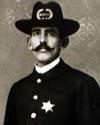
Bennie Jewkes Bushnell, a 26-year-old Caucasian male, was managing the City Center Motel in Provo, Utah, on the evening of July 20, 1976. That night, a man named Gary Gilmore entered the motel, robbed Bushnell, and then forced him to lie down before shooting him in the head. Bushnell's wife discovered him shortly after, but he died from the wound. This senseless act was the second of two murders committed by Gilmore on consecutive nights; the previous evening, he had robbed and killed a gas
station attendant in Orem.
The key to solving the case came from a trail of Gilmore's own blood. While fleeing the motel, Gilmore accidentally shot himself in the hand as he was trying to dispose of the murder weapon in some bushes. A mechanic at a nearby garage where Gilmore had left his truck for repairs noticed the blood on his hand when he returned to pay. The mechanic, having heard about the motel shooting on a police scanner, astutely wrote down Gilmore's license plate number and reported it to the authorities. Gilmore's cousin also contacted the police after he called her asking for bandages and painkillers. The Utah State Police were then able to apprehend Gilmore as he attempted to leave Provo, and he surrendered without resistance.
Gary Gilmore was charged with the murders of both Bennie Bushnell and the gas station attendant, Max Jensen, though the case for Bushnell's murder was tried first due to the presence of an eyewitness. The trial was swift, beginning on October 5, 1976, and lasting only two days. An eyewitness testified to seeing Gilmore in the motel office with a pistol and a cash box moments before Bushnell was found dead. Ballistics evidence matched the bullet that killed Bushnell to the gun Gilmore had hidden, and his blood trail further solidified the case against him. The jury returned a guilty verdict for first-degree murder and recommended the death penalty. Gilmore famously chose to be executed by firing squad and waived all of his appeals, a decision that garnered international attention. Despite efforts by anti-death penalty groups to intervene, Gary Gilmore was executed on January 17, 1977.