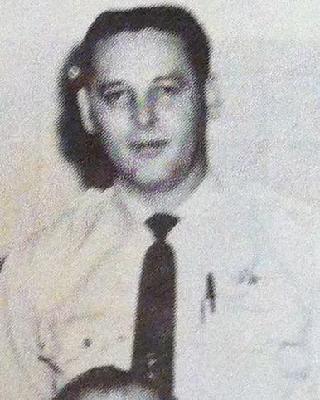
On a spring day in 1972, what began as a routine attempt to serve a warrant in the small town of McDougal, Arkansas, quickly devolved into a tragic and violent encounter that would claim the lives of three law enforcement officers. Clay County Sheriff Douglas Lucian Batey, a 50-year-old White/Caucasian male, was a four-year veteran of the department.
On April 6th, he was accompanied by two of his deputies, Glendal Ray Archer and Troy Key, as they drove to a residence just outside of town to serve a warrant for assault with intent to kill. The man they were seeking was 52-year-old Elbert Ray 'Bert' Grissom.
As the officers arrived at Grissom's driveway and exited their vehicle, they were met with a sudden hail of gunfire. Without warning, Grissom opened fire with a 12-gauge shotgun. Sheriff Batey and Deputy Archer were struck and killed instantly at the scene. Deputy Key sustained severe injuries from the shotgun blast. He was rushed from the scene for medical attention but would succumb to his wounds ten days later, raising the death toll from the violent outburst to three. The carefully planned service of a warrant had turned into a deadly ambush, leaving a community in shock and a sheriff's department decimated.
In the immediate aftermath of the shooting, law enforcement from the surrounding areas descended on the scene. It was Corning Chief of Police Ed Smith who, shortly after the incident, found Elbert Ray Grissom sitting on the tailgate of his truck. Grissom was taken into custody without any further violence or resistance. The man accused of single-handedly wiping out a significant portion of the Clay County Sheriff's Department was arrested and charged with three counts of first-degree murder for the deaths of Sheriff Batey, Deputy Archer, and Deputy Key.
The legal process that followed the horrific events of that April morning brought a measure of justice for the fallen officers and their grieving families. Elbert Ray Grissom was convicted on all three counts of first-degree murder. For each of the lives he had taken, he received a life sentence. He would spend the remainder of his days behind bars and ultimately died in prison on March 12, 1984. Sheriff Batey was survived by his wife and two children, his life and career cut short in a sudden act of violence that left an indelible mark on the community he had sworn to protect.