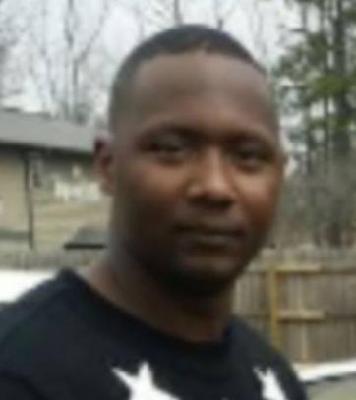
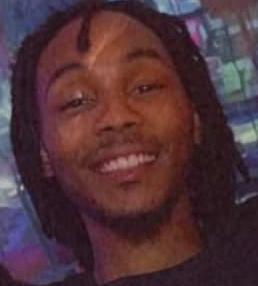
Hardip Singh, a 46-year-old Indian American man from Pine Bluff, Arkansas, was killed on the evening of June 22, 2015, while working at the Big Red convenience store at 1802 E. Harding Avenue. Shortly before 8:30 p.m., a bronze-colored four-door Cadillac pulled into the store’s parking lot and stopped near the gas pumps. Sha’Quille Carter, who was riding as a passenger, went into the store, looked around, purchased a drink and returned to the car.
Moments later, the driver, Lorenzo Lamar Kellon, got out carrying a pistol and wearing a silver mask with a black hood. Singh was outside along the side of the business smoking a cigarette when Kellon approached him. Surveillance footage and later trial evidence showed Kellon firing three times. One bullet struck Singh in the head, another grazed his cheek and a third struck him in the back. Singh collapsed and died where he fell.
Inside the store, another clerk had been stocking merchandise when he heard the gunfire. He ducked behind an aisle and remained hidden through the robbery, escaping injury. After shooting Singh, Kellon entered the convenience store, opened the cash register and took approximately $550. He then returned to the Cadillac and drove away with Carter. Police officers responding to the store found Singh unresponsive outside the business, and the coroner pronounced him dead. The killing was reported as Pine Bluff’s fifth homicide of 2015.
The investigation moved quickly because surveillance cameras had captured the Cadillac as well as the movements of the people involved. Police initially announced that Carter was wanted in connection with aggravated robbery and homicide and circulated information about the Cadillac, described in early reports as a green, pewter or similar-colored older-model Cadillac DeVille. The day after the murder, an officer spotted a bronze-colored Cadillac outside another Pine Bluff convenience store. After watching a person leave that store and return to the car, the officer followed the vehicle to an abandoned house, called for backup and officers took Kellon into custody. Police reported that he was arrested without incident. He was brought to the Pine Bluff Police Department, advised of his Miranda rights and questioned by detectives. About 20 minutes into the interrogation, Kellon confessed to killing Singh and robbing the store; he also offered to help investigators recover the murder weapon.
Carter remained wanted briefly after Kellon’s arrest, but police captured him the following morning without incident. Investigators ultimately treated Carter as Kellon’s accomplice, and both suspects were in custody within roughly 36 hours of the killing. Carter had been the passenger in the Cadillac used during the robbery, while the evidence identified Kellon as the gunman who shot Singh, entered the store and took the money. Carter was eventually accused of capital murder and aggravated robbery. He remained incarcerated while the case proceeded through the courts.
Kellon went to trial in Jefferson County in September 2016. Prosecutors had waived the death penalty before trial, but the capital-murder charge still exposed him to life imprisonment without parole. The case included surveillance recordings from cameras positioned inside and outside the Big Red store, forensic testimony concerning Singh’s gunshot wounds and Kellon’s recorded confession. After a five-day trial, the jury convicted Kellon of capital murder and aggravated robbery and also found that he had used a firearm in committing the offenses. On September 22, 2016, he was sentenced to life in prison without the possibility of parole for capital murder, an additional 40 years for aggravated robbery and another 15 years for the firearm enhancement. The additional sentences were imposed consecutively.
Kellon challenged his conviction on appeal, arguing in part that his confession should have been suppressed because statements made by detectives during the interrogation improperly induced him to confess. He also challenged the jury instructions used at his trial. The Arkansas Supreme Court rejected those arguments on February 15, 2018. The court concluded that detectives had not made the type of specific promises of leniency that would render the confession involuntary and upheld the trial court’s handling of the jury instructions. Kellon’s convictions and life-without-parole sentence therefore remained in place.
Carter’s case ended differently. On December 12, 2017, he resolved the prosecution by entering a plea to reduced charges of second-degree murder and robbery rather than standing trial on the original capital-murder and aggravated-robbery allegations. Court records cited in later federal proceedings describe the plea as no contest. He received a 20-year sentence, with the terms on the two offenses running concurrently rather than one after another. By then, the criminal cases had established the sequence captured on the store cameras: Carter accompanied Kellon to the Big Red store, Kellon armed and masked himself, Singh was shot outside, the register was robbed, and the pair fled together before investigators tracked them down in the days immediately following the killing.