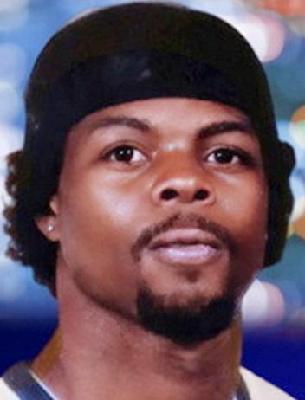
Jerry Don Hensley Jr., a 49-year-old White/Caucasian man, was found dead on March 26, 2020, in a field near the intersection of Spring Lake Lane and Marion County Road 5019 in St. Joe, Arkansas. Authorities were called at about 2:39 that afternoon after a report that a body had been discovered near a motorcycle while the callers were checking the mail. Marion County sheriff’s deputies and investigators responded, with assistance from the Arkansas State Police.
Hensley was lying beside the motorcycle and appeared to have been shot. Investigators initially observed a gunshot wound to his face, and when his body was moved during a search for a weapon, they discovered another gunshot wound on the left side of his chest. No weapon belonging to Hensley was found at the scene. The Marion County Coroner pronounced him dead at approximately 4:15 p.m., and his body was sent to the Arkansas State Medical Examiner, which later ruled the death a homicide.
The investigation soon focused on Caleb William Nance and his father, William Dean Nance, both of Marion County. Caleb was the person who contacted authorities and initially gave the impression that he and his father had simply come upon Hensley’s body while checking their mail. Accounts given during the early stages of the investigation were inconsistent. William Nance initially claimed that he had not known Hensley was dead until he and his son noticed buzzards in the area and discovered the body. At another point, however, he reportedly said someone at a nursing home had told him Hensley had been killed and had specifically mentioned that Hensley had been shot in the head and chest, details that drew investigators’ attention.
When investigators separately questioned the father and son, the story changed substantially. Caleb Nance admitted that he had shot Hensley with a. 30-30 rifle. According to the account he gave authorities, Hensley had followed him on a dirt bike to the area near Spring Lake Lane and Marion County Road 5019. Caleb claimed that Hensley stopped, began getting off the bike and appeared to be reaching for something. Caleb said he believed Hensley was reaching for a weapon and fired from roughly 25 to 30 yards away. He maintained that the shooting was an act of self-defense. Investigators, however, were unable to locate a weapon near Hensley’s body.
Caleb also described what happened after the shooting. He said he returned home and told his father what had occurred. Investigative records later described the pair as returning to the scene and staging the circumstances surrounding the 911 call so that it would appear they had merely discovered Hensley’s body. Caleb told authorities that his father went to the body looking for anything that might support the claim of self-defense and did something with ammunition connected to the firearm. Investigators said the rifle was cleaned, wrapped in plastic and hidden underneath an abandoned house next to the Nance property. Caleb reportedly explained that he believed cleaning the gun would eliminate evidence, saying he had picked up the idea from watching police television programs.
Investigators obtained a search warrant and recovered the. 30-30 rifle from beneath the abandoned house. During an additional search of the shooting scene, Arkansas State Police and Marion County investigators found three. 30-30 cartridge casings, evidence that was consistent with the account Caleb had given during questioning. William Nance had previously told investigators there were no firearms in the family home, further conflicting with what investigators subsequently learned about the rifle.
Caleb William Nance, who was 19 when arrested, was initially charged with first-degree murder and tampering with physical evidence. Early reporting also listed two counts of evidence tampering and several unrelated misdemeanor disorderly-conduct counts, and his bond was set at $1,000,500. William Dean Nance, then 63, was arrested in connection with the alleged efforts to conceal what had happened. He faced charges that included hindering apprehension or prosecution, tampering with physical evidence and obstructing governmental operations. His bond was initially reported as $50,000.
Caleb entered a not-guilty plea to the first-degree murder charge, and the prosecution moved toward a jury trial. The case was repeatedly delayed, including disruptions caused by the COVID-19 pandemic. By early 2021, Caleb remained in the Marion County Jail awaiting trial, while his father’s related case was also being scheduled for jury proceedings. Court reporting showed that Caleb at one point requested a psychological evaluation after writing that he believed he suffered from post-traumatic stress.
The prosecution ultimately did not take Caleb’s original first-degree murder charge to a completed jury trial. In April 2024, after spending 1,480 days in the Marion County Jail as a pretrial detainee, Caleb pleaded guilty to the reduced charge of second-degree murder and also pleaded guilty to tampering with evidence. He was sentenced to 20 years in prison. Although he had continued to characterize the shooting as self-defense, the guilty plea formally resolved the homicide prosecution with a murder conviction rather than an acquittal or dismissal based on self-defense.
As part of Caleb’s plea agreement, he was required to provide truthful information in the criminal case against his father. At the time Caleb was sentenced, William Dean Nance was still facing charges of tampering with physical evidence, hindering apprehension and obstructing governmental operations over allegations that he helped conceal the rifle and assisted his son after the shooting. His trial was scheduled for May 6, 2024. Available online reporting reviewed for this synopsis documents those charges and that scheduled proceeding, but it does not establish a later conviction, acquittal or other final disposition in William Nance’s case.