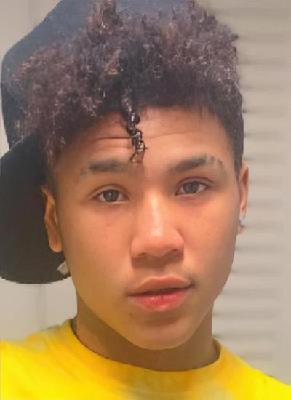
Sixteen-year-old Aidyn Montreal Davis, a Black male from Hot Springs National Park in Arkansas, was nearing the middle of his high school years when gunfire on a cool October evening cut his life short. Born on January 30, 2006, in McAlester, Oklahoma, to parents Antonio Davis and Rhawnie Palmer, he had grown up into a student whose days revolved around classes, friends, and the routines of adolescence.
At Hot Springs World Class High School, where he was a sophomore and had been part of the “Trojan family” since early childhood, staff and classmates later described the shock of losing someone they had watched grow up in their hallways. Online memorials portray him as goofy and hardworking, the kind of teenager who made people laugh and left those around him with warm memories even in the midst of their grief.
On Wednesday, October 5, 2022, just after 6 p.m., the ordinary rhythm of the neighborhood around School Street was broken by the sound of shots. At 6:17 p.m., officers from the Hot Springs Police Department were dispatched to the 600 block of School Street after reports of a shooting. When they arrived, they found a wounded boy lying there with gunshot injuries. He was rushed to a local hospital for treatment, but despite efforts to save him, he died from his injuries not long afterward; he would soon be publicly identified as Aidyn. The scene was not confined to a single victim. Around the same time, an older teenage boy arrived at a local hospital with multiple gunshot wounds he said came from the same School Street incident, and officers searching the area were flagged down by a driver on Central Avenue, several blocks away, who was frantically trying to get help for a teenage girl in the car suffering from life-threatening gunshot wounds. Officers rendered emergency aid to her in the vehicle until paramedics could take her on to the hospital, leaving the night split between the quiet of residential streets and the flashing lights of patrol cars and ambulances.
In the days that followed, grief settled heavily over Hot Springs. At Aidyn’s high school, administrators spoke publicly of how “heartbroken” the students and staff were, and the campus became a gathering place where classmates could mourn together, share memories, and try to make sense of the loss. Candle-lit vigils and social-media tributes added a digital layer to the mourning: on a national gun-violence memorial site, hundreds of virtual candles were lit for him, and short messages from friends and relatives appeared, calling him by affectionate nicknames, promising they would not forget him, and marking the birthdays he would never see. His obituary, posted by a Hot Springs funeral home, framed his death in the plain, painful language of a life cut off on a specific date, mentioning his family and the town in which he had grown up, while offering a space for condolences that quickly filled with expressions of love and disbelief.
Investigators worked quickly to identify those they believed were responsible for the shooting. By October 7, the Hot Springs Police Department had obtained warrants for two young men: Camron Young and Markus Conrad. The warrants accused them of a cluster of serious offenses tied to the School Street violence: murder in the first degree, aggravated robbery, two counts of committing a terroristic act, and battery in the first degree. One of them also faced an additional count of tampering with physical evidence, and officials noted that Conrad, although described as a juvenile in official statements, would be charged as an adult. At that stage police were still asking the public for help locating the two, underscoring the fear and tension that lingered in the wake of the shooting as residents absorbed the reality that those suspected in the killing were, at least initially, not yet in custody.
Over the following weeks, the picture of the case shifted. A later incident summary compiled in a national gun-violence database lists Young as a subject-suspect in the School Street shooting, with his status recorded as “unharmed, arrested,” indicating that at some point after the warrants were issued he was taken into custody in connection with the case, even though the database gives no narrative detail on how or when that arrest occurred. Separate county booking records from 2025 show men with the same names as Young and Conrad being held in the Hot Spring County facility on a “hold for court” status, but those brief entries do not spell out which specific charges or cases lie behind their confinement, leaving their exact legal trajectories opaque to the public.
Another dramatic development came a month after the shooting. On November 8, a younger suspect—himself a teenager—walked into the Hot Springs Police Department and surrendered. According to a city news release and local reporting the next day, police announced that this 16-year-old was responsible for the October 5 homicide at 607 School Street and that he had been arrested for his role in the case. He was charged as an adult with murder in the first degree, aggravated robbery, two counts of a terroristic act, and battery in the first degree, and was transported to a juvenile detention facility where he was held on a substantial bond. With one teenage suspect in custody and two older suspects facing warrants and later jail holds, the contours of the investigation suggested a violent encounter involving several youths, but publicly available summaries stop short of describing a final resolution in court. Case-tracking sites that aggregate information about homicides in Hot Springs continue to list Aidyn’s killing with those suspects’ names and charges attached, yet without clear documentation of eventual trials or sentences, leaving the story of legal accountability incomplete even as the story of loss—felt in a high-school hallway, a grieving family, and an online trail of candles and comments—remains painfully clear.