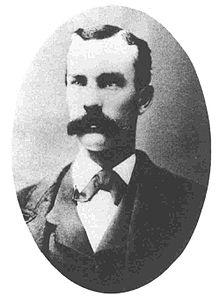
On the evening of December 8, 1883, a male Deputy Sheriff named D. Tom Smith was killed in the town of Bisbee, in Cochise County, Arizona. His death was part of a violent robbery that would come to be known as the Bisbee Massacre. Five armed men rode into town with the intent of robbing the Goldwater & Castaneda Mercantile Emporium, where they mistakenly believed a large mining payroll was being held.
While three of the outlaws entered the store, two remained outside, firing their
weapons indiscriminately to intimidate the townspeople. Inside, the robbers, disappointed to find the payroll had been delayed, proceeded to steal between $900 and $3,000 from the safe and the patrons, along with jewelry. The gunfire in the street claimed the lives of several citizens. A stray bullet killed a pregnant woman, Anna Roberts, in a nearby boarding house, and another bystander, John Nolly, was mortally wounded. A man named J.C. Tappenier was also shot and killed.
Hearing the commotion from a nearby restaurant where he was having dinner with his wife, Deputy Sheriff Smith rushed into the street. He identified himself as a lawman, at which point one of the robbers reportedly exclaimed, "Then you are the one we want!" before shooting him dead. Smith fell beneath a freight wagon, another victim of the chaotic and bloody robbery.
In the aftermath, Cochise County Sheriff Jerome L. Ward formed posses to track down the killers. The five men directly involved in the robbery and murders were identified as Daniel "Big Dan" Dowd, Comer W. "Red" Sample, Daniel "York" Kelly, William "Billy" Delaney, and James "Tex" Howard. Suspicion also fell upon a local saloon owner, John Heath, who was believed to have planned the heist. Heath was arrested and, under questioning, admitted to organizing the robbery but denied intending for anyone to be harmed.
All five of the gunmen were eventually captured, tried, and convicted of first-degree murder. They were sentenced to death and were legally hanged in Tombstone, Arizona, on March 28, 1884. John Heath was tried separately and, found guilty of second-degree murder, received a life sentence. However, this sentence was deemed too lenient by many citizens. On February 22, 1884, a lynch mob of angry townspeople forcibly took Heath from the Tombstone jail and hanged him from a telegraph pole.