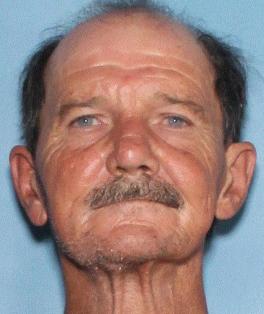
William Hazelton “Haze” Burch was a Phoenix police officer who, at age 41, was fatally shot in the line of duty on February 5, 1925, becoming the first officer of the Phoenix Police Department to die while serving; contemporary records identify him as male but do not specify his ethnicity. Born in 1884 in Payson, Gila County, Arizona, he had built a life in Phoenix with his wife and three young children and was known within his family as a stern but kind peacemaker.
His career with the department placed him on routine patrols in the growing downtown area, including the intersection of 8th Street and Jefferson Street, an ordinary crossroads that would become inseparable from his death in the city’s memory.
On the evening that led to the shooting, Officer Burch came upon two men siphoning gasoline from a parked car near 8th and Jefferson in central Phoenix. Accounts from law-enforcement memorials and historical summaries describe how he moved in to confront the pair over the apparent theft. One of the suspects suddenly turned on him and fired multiple rounds from a revolver, striking Burch in the midsection. Even after being hit, he managed to draw his own weapon and fire at the fleeing men, but none of his shots are reported to have found their mark. Gravely wounded and suffering severe internal bleeding, he was rushed to a nearby hospital, where he died within about an hour of the attack.
The two gasoline thieves were not petty local offenders but hardened fugitives: brothers William “Bill” Lawrence and Albert “Babe” Lawrence of Muskogee, Oklahoma. Before their encounter with Burch, they had already left a trail of violence across several states. In Texas, they were wanted for the murder of Deputy Sheriff Joseph P. Morgan, whom they shot during an escape while being transported back to Oklahoma; Morgan’s body was left in a roadside ditch and his colleague was handcuffed to a tree and robbed. Months later, in Livingston, Montana, the same pair were identified as the burglars who gunned down Patrolman Charles Wilson in a rail yard after he and a companion attempted to arrest them. A multi-state manhunt had followed, with circulars and reward notices distributed widely, but the brothers managed to evade capture through a series of car thefts and flight across the West until they surfaced in Phoenix.
After shooting Burch, the Lawrence brothers fled on foot into the dark Arizona night. Posses were quickly organized, and within an hour searchers discovered a Nash automobile with Oklahoma plates abandoned less than a quarter of a mile from the crime scene; its description matched a car reported stolen in Wewoka, Oklahoma, and strongly tied the Phoenix shooting to the long-running fugitive case. The following morning, a farm laborer reported seeing two suspicious men climbing Tempe Butte, a prominent barren hill several miles from downtown. Constable R. L. McDonald went to investigate alone, armed with a Winchester rifle. Climbing the butte on foot, he found the brothers asleep under a large rock, exhausted and disheveled from their night in the desert, and was able to capture them without a shot being fired. McDonald took the handcuffed pair to Tempe and then turned them over to Phoenix authorities; the size and hostility of the crowd that soon gathered outside the Maricopa County Jail, threatening mob violence, led officials to move the prisoners rapidly to the state prison at Florence for their safety.
In subsequent questioning, Bill Lawrence admitted that he had fired the shots that killed Officer Burch, though he later attempted to characterize the shooting as self-defense and recanted his confession. Arizona authorities charged him with first-degree murder, and within months he was convicted for Burch’s killing and sentenced to death by hanging. On January 8, 1926, at the Arizona State Prison in Florence, Lawrence was led to the gallows. Witnesses later reported that he declared he had accepted Christ, stated that he forgave those carrying out the sentence, and told the executioner, “Let’s do it,” before the trap was sprung; he was pronounced dead just over nine minutes later. His body was returned by rail to Muskogee to be buried near his wife, child, and father. His brother Albert was extradited to Texas, tried for the murder of Deputy Morgan, and sentenced to life imprisonment, while no one was ultimately convicted for the killing of Officer Wilson in Montana.
Officer Burch’s death left a widow, two sons, and an infant daughter, one of whom, Frank Haze Burch, would later become a prominent figure in Arizona’s legal community. He himself was laid to rest in Greenwood Memory Lawn Cemetery in Phoenix, where his grave is still marked and visited. Within the city, his sacrifice is commemorated in multiple ways: his photograph hangs in the Memorial Room of the Phoenix Police Museum, he is listed and remembered on law-enforcement memorial pages and in annual ceremonies, and a memorial marker and periodic media retrospectives continue to highlight the events of February 5, 1925, at 8th and Jefferson. Nearly a century later, his killing is still recognized as a defining early tragedy in the history of the Phoenix Police Department and a key episode in the violent saga of the Lawrence brothers’ crime spree.