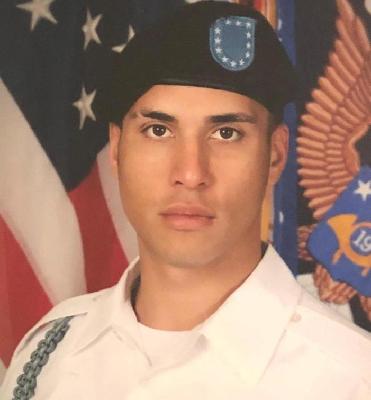
Eric Matthew Laird was 30 years old, a White/Caucasian male, when he was shot and killed in Cary, North Carolina, on July 2, 2023. Although the initial description associated him with Cary, police and later court records identified Laird as being from Lacey, Washington. The circumstances that eventually emerged through the criminal case showed that Laird had traveled to North Carolina to spend the weekend with William Jameson Reece Atkins, a friend he had known through their service in the United States Army. Atkins had returned to Cary after receiving an honorable discharge in 2021, and Laird arrived in North Carolina on or about July 1, 2023. Atkins picked him up from the airport and brought him to his apartment, where the two men began drinking heavily.
According to the factual account later described by the North Carolina Court of Appeals, much of which was based on Atkins' trial testimony, the two friends spent part of the night talking and drinking while Atkins showed Laird firearms and ammunition because they had planned to go target shooting during the weekend. Later, as Atkins prepared to go to bed, he and Laird took Atkins' dog outside near a wooded creek beside the apartment complex. Laird, who was intoxicated, fell into the creek. Atkins went down the bank to help him, and both men became wet before returning to the apartment and changing clothes. Atkins placed his wet phone in a bowl of rice to dry, and by then it was approximately 5:00 a.m.
Atkins testified that the situation changed dramatically after he went into the bathroom and then returned to the living area. He said he saw Laird holding an AR-15 rifle and apparently behaving as though he believed another man was outside the apartment. According to Atkins, Laird appeared paranoid, became increasingly frustrated when Atkins did not believe someone was outside, pointed the rifle at him several times, and threatened to shoot him. Atkins said the two struggled over the rifle until he was able to take it away. As he backed away, Laird allegedly threw a candle at him, cutting Atkins on the arm. These details became central to Atkins' later argument that the killing occurred in self-defense.
At approximately 6:54 a.m. on July 2, Atkins used Laird's phone to call Cary emergency services because his own phone was still drying. During the recorded emergency call, Laird could be heard speaking to Atkins. Atkins testified that while he was giving the dispatcher his address, Laird charged toward him. Atkins then fired five shots at Laird while still connected to the emergency operator. After the shooting, Atkins told the dispatcher that he was afraid to lower the gun while Laird was on the floor. When the dispatcher asked whether Laird had a gun at that point, Atkins said that he did not. Atkins also told the operator that he had cleared the rifle involved in the earlier confrontation and placed it on a counter.
Cary police responded to the 200 block of Hampton Lee Court near the MAA Hermitage apartment complex shortly before or around 7 a.m. Officers found Laird suffering from multiple gunshot wounds, and he died from those injuries. Early public statements from police described the shooting as an isolated incident and emphasized that Laird and the person accused of shooting him knew one another, indicating that authorities did not believe there was an ongoing threat to the surrounding community. Officer Harper Spell was among the responding officers and placed Atkins in handcuffs while the scene was secured. Atkins was then transported to the police station.
Later that day, Cary police arrested William Jameson-Reece Atkins, who was 29 at the time, in connection with Laird's death. He was taken to the Wake County Jail and initially charged with murder. On July 25, 2023, a grand jury formally indicted Atkins for first-degree murder. The prosecution therefore proceeded on the theory that Atkins had unlawfully killed Laird, while Atkins did not dispute that he fired the fatal shots but maintained that he acted because he feared for his life.
At trial, Atkins testified in his own defense and admitted shooting and killing Laird. The central dispute was not who fired the shots, but whether the shooting constituted a criminal homicide or lawful self-defense. Jurors were instructed that they could consider first-degree murder, second-degree murder, voluntary manslaughter and self-defense. The proceedings also encountered unusual complications after deliberations began. One juror had to leave because the juror's child was taken to an emergency room. Another juror found an identification badge belonging to an employee of the Wake County District Attorney's Office, contacted that employee and later sent a LinkedIn connection request. After questioning the juror about those contacts, the court excused the juror and substituted an alternate, directing the reconstituted jury to begin its deliberations again.
The jury ultimately rejected Atkins' claim of complete self-defense and found him guilty of second-degree murder rather than first-degree murder. The trial judge sentenced Atkins to a prison term of 216 to 272 months, the equivalent of approximately 18 to 22 years and eight months. Atkins immediately appealed the conviction, challenging several aspects of the trial, including the instructions given to jurors regarding self-defense and whether he could be considered the initial aggressor in the confrontation.
That appeal eventually produced a major reversal. On June 17, 2026, the North Carolina Court of Appeals ruled that the trial court had improperly included references to the "aggressor" doctrine in its self-defense instructions. The appellate court concluded that the evidentiary record did not support treating Atkins as the initial aggressor. In discussing the evidence, the court emphasized the testimony that Laird had possessed the AR-15, pointed it at Atkins and threatened him, that Atkins had wrestled the weapon away, called 911, and then said Laird charged him before the shooting. The appellate panel determined that merely being armed when the final confrontation occurred was not enough to make Atkins the aggressor under North Carolina self-defense law.
The Court of Appeals further found that the faulty instructions could have affected the verdict because jurors may have believed they could reject Atkins' self-defense claim simply by deciding he was the aggressor, even though the evidence did not legally support that conclusion. Because the error was considered prejudicial, the appellate court set aside the existing second-degree murder judgment and ordered a new trial. The court did not decide Atkins' other appellate arguments because the instructional error by itself was sufficient to require the case to be retried. As of the most recent publicly available court information located, the June 17, 2026 ruling granting Atkins a new trial is the latest significant adjudication in the case; no later online source located documents a completed retrial, a new conviction, an acquittal or a final dismissal of the charge.