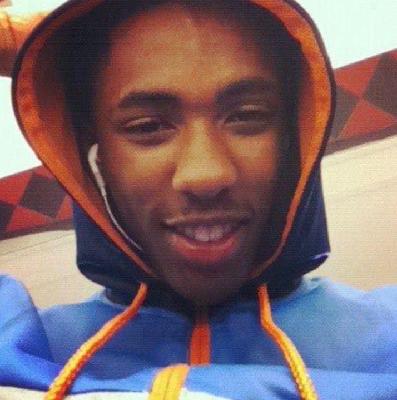
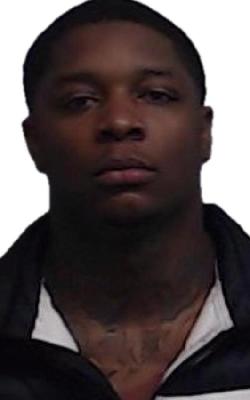
On a warm evening in early June of 2009, the rhythm of life in Atlanta, Georgia, was tragically and permanently altered for the family and friends of Andre Reynolds. Known affectionately as "Deek" to those who knew him well, he was a man remembered for a vibrant smile that he always seemed to carry. That evening, however, a sequence of events would unfold that would lead to the end of his life in an apartment parking lot. The 34-year-old Black / African American man, a father to four children named QuinnDarious, Armani, NyKia, and Kimara, would not return home to his family, which included his mother, Gloria Butts, his father, Donald Reynolds, and his brother, Brandon Reynolds.
The night of June 6, 2009, was set in motion by a plan for a significant marijuana transaction. Andre, known to be a supplier, was connected with a buyer named Ezwekwesiri Ngumezi through a middle man, Danny Marshall. Andre and Marshall had a history of facilitating such deals together.
The agreement was for the sale of two pounds of marijuana for $2,400. Ngumezi was driven to the arranged meeting place by his neighbor, Cornelius Hubert. The chosen location was a seemingly ordinary apartment complex parking lot, a backdrop for a deal that would take a fatal turn.
After some initial negotiations, the parties briefly separated; Andre to retrieve the marijuana and Ngumezi on the pretense of getting an additional $200, though he later testified he already had enough money. When they reconvened, Ngumezi, carrying a backpack, left Hubert's car and got into Andre's truck. Hubert and Marshall remained in the other vehicle, waiting for the transaction to conclude. From his vantage point, Marshall observed a "commotion" inside Andre's truck. Growing concerned, he approached the vehicle and was met with a horrifying scene: Ngumezi had a black handgun pointed at Andre. Andre, who was not known to carry a gun, was struggling with Ngumezi, trying to push the weapon away.
The struggle was brief and ended in two gunshots that echoed through the parking lot, claiming Andre Reynolds's life. Ngumezi then turned the gun on Marshall, who fled to avoid being shot himself. Hubert testified that he saw Ngumezi run from Andre's truck with the gun still in his hand and carrying a large plastic bag of marijuana. Ngumezi then got back into Hubert's car, and they sped away from the scene, leaving Andre behind. The vibrant smile that had brought joy to so many was extinguished in an act of violence. Friends would later recall his loving nature and the jokes he told that kept everyone smiling, with memories stretching back to childhood days of playing cards on a green box in the Four Season neighborhood and attending Southside High School together.
The investigation that followed pieced together the events of that tragic night. The evidence collected at the scene included shell casings found inside the cabin of Andre's truck. The testimony of the witnesses, particularly Danny Marshall who saw the struggle and the gun, and Cornelius Hubert who drove the perpetrator to and from the scene, proved to be crucial. Their accounts were corroborated by Ngumezi's own testimony, where he admitted to shooting Andre, though he claimed it was in self-defense, stating that Andre had reached for a pistol under the seat.
On September 16, 2009, Ezwekwesiri Ngumezi was indicted for malice murder, felony murder predicated on aggravated assault, armed robbery, aggravated assault, and possession of a firearm during the commission of a felony. Following a jury trial that concluded on January 28, 2011, Ngumezi was found guilty on all counts. In a subsequent appeal, Ngumezi contended that the evidence was insufficient for the armed robbery charge and that the court had erred by not instructing the jury on the lesser offense of voluntary manslaughter. However, his conviction was affirmed in a 2017 decision, with the court noting that his trial testimony unequivocally stated he acted out of fear for his life, which supported the self-defense instruction rather than one for voluntary manslaughter. The case of Andre Reynolds's death is, therefore, not an unsolved mystery but a closed chapter in the annals of Atlanta's criminal justice system, though the personal loss for his family and friends remains a story with no end.