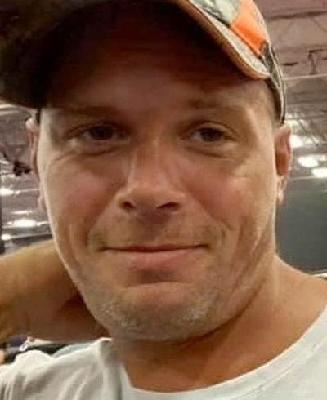
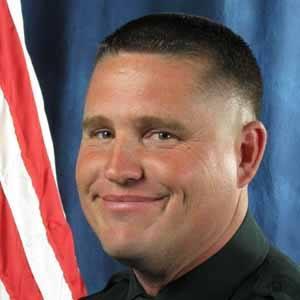
Manuel “Macho” Torres Jr., a 37-year-old Hispanic/Latino man from Port Charlotte, Florida, was fatally shot on March 20, 2024, outside UpperCutz Barbershop in Bell Plaza along Tamiami Trail. Torres had built a life around barbering and was well known in the Port Charlotte community, where friends and relatives described him as a devoted husband and father who regularly helped others.
His obituary said he had operated UpperCutz at Bell Plaza after years in the barbering business and was known for community efforts that included donating school supplies and providing children with free haircuts. He left behind his wife and two sons.
The shooting unfolded in the parking lot near Torres’s business, next door to a hydroponics store owned by David Lee Hull. The Charlotte County Sheriff’s Office quickly identified Hull as the person who fired the shots. Authorities said Hull called 911 after the shooting and reported that he had been attacked and had shot someone. Investigators initially detained and questioned him, but he was not immediately arrested. The sheriff’s office described the shooting as intentional while investigators and prosecutors examined whether Hull’s actions could legally qualify as self-defense under Florida law.
Information later presented in court gave a clearer picture of the confrontation. According to accounts of the evidence, an argument between Torres and Hull escalated into a physical struggle. Hull’s defense maintained that Torres attacked him, lifted or forced him down, choked him for roughly 17 to 20 seconds and slammed him onto the concrete. Hull told investigators that the pressure and choking made him believe he was going to die. Prosecutors, however, focused on what happened immediately after the physical struggle. They said that after Hull got back up, Torres had begun moving away, and within approximately four seconds Hull drew a firearm and fired twice. One of the bullets struck Torres in the heart. That sequence became central to the dispute over whether the shooting was a lawful act of self-defense or an unlawful killing after the immediate threat had passed.
For more than a month after the shooting, Hull remained free while the Charlotte County Sheriff’s Office continued investigating and consulted with the State Attorney’s Office. The delay deeply frustrated Torres’s relatives. His family publicly demanded answers, and supporters gathered at the Charlotte County Courthouse in Punta Gorda in April 2024 to protest the lack of an arrest and what they considered an absence of information about the investigation. Torres’s widow and other relatives argued that the circumstances warranted criminal charges and repeatedly called for justice.
The investigation ultimately resulted in criminal charges. On April 23, 2024, authorities arrested David Lee Hull after investigators concluded there was probable cause to charge him with second-degree murder. The decision came after additional review by the sheriff’s Major Case Division and the State Attorney’s Office. Hull was taken into custody at the Charlotte County Jail, formally accused of killing Torres, and subsequently pleaded not guilty while demanding a jury trial. The second-degree murder accusation was a criminal charge rather than a finding of guilt, and Hull’s defense continued to maintain that he had acted because he feared for his life during the confrontation.
At a bond hearing, prosecutors opposed Hull’s release and relied in part on surveillance footage capturing the confrontation. The defense emphasized the choking and alleged assault on Hull, while prosecutors stressed the brief interval between the end of the struggle and the gunfire and the allegation that Torres was moving away when Hull fired. A judge ultimately rejected the state’s request to keep Hull jailed without bond and set bond at $250,000. Conditions of release included GPS monitoring, surrendering any passport, possessing no firearms or ammunition and having no contact with Torres’s family.
Hull later sought to have the murder charge dismissed under Florida’s stand-your-ground and self-defense laws. That effort placed the disputed seconds surrounding the shooting at the center of the case: the defense argued that the choking and violent physical encounter gave Hull a reasonable fear of death or serious injury, while the prosecution maintained that the circumstances had changed by the time the shots were fired. In July 2025, a Florida court denied Hull’s motion to dismiss the second-degree murder charge on self-defense grounds, meaning the prosecution was permitted to continue rather than having the case terminated through stand-your-ground immunity.
The publicly available reporting located for this synopsis confirms Hull’s arrest, his not-guilty plea, the second-degree murder charge, his conditional release on bond, and the later rejection of his effort to obtain dismissal through a stand-your-ground defense. The sources reviewed did not establish a subsequent jury verdict, guilty plea, conviction, acquittal or sentencing, so no final criminal disposition can be stated from the available reporting. What began as a deadly confrontation between neighboring business owners therefore developed into a contested murder prosecution centered on whether Hull remained in imminent danger when he fired the shots that killed Torres.