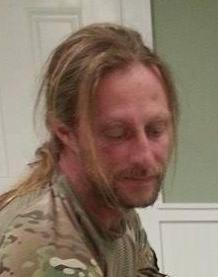
Anthony Benedict “Tony” Hinners, a 58-year-old White male, was fatally shot on April 9, 2022, outside his brother's home in Pomeroy, Iowa. Although some initial reports listed him as 59, obituary information shows that he was born on April 23, 1963, meaning he died two weeks before his 59th birthday. The shooting brought a sudden and violent end to the life of a longtime funeral director who had spent more than three decades helping families through their own periods of grief.
Earlier that day, Anthony and his older brother, Michael Kenneth Hinners, had gone hunting and consumed a substantial amount of alcohol. By the afternoon, the brothers had returned to Michael's residence at 210 South Ontario Street. When Anthony decided to leave, his car would not start because its battery was dead. The problem led to an increasingly heated argument between the two men as they stood near the driveway.
A neighbor, Ray Chick, attempted to help them start the vehicle. Michael reportedly wanted Anthony to move the car closer so a battery charger could reach it, but Anthony responded that the car could not be moved because it would not start. Chick went back to his own home to retrieve an extension cord. While returning, he heard a gunshot and saw Anthony fall. The shot had come from Michael's porch, above where Anthony was standing near the bottom of the steps.
At approximately 4:25 p.m., the Calhoun County Dispatch Center received a report that a man had been shot. Deputies, Pomeroy police officers and Calhoun County emergency medical personnel responded. They found Anthony suffering from a shotgun wound to the chest. Despite efforts to save him, he was pronounced dead at the scene. His body was taken to the Iowa Office of the State Medical Examiner for an autopsy.
Michael told the neighbor to call 911 and immediately described the shooting as an accident. When Pomeroy Police Chief Lori Gerdes arrived, Michael was visibly upset and crying. He initially refused to tell officers where the weapon was located. Investigators later found a Harrington and Richardson 10-gauge shotgun leaning just inside the front doorway of the residence.
Michael gave law enforcement an account in which he claimed he had been sitting on his bed cleaning the shotgun when Anthony entered the house and the weapon accidentally discharged. Investigators and the court ultimately rejected that version of where and how the shooting occurred. Evidence showed that Anthony had been shot outside the home and that the downward trajectory of the wound was consistent with the gun being fired from the elevated porch.
The Iowa Division of Criminal Investigation assisted the Calhoun County Sheriff's Office with the case. Michael was arrested on the day of the shooting and charged with first-degree murder, a Class A felony. He was initially booked into the Carroll County Jail. Prosecutors alleged that the argument over the disabled car had escalated until Michael went inside, retrieved the shotgun, returned to the doorway or porch and fired at his brother.
Michael did not deny firing the shot, but his attorneys maintained that the death was a tragic accident rather than an intentional murder. Evidence presented during later court proceedings showed that both brothers were heavily intoxicated. A forensic psychiatrist estimated that Michael's blood-alcohol concentration may have exceeded. 300 around the time of the shooting, a level associated with severe impairment.
Michael waived his right to a jury, and a bench trial was held before District Court Judge Derek Johnson in May 2023. Prosecutors argued that Michael had intentionally armed himself during the dispute and shot Anthony after their argument intensified. The defense argued that the state could not prove willfulness, premeditation, malice aforethought or a specific intent to kill.
In June 2023, Judge Johnson acquitted Michael of first-degree murder. He was also found not guilty of the lesser included offenses of second-degree murder and voluntary manslaughter. The judge concluded that the prosecution had not proved beyond a reasonable doubt that Michael intended to kill his brother. However, the court determined that Michael had intentionally pointed the shotgun at Anthony and had acted with willful disregard for the lethal danger created by handling and aiming a firearm while heavily intoxicated.
Michael was consequently convicted of involuntary manslaughter, a Class D felony. The court found that he had recklessly committed the public offense of assault by pointing a firearm at another person and, while committing that offense, unintentionally caused Anthony's death. The ruling recognized the shooting as accidental in the sense that Michael had not intended the fatal result, while still holding him criminally responsible for the reckless conduct that produced it.
At his sentencing hearing in August 2023, members of the family described the damage caused by one brother's death and the other brother's prosecution. Michael's sister asked that he receive substance-abuse and mental-health treatment, expressing concern that prison might not provide the help he needed. Prosecutors urged the court to impose the maximum sentence, emphasizing that Michael had chosen to become heavily intoxicated and then handled a loaded firearm in a dangerously reckless manner.
Judge Johnson sentenced Michael to an indeterminate prison term of up to five years, the maximum punishment for the offense. He received credit for approximately 14 months already spent in jail while awaiting trial. The court also ordered him to continue substance-abuse treatment and mental-health counseling and to pay $150,000 in restitution to Anthony's estate. The judge noted that Michael had prior alcohol-related convictions and warned that his history demonstrated the devastating consequences of combining intoxication with firearms.
Michael appealed his conviction, arguing that the trial court had failed to properly consider intoxication as an affirmative defense. The Iowa Court of Appeals rejected that argument and affirmed the conviction. The appellate court concluded that voluntary intoxication was not a defense to the general-intent offense underlying his involuntary-manslaughter conviction. Michael's conviction and sentence therefore remained in place.
Anthony had graduated from Pomeroy High School in 1981 before attending Iowa Central Community College and the Worsham College of Mortuary Science. He later obtained specialized certification connected to eye donation through the Iowa Donor Network. For more than 30 years, he worked as a funeral director, a profession he had wanted to pursue from a young age. His family remembered him as energetic, outspoken and intensely affectionate, with a personality that was often evident before he even entered a room.
He left behind children, stepchildren, grandchildren, his father and a large extended family that included numerous brothers and sisters. The circumstances of his death made the loss especially painful: a day spent hunting with his brother deteriorated into an alcohol-fueled dispute over a dead car battery, followed by a single reckless shotgun blast. The case ended not with a murder conviction, but with a finding that Michael's intoxicated decision to point the weapon at Anthony was criminally reckless and directly caused his death.