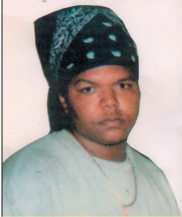
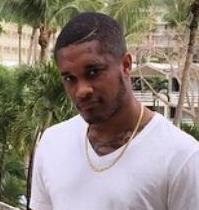
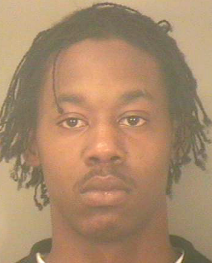
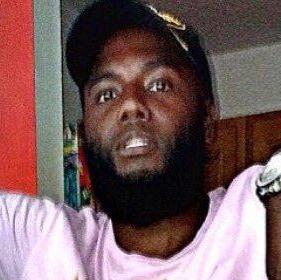
Do you know who murdered Thomas Batchelor? Thomas Batchelor, an African-American man from Southeast Washington, D.C., was known to family as Thomas Lanell “Pooh” Batchelor, a son, father, and fiancé whose life was deeply rooted in his community. Obituary notices later described him as the beloved son of Joyce Evans and William Batchelor Sr., the father of a young daughter named Tajauna, and engaged to Shalawna Boone, with siblings and grandparents forming a large extended family around him.
In the fall of 2001 he was living his life in the nation’s capital when violence cut it short, leaving his relatives to speak for him in funeral announcements and memorial pages rather than in everyday conversation. On November 2, 2001, he was shot in the 200 block of 36th Street SE in Southeast Washington; an obituary published a few days later marked Saturday, November 3, 2001, as the day his family formally recorded his passing.
The place where he was killed—along the 200 block of 36th Street SE—sits in a stretch of Southeast that has long carried a reputation for hardship and concentrated violence. Police records and later case summaries state plainly that he was found there with fatal gunshot wounds and that the incident was immediately classified as a homicide. Public descriptions do not spell out what brought him to that block on that particular day, nor do they describe the moments just before the gunfire. Instead, they offer the bare facts: a specific street, a specific date, and a life ended by bullets in an area already known for shootings and unsolved killings.
In the days and years that followed, the focus shifted from what happened to who might be responsible. The Metropolitan Police Department’s Violent Crimes Branch took on the investigation, and the department issued a printed reward flier bearing his photograph and the promise of up to $25,000 for information leading to the arrest and conviction of whoever killed him. That flier urged anyone with knowledge of the crime to call Detective Mitch Credle or the department’s Synchronized Operations Command Center, signaling that investigators were still searching for basic answers: witnesses, leads, a motive. Case summaries compiled years later echo the same reality, noting that no suspect has been publicly identified and no arrest has been announced in connection with his death. His name still appears among unsolved homicides on police-linked materials and independent cold-case compilations, the official record offering no resolution for his family.
While investigators worked their case, his loved ones prepared a farewell that reflected the life behind the crime statistic. Notices in the local paper invited mourners to Ward Memorial AME Church on 42nd Street NE, where friends and relatives were asked to gather on November 9 for a morning viewing and service before his burial at Lincoln Memorial Cemetery in nearby Suitland, Maryland. The memorial details—church, pastor, cemetery—trace the path of a traditional Washington homegoing service, suggesting pews filled with relatives, neighbors, and friends who knew him as “Pooh” rather than as a name on a police circular.
His killing unfolded in a city still wrestling with the long shadow of its “murder capital” years. Official homicide reports from the Metropolitan Police Department show that although the peak of violence had passed by the early 2000s, the District still recorded 232 homicides in 2001, far higher than national norms and concentrated heavily east of the Anacostia River. Analyses of crime in Washington and studies of life in Wards 7 and 8 describe these neighborhoods as bearing a disproportionate share of the city’s poverty and violent crime, even as some conditions slowly improved. In that context, the shooting of Thomas Batchelor becomes both singular and emblematic: a specific life with a nickname, a daughter, and a waiting fiancée, and at the same time one of many unsolved killings that left families in Southeast Washington navigating grief without the closure of a named suspect or a completed case.