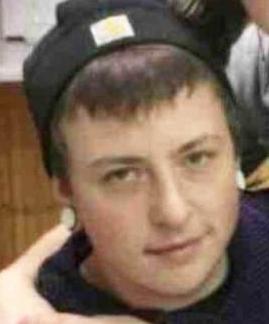
Zachary Newell, 25, male, Caucasian, died in the predawn hours of January 25, 2020, after violence spilled out from a house party near Northern State University in Aberdeen, South Dakota. Police were called at about 4:08 a.m. to the 1100 block of South Washington Street, where they found him unresponsive and suffering from multiple gunshot wounds. He was rushed to Avera St. Luke's Hospital, but he did not survive. Investigators arranged for an autopsy in Grand Forks, North Dakota, and quickly told the community there was no continuing danger because the shooter had already been identified.
In the days that followed, relatives described a night that turned abrupt and irreversible. Family members said Newell had been kicked out of the party and tried to go back inside to retrieve personal property when gunfire erupted. As his loved ones mourned, frustration set in almost immediately—not only over how quickly a party could become a death scene, but over the sense that the person who pulled the trigger might never face a courtroom. Reports quoting his family conveyed that he was shot five times, and they publicly pressed for answers while authorities said additional test results were still needed before any charging decision could be made.
By early February, the charging question landed with a finality that deepened the family's anger: the Brown County State's Attorney's Office concluded the shooting was a justifiable homicide and announced no charges would be filed. Authorities acknowledged they knew who shot Newell, but the shooter's name was not released in the reporting. The same accounts described the shooter as a 24-year-old man from Aberdeen and framed the confrontation as a verbal altercation on a dark street, where Newell was said to have threatened that he had a gun and to have acted as if he were reaching behind his back. The shooter fired five times, striking Newell multiple times; no weapon was found on Newell afterward.
That decision meant there were no homicide charges, no announced trial, and no conviction tied to Newell's death—only an investigation that ended in a legal determination that the shooting was justified. Reporting also indicated the shooter had been initially arrested at the scene on an unrelated misdemeanor bench warrant, a detail that, for those close to Newell, underscored how the system's only immediate “custody” action was not directly connected to the killing itself.
As the community absorbed what had happened, Newell's death rippled outward in memorials and in the practical burdens that follow sudden loss. Funeral notices placed him in the orbit of northeastern South Dakota life—family, friends, and a service held in Aberdeen just days after he died—while those advocating for the Newell family described a push for legal help after being told there would be no arrest connected to the shooting. In the end, the public record available in news and community reporting depicts a case where law enforcement identified a shooter quickly, but the prosecutor's conclusion of justifiable homicide closed the door on criminal charges, leaving Newell's loved ones to carry their grief alongside a lingering sense that the story ended before they ever felt it truly began.