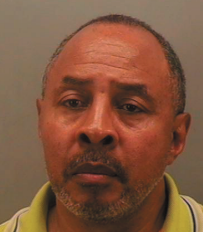
Do you know who murdered Jehu Arias?
In the early hours of May 27, 2006, 30-year-old Jehu Arias, a Caucasian / White male from Washington, D.C., was shot and killed in the 1400 block of Half Street SW, near the address listed by police as 1322 Half Street SW, his life ending around 3:37 a.m. on a residential stretch of Southwest. Police records and later summaries describe how multiple gunshots tore through the quiet of the night, leaving Arias fatally wounded in the alleyway that runs behind the row houses there.
The exact moments before the gunfire have never been publicly detailed, but the place where he fell is known with stark precision. DC Police documents and later accounts agree that he died of multiple gunshot wounds at that very spot, a narrow service alley tucked behind Half Street, where the pavement and brick walls would, in time, become part of a small, enduring memorial. The address appears in official flyers and in lists of major unsolved homicides, a fixed coordinate in city records that now marks both a crime scene and a point of remembrance.
In the months and years that followed, friends and family made sure the site did not simply fade back into anonymity. A local chronicler of Washington’s street shrines later found a small memorial in the alley behind 1322–1332 Half Street SW, noting that it had been carefully maintained by those who knew and loved Arias. Flowers, tokens, and other offerings turned the bare strip of concrete into a quiet testimony to his absence, a place where grief and memory gathered long after police tape was gone. The shrine stood as a kind of counterpoint to the official notices and case files: where the government recorded a homicide, the community built a space to remember a person.
On paper, the investigation was taken up by the Metropolitan Police Department’s Violent Crimes Branch, which issued a reward flyer offering up to $25,000 for information leading to the arrest and conviction of whoever was responsible. The case was cataloged among the city’s major unsolved homicides for 2006, its entry listing Arias’s name, the date, and the Half Street address, inviting the public to click for more details and download the same flyer detectives once circulated. Years later, online case summaries would echo that call, emphasizing how authorities continued to seek information and urging anyone who knew anything to come forward.
Despite these efforts, the story of what happened in that alley remains incomplete. Publicly available records do not describe any identified suspects, nor do they report any arrests or charges linked to the killing; instead, they repeatedly frame the homicide as an open case still in need of community help. The memorial in the alley and the persistent presence of Arias’s name on unsolved-homicide lists together tell a story of a life ended abruptly and a family and city still waiting—waiting for someone, someday, to fill in the missing pieces of that night on Half Street.