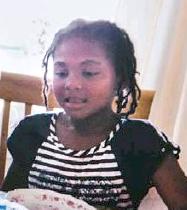
Aracely Hoffman, 40, was a woman originally from El Salvador who had built a life on Hawaiʻi Island, where people who knew her remembered her as a churchgoing mother trying to make a better future in Pahoa. In the early hours of May 6, 2016, that life ended in a scene so brutal it stunned the Big Island: police responding to a report of violence in Leilani Estates arrived just as her husband, John Ali Hoffman, was driving away from the family home without headlights.
Officers stopped the car and saw blood dripping from the trunk. Inside, they found Aracely’s body. In the house, they found the bodies of the couple’s two young children, a daughter and a son, turning what began as a dark roadside stop into one of Hawaiʻi’s most haunting family murder cases.
Investigators said John Ali Hoffman had called police shortly before the discovery and claimed that three or four intruders had entered the home and shot his wife. But the facts officers encountered almost immediately cast doubt on that account. Police said there was a gun on the front seat of his car when he was stopped, and the condition of the scene led prosecutors to move quickly. Aracely was identified by police after the killing, and authorities soon tied all three deaths together as a single domestic homicide case centered on the family’s home in rural Puna. What emerged publicly was not a mystery with a wide field of suspects, but a case in which investigators focused almost at once on the husband who had been found leaving the scene with his wife’s body in the trunk.
John Ali Hoffman was arrested and charged in connection with the killings. Reports from his initial court appearance said he faced one count of first-degree murder, three counts of second-degree murder, and a firearms charge, with bail set in the millions. From that point on, he remained the sole publicly identified suspect in the deaths of Aracely and the children. There is no credible public reporting showing that anyone else was arrested in the case or that investigators named additional suspects beyond the intruder story Hoffman himself allegedly told police. The prosecution’s theory, as reflected in the charging decisions and later reporting, treated the killings as a family triple homicide for which Hoffman alone was criminally responsible.
What followed was not a swift trial, but years of delay. Shortly after the case began, Hoffman’s defense sought mental health evaluations, and the criminal proceedings were repeatedly suspended while courts and doctors examined whether he was fit to stand trial and whether he could be held criminally responsible. By 2023, Civil Beat reported that he had spent more than seven years in the Hilo jail without a trial, with mental health experts having submitted numerous reports and the case still unresolved. More recent reporting indicates that the case continued to drift through hearings and competency disputes for years afterward, with trial settings discussed nearly a decade after Aracely’s death. Based on the latest public reporting I found, there has been no final conviction publicly reported in connection with her killing, and the case had long remained in a pretrial limbo rather than reaching a jury verdict.
That long legal standstill has left Aracely’s death suspended in a painful kind of unfinished history. Public accounts describe a woman who came to Hawaiʻi seeking stability and family life, only to die in a crime that was quickly treated by police as an intimate, internal act of violence rather than the outside attack first reported by the accused. The arrest came immediately, the charges were severe, and the suspect was identified from the outset. Yet the years that followed brought hearings, evaluations, and postponements instead of a completed trial. So the story of Aracely Hoffman remains, in the public record, both stark and unresolved: a mother killed in Pahoa on May 6, 2016, her husband arrested as the central and only publicly named suspect, and the promised final reckoning in court delayed for years beyond the night she was found.