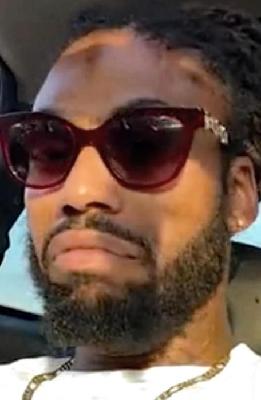
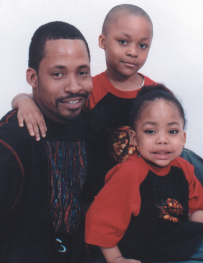
Do you know who murdered Juma Adams? In the early morning darkness of December 6, 2006, 23-year-old Juma Adams, an African-American man from Washington, D.C., was gunned down on the unit block of 46th Place NE. Around 5:10 a.m., the stillness of the residential street was broken by a burst of gunfire, sharp enough to wake nearby residents and send them to their windows, trying to understand what had just happened.
When officers from the Metropolitan Police Department's Sixth District arrived in response to reports of shots fired, they found Adams lying in the middle of the street, suffering from multiple gunshot wounds, his body exposed to the cold December air where only moments earlier the block had been quiet and unremarkable.
Emergency responders could do nothing to reverse what had already unfolded. Adams was pronounced dead at the scene, his life ended where he fell. Away from that stretch of pavement, he was more than a name on a police report: he was a husband and a father, remembered in his obituary as the beloved spouse of Nancy Lisa and the devoted father of Keon and Juma Jr., part of a large and close-knit family that included his parents, stepfather, siblings, grandmother, and many relatives and friends. In the days that followed, as funeral arrangements were made and loved ones gathered at a church in nearby Temple Hills, Maryland to say goodbye, the suddenness of the loss and the violence of his death left a hollow space where an ordinary life had once been—someone who should have had many more years with his children and family.
For detectives, the crime scene offered only limited answers. The shooting took place in the predawn hours, a time when few people were outside and potential witnesses were scarce. Initial canvassing of the neighborhood yielded little solid information about who had fired the shots or why Adams had been targeted. The case was taken up by the Metropolitan Police Department's Violent Crimes Branch, which began the painstaking work of trying to reconstruct his final moments, searching for any thread that might lead to the person or people responsible. A reward poster was issued by the department, offering up to $25,000 for information leading to the arrest and conviction of those behind the killing, a public plea that underscored how few concrete leads investigators had and how much they were depending on someone to come forward.
As the years passed, the investigation into Adams's homicide remained open but unresolved. Online case summaries and cold-case listings continued to describe the killing in stark, simple terms: he was found in the street with multiple gunshot wounds, the investigation was still active, and authorities were still seeking the public's help. Websites dedicated to unsolved murders and community-driven justice featured his case, repeating the same essential facts and inviting tips from anyone who might know more. Forum posts and case pages reflected a lingering frustration that, despite the passage of time, there had been no public announcement of an arrest and no suspect named. The story of Juma Adams thus remains suspended between memory and mystery: a family left with an empty seat at the table, a neighborhood that once woke to the sound of gunfire, and an investigation that, to this day, has not brought his killer or killers into the light.