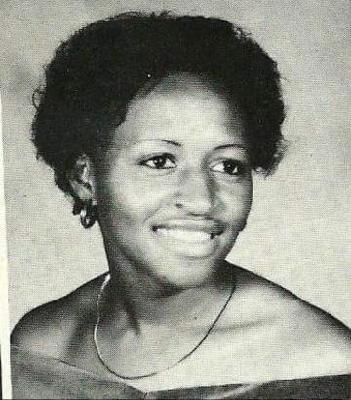
Janet Lockett, a 27-year-old Black woman from Elba, Alabama, was killed on September 4, 1989, in what the surviving court record describes as the violent end of a domestic dispute with her common-law husband, Randy Walton. According to the federal case that later grew out of her death, the trouble had begun earlier that day. Officer Michael Patrick of the Elba Police Department transported Walton to the home of Lockett’s parents, where she was staying. Walton was allowed to sit in the front seat of the patrol car. When they arrived, he struck the officer, took the officer’s revolver, ran into the home, and shot Lockett. He then shot himself. Burial records and memorial listings align on Lockett’s date of death and age, placing her death in Elba on that September day in 1989.
What followed was not a criminal prosecution of a living suspect, but a civil fight over how the killing had happened and whether it could have been prevented. Lockett’s mother, Mary Lee Brown, acting as administratrix of her daughter’s estate, brought suit against Officer Patrick and the City of Elba. The lawsuit argued that Patrick had been grossly negligent by bringing Walton to the residence and by letting him ride in the front seat, where he was able to seize the weapon that became the instrument of Janet Lockett’s death. In that sense, the record leaves little mystery about who carried out the shooting: the identified suspect was Randy Walton, and the same court account states that he died by suicide immediately afterward. Because he was dead at the scene, the available online sources do not indicate an arrest, criminal charge, trial, or conviction arising against him.
The courtroom story that survived into the public record centered less on solving the killing than on assigning responsibility for the chain of events around it. In 1990, the federal district court granted summary judgment to the City of Elba, concluding that the evidence did not show a city policy or custom that created constitutional liability. The opinion also framed Lockett’s death as a private act of violence carried out by Walton rather than a killing committed under color of state law, even though the circumstances involved a police officer and police weapon. That leaves Janet Lockett’s death remembered online not as an unsolved case with lingering unknown suspects, but as a fatal domestic violence case in which the named killer was immediately identified and died moments after the shooting, closing off the possibility of any later arrest or prosecution.