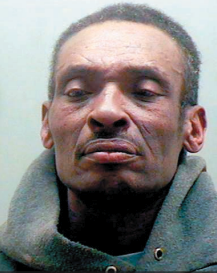
Charles Turner, a 37-year-old African-American man, was found fatally shot on the night of February 28, 2008, on the 1400 block of 1st Street NW in Washington, D.C. Around 8:45 p.m., officers from the Metropolitan Police Department arrived on that stretch of 1st Street and discovered him suffering from multiple gunshot wounds; despite efforts to provide medical assistance at the scene, he did not survive and was pronounced dead where he was found.
The public record that remains of his death is stark and spare. The case entry that preserves his name online labels his killing simply as “Death by Force,” recording his basic details—his name, the city where he died, the date he was found, and the fact that he was shot—without adding any insight into how the confrontation began or who pulled the trigger.
The same page openly asks readers whether there are “any updates on this case,” a small line of text that quietly signals how little has been revealed: there is no description of a getaway car, no composite sketch, no timeline of events leading up to the gunfire on that block. Instead, the picture that emerges is of a man whose final moments are known only in outline: a late-winter Thursday night, a sudden burst of violence, and a life ending in the street before it could be carried to a hospital corridor.
Official police archives add another layer of silence. The Metropolitan Police Department’s “Major Case/Unsolved Homicides – 2008” list contains dozens of names, each linked to a PDF flyer detailing a particular killing in the District that year, but Charles Turner’s name does not appear among them. On its broader “Unsolved Homicides” page, the department notes that not every homicide in the city’s history has been added to the site, a reminder that the absence of a flyer does not mean a case never existed. Yet when this official omission is set beside the brief online memorial to Turner—where no suspect is identified and no arrest is mentioned—the public trail suggests a case that has never been brought to a visible resolution, with no documented indication that anyone has been charged in connection with his killing.
Turner’s story sits within a broader pattern that researchers have traced across the United States. National studies of homicide and cold cases have described how, over the decades leading up to and following 2008, clearance rates for killings declined compared with earlier generations, and how unresolved murders accumulated into a large backlog of cases with no identified perpetrator. In many large cities, Washington among them, gun violence has often clustered in particular neighborhoods, and a portion of those shootings has remained unsolved for years. Against that backdrop, Turner’s death reads like one more entry in a ledger of lives cut short and investigations that, at least in the public record, never reach the moment where a suspect is named, arrested, and brought into court.
Even so, his case has not vanished entirely into statistics. The online profile dedicated to him continues to be updated, with the record showing recent activity as late as 2025, and beneath the bare case data there is a section for forum posts where visitors leave short messages about his death. Over the years, people have written there to reflect on how long it has been, to voice their unease that no clear answers are available, and to urge anyone who might know more to come forward. The tone of those fragments is subdued but insistent: a mixture of remembrance and frustration, a refusal to let his name be reduced to a date and a location in a database.
In the end, the story that can be told from publicly available information is a narrow one but heavy with implication. On a February night in 2008, in a neighborhood of Northwest Washington where row houses and city lights line the streets, Charles Turner was shot multiple times and died before he could be saved. Police came, a homicide investigation began, and his name was entered into the record. Years later, the online traces show no public sign of a suspect, no announcement of an arrest, only a case description that remains unresolved and a handful of messages from strangers and loved ones who still want to know who was responsible for the gunfire that ended his life.