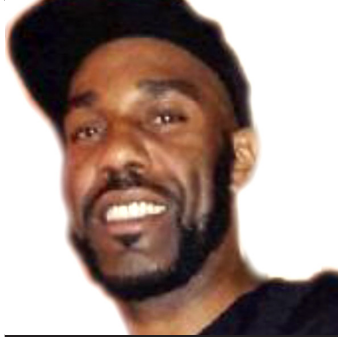
Do you know who killed William Boykin in 2019? In the early minutes of May 28, 2019, the quiet of the 2600 block of Birney Place Southeast in Washington, D.C., was broken by a burst of gunfire under the streetlights. William Jblaze Boykin, a 36-year-old Black male from nearby District Heights, Maryland, was discovered gravely wounded on a sidewalk as officers from the Metropolitan Police Department's Seventh District raced to the scene in response to reports of shots fired around 12:04 a.m.
When officers arrived, they found not one but two victims. One adult male was located first, suffering from a gunshot wound; as they searched further behind the buildings, they found Boykin, who had been struck multiple times. D.C. Fire and Emergency Medical Services rushed him to a local hospital, where, despite efforts to save his life, he was pronounced dead after all life-saving measures failed. The second victim survived his injuries, which were later described in court records as a gunshot wound to his foot, and was treated at an area hospital for non-life-threatening wounds.
Within hours, the case was formally opened as a homicide investigation. The Metropolitan Police Department publicly identified the decedent as 36-year-old William Boykin of District Heights and appealed for community assistance, issuing a reward flyer and listing the case among its major unsolved homicides for 2019. Investigators canvassed the immediate area of Birney Place Southeast, gathering physical evidence and looking for security cameras that might have captured the shooting, while the presence of a surviving victim offered at least the possibility of an eyewitness who might help reconstruct the events leading up to the gunfire.
Even as detectives worked the case, friends, family, and community members began to fill in the picture of who Boykin had been in life. A memorial page created in his honor records that he had attended local schools including Birney, Douglass, and Ballou, reflecting long-standing ties to the Washington, D.C., area. In messages posted there, people remembered him with affection, calling him “Blaze” and describing him as a laid-back, well-liked person whose death felt senseless and deeply painful to those who knew him.
A breakthrough appeared to come about a week after the shooting. On June 4, 2019, pursuant to a D.C. Superior Court arrest warrant, members of the Capital Area Regional Fugitive Task Force located and arrested 28-year-old Herman Sylvester Williams of Southeast D.C. in connection with the killing. The Metropolitan Police Department announced that Williams was being charged with second-degree murder while armed, tying him directly to the Birney Place homicide in which Boykin was killed and another man wounded. A later summary by court-watching outlet D.C. Witness noted that Williams's arrest followed a period during which the case had not yet been presented to a grand jury, and that he was being held while prosecutors prepared a more extensive set of charges.
Over the months that followed, the accusations against Williams expanded and the case moved deeper into the court system. Prosecutors eventually secured an indictment charging him with first-degree murder while armed for Boykin's death, assault with intent to kill while armed in the non-fatal shooting of the second victim, and multiple firearm-related counts, including unlawful possession of a firearm with a prior conviction and possessing a firearm during a crime of violence. D.C. Witness reports describe surveillance footage that, according to court documents, was said to show a person believed to be Williams firing at a group of people on the 2600 block of Birney Place Southeast. Court calendars filled with hearings, status conferences, and scheduling discussions as the defense and prosecution argued over evidence, deadlines, and trial dates.
The path to trial proved long and complicated. Williams's case saw repeated delays, including changes in defense counsel and disputes over preparation and communication, which he himself raised before the judge. During one hearing, a judge agreed to appoint new counsel after Williams expressed dissatisfaction with his attorney and complained that he had not been kept informed about evidence in the case. At various stages, judges set and reset timelines for motions, witness statements, and hearings, and at one point a trial readiness date was projected for mid-2023, suggesting that a jury would finally hear the evidence in Boykin's killing several years after the night of the shooting.
Instead of culminating in a full trial on the original homicide charges, the case took a dramatic turn in the spring of 2023. At an April 6 status hearing, D.C. Witness reports that the prosecution moved to dismiss five of the six counts against Williams—including first-degree murder, assault with intent to kill while armed, and the most serious firearm charges—asking that they be dismissed without prejudice, meaning they could be refiled in the future. The judge granted the motion, leaving only a single charge of unlawful possession of a firearm with a prior crime of violence. Williams, who had by then spent about four years in custody, was sentenced to time served on that remaining count, along with three years of supervised release, an order to register as a gun offender, and a monetary contribution to a victims' fund. With the homicide counts dismissed and all further hearings vacated, he left court no longer charged with Boykin's murder, even though the dismissal technically allowed for the possibility that charges could be brought again if new evidence emerged.
In the years since, the case has remained in a painful limbo for Boykin's loved ones. On official lists maintained by the Metropolitan Police Department, his name still appears among 2019's unsolved homicides, and CrimeSolversCentral, which tracks cold cases and violent deaths, continues to describe the investigation as unresolved while urging the public to come forward with any information. The department's standard reward—up to $25,000 for information leading to the arrest and conviction of those responsible—still applies, underscoring that, despite an early arrest and a complex court battle, no one stands convicted of the killing that ended Boykin's life on that Southeast D.C. sidewalk in the early hours of May 28, 2019.