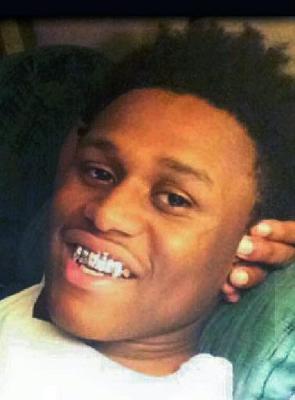
On the night of June 13, 2015, Rahkei R. Washington, a 19-year-old African-American male, was fatally wounded in a shooting on Milwaukee's northwest side. At approximately 10:00 p.m., Washington was sitting in the passenger seat of a vehicle in the 6200 block of West Villard Avenue, near North 62nd Street, when gunfire erupted. He suffered gunshot wounds and was transported to Froedtert Hospital, where he was pronounced dead on Sunday, June 14, 2015, according to the Milwaukee County Medical
Examiner's Office. His killing became another tragedy in a year when Milwaukee was experiencing a sharp increase in gun violence.
Washington's death was especially devastating because his family was already grieving the murder of his older sister, Jahara Kennedy. On January 4, 2015, Kennedy had been shot and killed during an attempted robbery at the Days Inn hotel on North 6th Street in Milwaukee. She had been celebrating her sister's birthday when several men attempted to rob people at the gathering. Kennedy tried to protect herself by barricading a door, but a gunman fired through it, striking her in the head. Just five months later, the family suffered another unimaginable loss when Washington was killed.
Their mother, Tamika Holmes, had moved to Phoenix, Arizona, for a new job and had encouraged Washington to join her following his sister's murder. However, he reportedly refused to leave Milwaukee because he did not want to move away from the city where his sister was buried. Holmes acknowledged that her son had experienced difficulties earlier in his life, including time spent at the Lincoln Hills School for Boys, but emphasized that he had been working to create a better future. Washington had recently graduated from high school, completed his SAT examinations, and applied to college. His mother proudly recalled that he had earned the highest SAT score at Banner Prep in Milwaukee and had been accepted to a community college in Texas.
One particularly heartbreaking moment occurred on the day of Washington's funeral. As Holmes was preparing to lay her son to rest, she received a telephone call from a college in Texas asking whether he had received his acceptance letter. The call was a painful reminder of the opportunities that had awaited him and the future he would never experience. Holmes described herself as emotionally numb after losing both children within such a short period. Their deaths left her struggling to understand the violence that had taken their lives and questioning why so many families in Milwaukee were suffering similar losses.
Milwaukee police opened a homicide investigation following Washington's shooting. On June 15, 2015, authorities announced that a suspect had been arrested in connection with the killing. However, police did not publicly identify the individual or provide additional details about the circumstances surrounding the arrest. The available reporting did not establish a motive, explain what led to the shooting, or identify the person responsible for firing the fatal shots. Although investigators initially reported an arrest, subsequent accounts raised questions about whether the case had progressed toward prosecution.
In a July 2015 interview, Holmes stated that nobody had been arrested in connection with her son's murder. This conflicted with the earlier police announcement that someone had been taken into custody. The discrepancy was never clearly resolved in the available reporting. A June 2017 review of Milwaukee's 2015 firearm homicides again acknowledged the initial arrest but reported that no suspects had been charged in Washington's killing. No publicly documented homicide trial or conviction connected to his death was identified in the available records. The four men Holmes said had been arrested in connection with Kennedy's murder were associated with her daughter's case, not Washington's.
As the family struggled with its losses, Holmes became increasingly vocal about the devastating effects of gun violence. She questioned the availability of firearms on Milwaukee's streets and expressed concern for other mothers who were experiencing similar tragedies. Washington and Kennedy were among the victims remembered during a particularly violent period in Milwaukee's history. The city recorded 145 homicides in 2015, one of its highest totals in decades.
In 2016, the family's grief became part of a community effort to honor victims of violence through Milwaukee's Peace Garden Project. Founded by Camille Mays, the initiative transformed roadside memorials into landscaped spaces filled with flowers and plants. A memorial honoring Washington and Kennedy was established near 109th and Jonen streets. Holmes traveled from Phoenix to Milwaukee to participate in creating the garden, ensuring that both children would be remembered together. Their story deeply affected Mays, who recognized the extraordinary heartbreak of a mother losing two children to gun violence within five months.
Washington's killing remains without a publicly documented conviction in the available reporting. Although police initially announced an arrest, the identity of the individual taken into custody, the circumstances of the shooting, and the reason no homicide charges were subsequently reported remain unclear. For his family, his death represented far more than another entry in Milwaukee's homicide statistics. He had overcome difficulties, completed his education, and was preparing for college when his life was abruptly ended. The garden dedicated to Washington and his sister continues to represent the family's determination that their lives be remembered beyond the violence that took them.