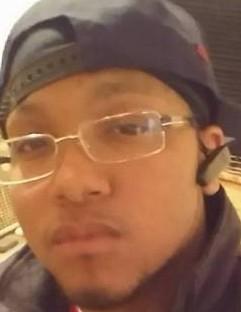
Kurt Steven Pierzchalski, a 35-year-old White male, was fatally shot during the early morning hours of June 8, 2016, in Milwaukee, Wisconsin. His death occurred just outside a home he had purchased and was renovating in the city's Johnson's Park neighborhood. Pierzchalski had moved into the property only months earlier, hoping to transform a troubled house into a place where he could raise his family and make a positive difference in the surrounding community.
Instead, his life ended in a violent encounter that left his loved ones searching for answers and a neighborhood mourning someone who had worked to improve it.
At approximately 2:14 a.m., Milwaukee police responded to reports of a shooting near North 18th and West Vine streets, in the vicinity of North 18th and West Walnut streets. When officers arrived, they discovered Pierzchalski lying in the roadway, suffering from gunshot injuries. Police officers and Milwaukee Fire Department personnel attempted lifesaving measures, but their efforts were unsuccessful. He was pronounced dead at the scene. According to his longtime companion, Sarah Alvarez, Pierzchalski had been shot twice in the back and was discovered in the street directly outside the property he had been renovating.
In the months leading up to his death, Pierzchalski had devoted considerable effort to rehabilitating the house and creating an urban farming project. He purchased the property shortly after the birth of his daughter, Penelope "Kaia" Rose Pierzchalski, with the intention of establishing a stable home for his family. He and Alvarez planted an extensive garden approximately 40 yards long and planned to introduce chickens as part of their vision for a self-sustaining urban farm. Their larger ambition was to demonstrate how neglected properties could be transformed into productive spaces and encourage positive changes throughout the neighborhood. By the time of his death, the garden was flourishing and approaching its first harvest.
However, the property had a troubled history that continued to affect the couple after Pierzchalski purchased it. Alvarez told reporters that strangers frequently visited the house looking for people who had previously lived there. Some individuals reportedly walked through the yard, gathered on the porch, or otherwise treated the property as though its ownership had not changed. Initially, Pierzchalski and Alvarez attempted to discourage these activities through friendly interactions and by explaining that new residents occupied the home. Nevertheless, the disturbances reportedly continued and eventually escalated into incidents involving a stolen lawnmower, damage to items around the property, and attempted break-ins.
Following the shooting, Alvarez raised the possibility that Pierzchalski had gone outside to investigate a disturbance during the early morning hours. She explained that a ladder normally kept on his truck had been discovered in a neighboring yard, leading her to wonder whether someone had attempted to steal it or whether another incident had drawn him from the house. This was a theory expressed by his family rather than an established finding of the police investigation. Authorities did not publicly confirm that a theft, burglary, or confrontation involving the ladder was responsible for the shooting. Whether Pierzchalski encountered an intruder, interrupted another crime, or became involved in an unrelated confrontation remained undetermined in the available reports.
Milwaukee Police Department homicide investigators began examining the circumstances surrounding his death and searching for those responsible. In the immediate aftermath, detectives had not publicly identified a suspect or established a definitive motive. On June 9, 2016, police confirmed that nobody had been taken into custody. Investigators continued working to determine what happened in the moments before the shooting and why Pierzchalski had been killed. The reported disturbances surrounding the property provided possible avenues for investigation, but no publicly confirmed evidence established a connection between those earlier incidents and his murder.
The killing deeply affected the Johnson's Park neighborhood, where Pierzchalski had already become known for his commitment to improving the community. On June 12, 2016, family members, friends, and neighbors gathered for a candlelight vigil to honor his memory. The gathering brought together residents of different generations and backgrounds who wanted to reject the violence that had taken his life. Tony Gibson, chairman of the Johnson's Park Neighborhood Association, spoke about the importance of community solidarity and the ability of residents to reclaim and improve their neighborhoods. Pierzchalski's garden became a symbol of the positive changes he had hoped to accomplish.
His death also left Alvarez facing the difficult responsibility of raising their infant daughter without him. In a fundraising appeal established shortly after the murder, Alvarez described Pierzchalski as the person who had provided love, direction, and stability for their family. She explained that their daughter, who was only six months old, had been his greatest dream. Funds were sought to help complete the renovations he had started, establish educational savings for Penelope, and provide for her future. The appeal reflected both the immediate financial hardship caused by his death and the family's desire to preserve the goals he had worked toward during his final months.
Family and friends gathered for funeral services on June 14, 2016, at Jericho Church Without Walls in Milwaukee. A private burial followed at Graceland Cemetery on June 15, and a remembrance gathering was arranged at Concordia Community Garden. Pierzchalski was remembered as a devoted father, a loving companion, and a determined individual whose ambitions extended beyond his own household. His surviving family included his mother, Susan Mary Pierzchalski, his daughter, and his siblings. His father, Steven James Pierzchalski, had died the previous year.
As of the most recent publicly accessible information located, no suspect has been reliably identified in connection with Kurt Pierzchalski's killing, and no subsequent arrest, criminal charges, trial, or conviction could be verified. News reports published in the days following the shooting confirmed that investigators were still searching for suspects, but no verified later report established that the case had been solved. The motive also remains publicly unresolved. Pierzchalski's death brought an abrupt end to his plans for a family home and community urban farm, leaving behind a daughter who would grow up without her father and a neighborhood that remembered his determination to create something better.