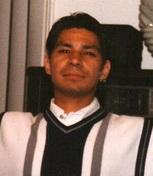
On October 9, 2014, James Boles, a 29-year-old Hispanic/Latino man, was found dead in Denver, Colorado, his case immediately entering the city’s homicide statistics as a life cut short by violence rather than natural causes. Publicly available records list that date both as the day he was discovered and the official date of his death, underscoring how suddenly his life ended and how little time there was between whatever confrontation occurred and the moment he was pronounced dead.
The case is cataloged simply as a “death by force,” a stark phrase that conveys brutality without revealing the exact method or the setting in which it happened.
The silence around what happened to Boles is almost total. Online case summaries note only that he was found dead in Denver and that the incident remains unsolved, with few, if any, publicly disclosed details about where in the city he was located, who first discovered him, or what his final hours looked like. There is no widely available description of his work, family life, or daily routine, and no narrative from investigators that explains a possible motive. Instead, his name appears in databases and cold-case listings as one entry among many, identified by date, location, and demographic details—enough to mark that a life existed and was taken, but not enough to reconstruct the story of the person behind the data.
In 2018, the Denver alt-weekly Westword published a detailed analysis of 312 homicides that took place in the city from 2010 through early 2017. In a long roll of names and dates, Boles appears under October 9, 2014, with his demographic information and a case status plainly marked as open and lacking any arrest. Within that broader investigation, Westword reported that more than half of the Denver homicides in that period had no arrest at the time of their analysis, and that victims in unsolved or arrest-free cases were disproportionately Black or Hispanic. Boles’s entry, with its unresolved status, is one of many that illustrate how often killings in the city have not led to identified or charged perpetrators.
Later, in 2021, the Denver District Attorney announced that a grand jury had indicted a group calling itself “The Sopranos” on organized crime charges, naming Timothy James Boles and ten others in connection with a large-scale vehicle theft and fraud scheme. Although the cold-case listing for James Boles’s homicide includes a link to this news release, the DA’s announcement describes a property and drug-related enterprise and does not assert any connection between that group and the 2014 killing. The indictment focuses on auto theft, identity theft, and organized crime offenses occurring years after Boles’s death, and authorities have not publicly tied that prosecution to his unsolved homicide.
Community cold-case pages that feature Boles’s name emphasize how little has been released about the investigation itself. Crime summaries explain that no significant leads have surfaced that would point to those responsible, and the case continues to be presented as an open homicide with no resolution. Forum discussions linked from these pages show concerned readers asking whether there were ever any viable suspects at all, referencing an “initial suspect list” in general terms but without names, charges, or official confirmation. That absence of concrete information in public records suggests that, if investigators have privately explored specific persons of interest, they have not brought those inquiries to the point of arrest or public identification.
As of the most recent updates to online case files, there is no record of anyone being arrested or charged in connection with the death of James Boles, and no suspect or group of suspects has been publicly named by the Denver Police Department or the Denver District Attorney’s Office. His case remains one of Denver’s unresolved homicides: a young life reduced in official documents to a date, a city, and a brief notation of “death by force,” while the questions of who killed him and why continue to hang unanswered over the sparse lines of his file.