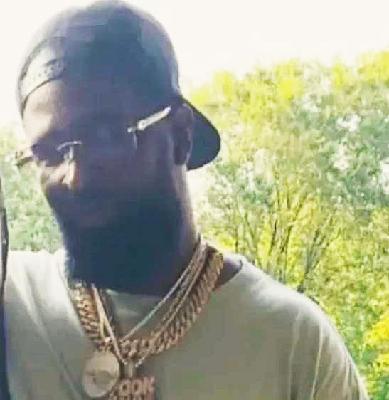
Lamont Clark, a 34-year-old Black male from Philadelphia, Pennsylvania, died on November 17, 2007. His death was recorded in Philadelphia’s homicide records, with the location connected to the 6600 block of Ross Street. The public information available about what happened to him is painfully limited, but even the few details that are known are enough to mark the loss of a real person whose life ended far too soon.
Lamont’s death came during a devastating period of violence in
Philadelphia, a year when many families across the city were forced to grieve loved ones lost to homicide. Behind every name in those records was a person with a life, a history, relationships, routines, memories, and people who expected them to come home. Lamont was not just another entry in a list of victims. He was a man from Philadelphia whose life mattered before the moment it was taken, and whose death left behind unanswered questions for anyone who cared about him.
The known record places the tragedy on Ross Street, but it does not publicly explain the moments leading up to Lamont’s death. It does not describe where he had been earlier that day, who he may have spoken to, what circumstances brought him to that location, or what investigators believed caused the violence. There is no detailed public account explaining whether the attack was sudden, whether there was an argument, whether Lamont knew the person responsible, or whether he was targeted. The absence of those details leaves a silence around the case, and that silence can be especially painful because it gives so little shape to the final chapter of his life.
What can be said is that Lamont’s life ended abruptly, in the kind of violence that sends shockwaves beyond the immediate scene. A homicide does not only take one person; it changes the lives of everyone connected to that person. Family members are left with grief that has no easy place to go. Friends are left remembering conversations, shared moments, and all the ordinary things that become precious after someone is gone. Communities are left with the familiar fear and sorrow that comes when another person is lost before their time.
No publicly available information provided for this synopsis identifies an arrest, a named suspect, charges, trial, conviction, or sentencing in connection with Lamont Clark’s death. There is also no public suspect description available from the information at hand. That means the story of his killing remains incomplete in the public record. It is not clear whether detectives had leads that were never released, whether witnesses came forward, or whether the case continued quietly outside public view. What remains visible is the loss itself and the lack of a publicly documented resolution.
Lamont’s death deserves to be remembered with care, even when the details are scarce. A sparse record should not make a victim’s life feel small. It should remind people how many families are left searching for answers in cases where the public only sees a name, an age, a date, and a location. For those who knew Lamont, those bare facts would never be enough to describe who he was. They would remember the sound of his voice, the way he carried himself, the memories they shared, and the place he held in their lives.
The tragedy of Lamont Clark’s death is not only that he was killed, but that the public story of what happened to him remains so unfinished. His name remains tied to a painful day in Philadelphia, and the absence of confirmed suspect or arrest information leaves a lingering sense of injustice. Until more details are made public, his case stands as a reminder of a life taken, a family left to mourn, and a community still carrying the weight of violence that claimed too many people.