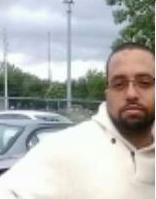
Do you know who murdered Anthony? Anthony Lydell Jackson, a 21-year-old African-American man, was a son, a churchgoing young adult, and a recent high school graduate before his life was cut short on a cold January morning in Tulsa. Born on July 17, 1982, to Dwayne and Marcella Jackson, he grew up in the city's public schools and walked across the stage at McLain High School in 2002.
He was active in his faith community at Greater Union Baptist Church, working with the youth department and singing in the youth choir, the kind of steady presence that families and congregations come to rely on quietly over the years.
On January 17, 2004, not long after 9:30 that morning, Anthony went into the Hood Food Store at 4538 North Cincinnati Avenue in north Tulsa. It was the sort of errand countless people make every day: he walked up to the counter to buy cigarettes, unaware that others had an eye on him. Investigators later said several men had followed him into the store area, shadowing his movements until he stepped inside what should have been a safe, ordinary neighborhood business.
As Anthony stood at the counter, an assailant came through the front door and immediately opened fire. Witnesses described the shots as being fired at point-blank range; bullets struck Anthony multiple times, including in the head, in a sudden burst of violence that turned the small store into a crime scene in seconds. Customers and the store clerk watched in shock as he collapsed. Emergency responders rushed him from the Hood Food Store to a hospital, but the wounds were too severe, and he died shortly afterward from his injuries.
From the beginning, detectives suspected the shooting was no random encounter. Tulsa police later said they believed the killing was tied to ongoing gang rivalries in the city, part of a broader surge of gang-related gun violence at the time. A week after Anthony's death, another shooting occurred near where he lived, and investigators have said they think that later incident may be connected to his murder, suggesting that whoever targeted him was part of a larger, simmering conflict that spilled over into the streets and corner stores of north Tulsa.
Despite the brazenness of the attack and the number of people who saw what happened, the investigation stalled. Police have said there were numerous witnesses, including the store clerk, but they were never able to develop a solid suspect from the information they received. The shooter has never been publicly identified; on official cold case listings, the killer is still described only as an unknown person who entered the store and fired several shots before fleeing, leaving Anthony dying on the floor. Over the years, officers have spoken about the case with lingering frustration, noting that the gunman showed no respect for life when he pursued Anthony into the store and executed him in front of others, yet no one has provided the crucial piece of information needed to name him.
Today, Anthony's killing remains an open cold case in Tulsa. His name appears on lists of unsolved homicides, on memorial pages, and on sites that track victims of unsolved violence, each entry reiterating the same stark facts: he was 21 years old, shot inside a neighborhood store, and the person responsible has never been brought to justice. His family and community are left with the memory of a young man who sang in church, finished high school with hopes for the future, and stepped into a corner store one winter morning, never knowing that someone was already behind him, ready to turn a routine errand into a permanent absence that his loved ones still feel decades later.