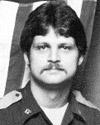
At 54, Rickey Lee Furr, a Caucasian male from Tulsa, Oklahoma, was a lifelong son of the city, born there in May 1954 and still living there when his life was cut short in the spring of 2008. Public records trace a life rooted in Tulsa and the surrounding region, with family ties and multiple marriages that kept him connected to Oklahoma even when work and relationships drew him for periods into neighboring Texas. By May 2008 he was back in Tulsa, staying at a modest house in the 1000 block of North Quaker Avenue, a place that would soon be remembered less as a home and more as the scene of a fatal confrontation.
On the evening of May 7, 2008, a dispute over who had the right to stay in that house erupted into violence. According to later accounts, the property's owner had planned to rent it to relatives of a young man named Carl Allen Couch Jr., and the two people already living there, including Furr, were supposed to move out at the beginning of the month. Instead, Couch arrived that day with three other men to force the issue. What started as an argument inside the residence spilled out into the yard. Witnesses later told investigators that Furr was struck repeatedly in the head both inside and outside the home, the blows culminating in a final hit in the front yard that knocked him unconscious. Emergency responders rushed him to a hospital, where doctors determined he had suffered severe blunt-force head trauma. He never woke up. After more than two weeks on life support, he died on May 25, 2008, and the medical examiner ruled his death a homicide attributed to the injuries from the beating.
In the first weeks after the attack, the case was treated as an unsolved killing. Tulsa police spoke with witnesses who had seen the assault and the men who fled afterward, and they worked with a sketch artist to create a composite image of the person believed to have delivered the fatal blows. Witnesses described the assailant as a young white man, about 25 years old, around 5 feet 10 inches tall and roughly 190 pounds, with a stocky build, short dark hair, and a stubbly beard. He was seen leaving in a yellow or tan vehicle occupied by three other men, a small caravan disappearing into the city streets while Furr lay gravely injured in the hospital. In early June 2008, police released the composite sketch to the public, asking anyone who recognized the man or the car to call Crime Stoppers and offering reward money for information that could lead to an arrest, but for a time the case remained without a named suspect in the courts.
Behind the scenes, investigators and prosecutors continued to build their case. Eventually, the Tulsa County District Attorney's Office concluded that the description witnesses had given of the attacker matched that of Couch, a Tulsa resident in his mid-twenties who already had a serious record: in 2004 he had been convicted of assault and battery with a dangerous weapon and had served a two-year sentence. In late 2009, prosecutors filed a first-degree manslaughter charge alleging that Couch was the man who had assaulted Furr on May 7, 2008, in the yard of 1013 North Quaker Avenue, causing the head injuries that led to his death on May 25. According to summaries of court records and local news reporting, Couch was not actually taken into custody on the case until January 2010, nearly two years after the beating, a delay that meant Furr's family had to wait a long time before seeing anyone formally held to account. Later coverage of the case indicates that Couch ultimately received a three-year prison sentence for manslaughter in connection with Furr's death, a relatively short term that nonetheless marked a legal acknowledgement that the confrontation at the Quaker Avenue house had crossed a fatal line.
Even after he left prison, the shadow of that night did not end with the manslaughter conviction. More than a decade after Furr's death, the same man who had been charged in the 2008 assault appeared again in Tulsa headlines, this time accused of shooting another victim, Michael Johnson, in a front-porch killing in January 2022. Reports on the newer case noted the earlier manslaughter conviction, tying the names of Couch and Furr together once more in the public record and underscoring how the violence that ended Furr's life had been part of a longer pattern. For those who knew Furr, the Quaker Avenue house became a marker of loss: a small, ordinary home where a landlord's deadline, a dispute over who could stay, and a flurry of blows turned a longtime Tulsan's life into a homicide file number, a courtroom docket entry, and a family story that would always end on a late May day in 2008.